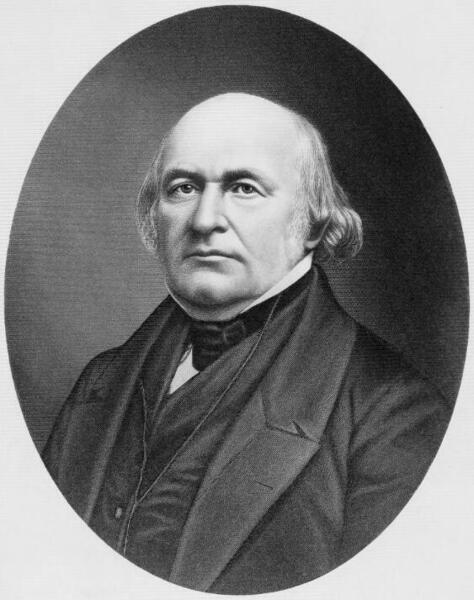
Representative Nathaniel Briggs Borden
Here you will find contact information for Representative Nathaniel Briggs Borden, including email address, phone number, and mailing address.
| Name | Nathaniel Briggs Borden |
| Position | Representative |
| State | Massachusetts |
| District | 10 |
| Party | Whig |
| Status | Former Representative |
| Term Start | December 7, 1835 |
| Term End | March 3, 1843 |
| Terms Served | 3 |
| Born | April 15, 1801 |
| Gender | Male |
| Bioguide ID | B000636 |
About Representative Nathaniel Briggs Borden
Nathaniel Briggs Borden (April 15, 1801 – April 10, 1865) was a businessman and politician from Fall River, Massachusetts, who became a prominent figure in the industrial, financial, and civic development of his community and state. He served as a U.S. Representative from Massachusetts’s 10th congressional district from 1835 to 1839 and again from 1841 to 1843, later serving in both houses of the Massachusetts General Court and as the third mayor of Fall River. Over the course of his career he was closely associated with the growth of textile manufacturing, banking, and railroads in southeastern Massachusetts. He was the younger brother of noted land surveyor and engineer Simeon Borden.
Borden was born on April 15, 1801, to Simeon Borden and Amey (Briggs) Borden in that part of Freetown, Massachusetts, which in 1803 was set off and incorporated as the town of Fall River. His father died in 1811, when Nathaniel was still a child. His mother, Amey Borden, became an early industrial pioneer in the community; in 1813 she was one of the original incorporators of the Troy Cotton & Woolen Manufactory, the second cotton mill established in Fall River, which was built on her property. Amey Borden died in 1817, leaving five children, including sixteen-year-old Nathaniel. Much of his youth was spent in nearby Tiverton, Rhode Island. He attended the local district school and later Plainfield Academy in Plainfield, Connecticut, but his formal education was curtailed when his mother died and family responsibilities increased. Even as a young man he developed an interest in public affairs and government that would shape his later political career.
Borden entered business at an early age and quickly became involved in the emerging textile industry of Fall River. In 1821, at just twenty years of age, he and several associates organized the Pocasset Manufacturing Company in Fall River, one of the important early textile enterprises in the town. He served as the company’s first clerk and treasurer, positions that placed him at the center of the firm’s financial and administrative operations. Over time, his business interests broadened beyond textiles to include banking and transportation. He became a leading figure in the local financial community, later serving as president of the Fall River Savings Bank and of the Fall River Union Bank. He also played a significant role in the development of regional rail transportation, serving as president of the Fall River Railroad from 1847 until 1854, when that line merged with the Old Colony Railroad, thereby strengthening Fall River’s commercial connections with the rest of Massachusetts and New England.
Alongside his business pursuits, Borden embarked on a long career in public service. He first entered elective office as a member of the Massachusetts House of Representatives, serving in 1831 and again in 1834. His early legislative work in the state House coincided with a period of rapid industrialization in Massachusetts, and his background in manufacturing and finance gave him a practical perspective on economic and infrastructural issues. He returned to the Massachusetts House later in his life, serving additional terms in 1851 and 1864, and he also served as a member of the Massachusetts Senate from 1845 to 1848. Through these positions in the General Court he participated in shaping state policy during a period of significant political realignment and economic change.
Borden’s national political career began with his election to the United States House of Representatives. He was elected as a Jacksonian to the Twenty-fourth Congress and reelected as a Democrat to the Twenty-fifth Congress, serving from March 4, 1835, to March 3, 1839. In both elections he ran as the candidate of a coalition that included the Anti-Masonic Party in his district, reflecting the complex and shifting party alignments of the era. After two consecutive terms, he was an unsuccessful Whig candidate for reelection to the Twenty-sixth Congress in 1838. He returned to Congress after winning election as a Whig to the Twenty-seventh Congress, serving from March 4, 1841, to March 3, 1843. Over his three terms in the House of Representatives, Borden represented Massachusetts’s 10th congressional district during a significant period in American history, participating in the legislative process as the Second Party System took shape and representing the interests of his Fall River and southeastern Massachusetts constituents in debates over economic policy, infrastructure, and national development.
After leaving Congress, Borden continued to play a central role in the civic life of Fall River. In 1856 he was elected mayor of Fall River and was reelected in 1857, serving as the city’s third mayor. His mayoralty coincided with a period of continued industrial expansion and urban growth, and he brought to the office his extensive experience in manufacturing, banking, and railroads. In municipal government, as in state and national office, he was closely identified with efforts to promote economic development and to manage the challenges of a rapidly growing industrial community.
Borden’s personal life was marked by several marriages and a large family. He married Sarah Gray on March 16, 1820, and the couple had five children before her death on May 22, 1840. Their eldest son, Simeon, went on to serve as clerk of the courts of Bristol County, Massachusetts, for thirty-two years, continuing the family’s tradition of public service. On December 10, 1840, Borden married Sarah’s sister, Louisa Gray; she died on June 4, 1842. His third marriage was to Sarah Gould Buffum on February 12, 1843. She was the daughter of Arnold Buffum and the sister of noted reformer Elizabeth Buffum Chace. This marriage produced at least two children, including a daughter who died of Asiatic cholera on September 9, 1854, followed by Sarah Gould Buffum Borden herself on September 10, 1854, from the same disease. Their son, Nathaniel Briggs Borden Jr., born in 1844, later pursued a career in business and banking, working with the Valley Falls Company, managed by his uncle Samuel B. Chace, and later helping to organize and manage the Barnard Mills in Fall River. Borden married for a fourth time on March 14, 1855, to Lydia A. Slade, who survived him and later took part in memorializing his contributions to the city.
Nathaniel Briggs Borden died in Fall River, Massachusetts, on April 10, 1865, just five days short of his sixty-fourth birthday. He was interred in Oak Grove Cemetery in Fall River. His community honored his memory and long record of public and business leadership in the years following his death. In 1867 the City of Fall River dedicated the N. B. Borden School on Morgan Street in his honor. In 1876 the Academy of Music Building in Fall River was dedicated to his memory by his widow, Lydia, and his surviving adult children, reflecting the enduring local recognition of his role in the city’s political, economic, and civic development.