Senator Nathaniel Chipman
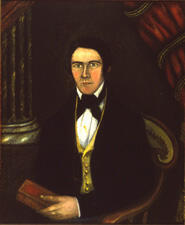
Here you will find contact information for Senator Nathaniel Chipman, including email address, phone number, and mailing address.
| Name | Nathaniel Chipman |
| Position | Senator |
| State | Vermont |
| Party | Federalist |
| Status | Former Representative |
| Term Start | May 15, 1797 |
| Term End | March 3, 1803 |
| Terms Served | 1 |
| Born | November 15, 1752 |
| Gender | Male |
| Bioguide ID | C000369 |
About Senator Nathaniel Chipman
Nathaniel Chipman (November 15, 1752 – February 17, 1843) was an American politician, jurist, and author who served as a United States Senator from Vermont, Chief Justice of the Vermont Supreme Court, and the first judge of the United States District Court for the District of Vermont. A leading Federalist, he was also a Continental Army veteran of the American Revolution, a prominent advocate for Vermont statehood, and for nearly three decades a professor of law at Middlebury College.
Chipman was born in Salisbury, Connecticut Colony, British America, on November 15, 1752, the son of Samuel Chipman and Hannah (Austin) Chipman. He received his early education through private tutoring before enrolling at Yale College. While still a student, he left Yale in January 1777 to volunteer for service in the Continental Army during the American Revolutionary War, and he later received his diploma in 1777 while on active duty. His family connections would later extend into American public life: he was the brother of Daniel Chipman, who became a United States Representative from Vermont, and the grandfather of John Logan Chipman, a United States Representative from Michigan, as well as the grandfather of New York State Senator John W. Brownson.
During the Revolution, Chipman was commissioned as an ensign in the 2nd Connecticut Regiment and joined the army in Pennsylvania. He took part in the Battle of White Marsh in December 1777 and then went into winter quarters with his unit at Valley Forge, where they remained until June 1778. He was promoted to first lieutenant on December 29, 1777, and continued serving through the summer of 1778. Chipman resigned his commission at White Plains, New York, on October 16, 1778, and soon afterward moved to the Vermont Republic, where he read law, attained admission to the bar, and established a private practice in Tinmouth.
In Vermont, Chipman quickly emerged as a leading lawyer and public official. He continued his military involvement as a member of Captain John Spafford’s company in the militia regiment commanded by Colonel Gideon Warren. He served as state’s attorney in Montpelier from 1781 to 1785 and represented his community in the Vermont House of Representatives from 1784 to 1785. He was appointed a judge of the Supreme Court of Vermont, serving from 1786 to 1787, and then as chief judge from 1789 to 1791. During these years he became a prominent advocate for the admission of Vermont to the Union. On February 9, 1791, he met with President George Washington to notify him officially of Vermont’s decision to apply for admission as the fourteenth state, following the resolution of a long-standing boundary and land-claims dispute with New York. Under the terms of the settlement, New York relinquished its claim to Vermont in exchange for $30,000 in indemnity to holders of New York land grants, and Congress voted on February 18, 1791, to admit Vermont to the Union, effective March 4, 1791.
Upon Vermont’s admission, President Washington nominated Nathaniel Chipman to serve as the first judge of the United States District Court for the District of Vermont, a new seat authorized by statute (1 Stat. 197). He was confirmed by the United States Senate on March 4, 1791, and received his commission the same day. Chipman resigned from the federal bench on January 1, 1793, and returned to private practice in Tinmouth, where he practiced law from 1793 to 1796. He remained active in state legal affairs and was again called to judicial service as chief justice of the Vermont Supreme Court from 1796 to 1797.
Chipman entered national legislative service as a member of the Federalist Party. He was elected as a Federalist from Vermont to the United States Senate to fill the vacancy caused by the resignation of Senator Isaac Tichenor. Nathaniel Chipman served as a Senator from Vermont in the United States Congress from October 17, 1797, to March 3, 1803. A member of the Federalist Party, he contributed to the legislative process during one term in office, participating in the democratic process and representing the interests of his Vermont constituents during a significant period in early American history. He was an unsuccessful candidate for reelection in 1803 and left the Senate at the close of his term.
After his departure from Congress, Chipman resumed the practice of law in Tinmouth and continued to play an important role in Vermont’s public life. He returned to the Vermont House of Representatives, serving from 1806 to 1809 and again in 1811. In 1813 he was a member of the Vermont Council of Censors, the body charged with reviewing the actions of the state government for constitutional compliance. That same year he was again appointed chief justice of the Vermont Supreme Court, serving from 1813 to 1815. In 1816 he joined the faculty of Middlebury College as professor of law, a position he held for 28 years. In this role he influenced generations of students and contributed to the development of legal education in the early United States. In 1833 he published “Sketches of the Principles of Government,” one of several works he authored on government and law; he was also known as a satirical poet.
Chipman’s family life was closely intertwined with his public career. In 1781 he married Sarah Hill (1762–1831), and the couple had six children. Among them was Henry C. Chipman, who became a noted lawyer and judge, and Jeffrey Chipman, who served as a justice of the peace in Canandaigua, New York, in the 1820s. Jeffrey Chipman was the magistrate from whom those seeking to prevent William Morgan from publishing an anti-Masonic exposé obtained an arrest warrant for Morgan, an episode that culminated in Morgan’s disappearance and presumed death and contributed to the founding of the Anti-Masonic Party. Through his daughter Laura, who married Dr. John Brownson, Nathaniel Chipman was the grandfather of John W. Brownson, later a member of the New York State Senate.
In his later years, Chipman remained in Tinmouth, where he continued his intellectual pursuits and maintained his standing as an elder statesman of Vermont’s legal and political community. Nathaniel Chipman died in Tinmouth on February 17, 1843, and was interred in Tinmouth Cemetery. His long career as soldier, jurist, senator, educator, and author left a lasting imprint on Vermont and on the early constitutional and legal development of the United States.