Senator Nathaniel Macon
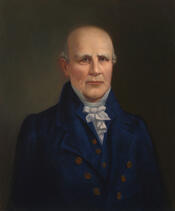
Here you will find contact information for Senator Nathaniel Macon, including email address, phone number, and mailing address.
| Name | Nathaniel Macon |
| Position | Senator |
| State | North Carolina |
| Party | Jackson |
| Status | Former Representative |
| Term Start | October 24, 1791 |
| Term End | November 14, 1828 |
| Terms Served | 16 |
| Born | December 17, 1757 |
| Gender | Male |
| Bioguide ID | M000034 |
About Senator Nathaniel Macon
Nathaniel Macon served as a Senator from North Carolina in the United States Congress from 1791 to 1828. A member of the Jackson Party, Nathaniel Macon contributed to the legislative process during 16 terms in office.
Nathaniel Macon’s service in Congress occurred during a significant period in American history. As a member of the Senate, Nathaniel Macon participated in the democratic process and represented the interests of constituents.
Nathaniel Macon (December 17, 1757 – June 29, 1837) was an American politician who represented North Carolina in both houses of Congress. He was the fifth speaker of the House, serving from 1801 to 1807. He was a member of the United States House of Representatives from 1791 to 1815 and a member of the United States Senate from 1815 to 1828. He opposed ratification of the United States Constitution and the Federalist economic policies of Alexander Hamilton. From 1826 to 1827, he served as President pro tempore of the United States Senate. Thomas Jefferson dubbed him “Ultimus Romanorum”—“the last of the Romans”. During his political career he was spokesman for the Old Republican faction of the Democratic-Republican Party that wanted to strictly limit the United States federal government. Along with fellow Old Republicans John Randolph and John Taylor, Macon frequently opposed various domestic policy proposals, and generally opposed the internal improvements promoted by Henry Clay and John C. Calhoun. An earnest defender of slavery, Macon voted against the Missouri Compromise in 1820. In the 1824 presidential election, he received several electoral votes for vice president, despite declining to run, as the stand-in running-mate for William Harris Crawford. He also served as president of the 1835 North Carolina constitutional convention. After leaving public office, he served as a trustee for the University of North Carolina at Chapel Hill and protested President Andrew Jackson’s threat to use force during the Nullification Crisis.