Senator Nathaniel Silsbee
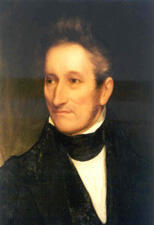
Here you will find contact information for Senator Nathaniel Silsbee, including email address, phone number, and mailing address.
| Name | Nathaniel Silsbee |
| Position | Senator |
| State | Massachusetts |
| Party | Adams |
| Status | Former Representative |
| Term Start | December 1, 1817 |
| Term End | March 3, 1835 |
| Terms Served | 4 |
| Born | January 14, 1773 |
| Gender | Male |
| Bioguide ID | S000411 |
About Senator Nathaniel Silsbee
Nathaniel Silsbee Jr. (December 28, 1804 – July 9, 1881) was a Massachusetts businessman and politician who served as a member of the Massachusetts House of Representatives, twice as mayor of Salem, Massachusetts, and for many years as treasurer of Harvard College. He was born on December 28, 1804, in Salem, Massachusetts, into a prominent New England mercantile and political family. He was the son of former United States Senator Nathaniel Silsbee, who served as a Senator from Massachusetts in the United States Congress from 1817 to 1835 and was a member of the Adams Party, and Mary (née Crowninshield) Silsbee. His father’s service in Congress occurred during a significant period in American history, and as a member of the Senate he participated in the legislative process and represented the interests of his Massachusetts constituents. Through this background, Silsbee Jr. grew up in an environment closely connected to both commerce and public affairs.
Silsbee’s family connections extended deeply into the political and mercantile elite of New England. His paternal grandparents were Sarah (née Becket) Silsbee and Capt. Nathaniel Silsbee, and his maternal grandparents were Mary (née Derby) Crowninshield and Capt. George Crowninshield, one of Salem’s wealthiest merchants. Among his maternal uncles were Benjamin Williams Crowninshield, who served as Secretary of the Navy, U.S. Representative Jacob Crowninshield, and George Crowninshield Jr., owner of Cleopatra’s Barge, the first yacht to cross the Atlantic. His sister Mary Crowninshield Silsbee married Jared Sparks, the 17th President of Harvard College, and another sister, Georgiana Crowninshield Silsbee, married first Francis Henry Appleton and later Henry Saltonstall. These extensive family ties linked Silsbee to leading figures in government, higher education, and maritime trade.
Educated in this milieu, Silsbee attended Harvard College, from which he received an A.B. degree in 1824. He later received an A.M. degree from Harvard in 1862, reflecting his continued association with the institution that would play a major role in his later professional life. His Harvard education prepared him for both business and public service, and it placed him within the social and intellectual circles that shaped Massachusetts politics in the mid-nineteenth century.
On November 9, 1829, Silsbee married Mary Ann Cabot Devereux (1812–1889) in Salem. She was the daughter of Humphrey Devereux and Eliza (née Dodge) Devereux, and the sister of Adj. Gen. George Humphrey Devereux, father of Arthur F. Devereux. Nathaniel and Mary Ann Silsbee had three children: Nathaniel Devereaux Silsbee (1830–1912), who married Mary Stone Hodges, daughter of George Hodges, in 1856; Mary Crowninshield Silsbee (1840–1928), who married Frederick Augustus Whitwell, son of Samuel Whitwell, in 1861; and William Edward Silsbee (1845–1908), who never married. The family remained closely tied to Salem and to the broader network of New England professional and mercantile families.
Silsbee’s public career began in state and local government. He served as a member of the Massachusetts House of Representatives from the Essex district in 1833, again in 1846, and during the extra special session called in 1848 to choose presidential electors. Through this legislative service he participated in the democratic process at the state level and represented the interests of his constituents during a period of shifting party alignments and growing national tensions. In addition to his work in the House, he was a member of the Salem Board of Aldermen from 1851 to 1852, contributing to the municipal governance of his native city.
At the municipal level, Silsbee twice held the office of mayor of Salem. He served as the 5th Mayor of Salem, Massachusetts, from 1849 to 1850, and returned to office as the 11th Mayor of Salem from 1858 to 1859. His mayoral terms coincided with a time when Salem was transitioning from its early prominence as a maritime trading center to a more diversified commercial and industrial economy. As mayor and alderman, he played a role in overseeing local administration, public works, and civic development in a community long associated with his family’s mercantile and political leadership.
Beyond elective office, Silsbee maintained a long and influential relationship with Harvard College. From 1862 to 1876 he served as treasurer of Harvard College, a position of significant responsibility in the governance and financial management of the institution. His tenure as treasurer spanned the presidencies of Thomas Hill and Charles William Eliot, a period of substantial growth and reform at Harvard. In this capacity, he helped oversee the college’s financial affairs during years marked by the Civil War and the subsequent expansion and modernization of the university.
In addition to his political and educational roles, Silsbee was active in business and cultural life. Known as a businessman as well as a public official, he also developed an interest in art collecting. Among his acquisitions was the 1853 painting “Salem Harbor” by the artist Fitz Henry Lane, a work that reflects both his personal taste and his enduring connection to the maritime heritage of his hometown. The painting later became part of the collection of the Museum of Fine Arts, Boston, further linking his name to the cultural history of Massachusetts.
Nathaniel Silsbee Jr. spent his later years in Massachusetts, remaining associated with the civic and educational institutions that had shaped his life. He died in Milton, Massachusetts, on July 9, 1881. His career, encompassing service in the Massachusetts House of Representatives, leadership in Salem municipal government, and long stewardship of Harvard’s finances, reflected the traditions of public service and institutional commitment characteristic of his prominent New England family.