Senator Nathaniel Pitcher Tallmadge
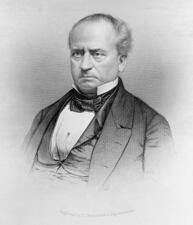
Here you will find contact information for Senator Nathaniel Pitcher Tallmadge, including email address, phone number, and mailing address.
| Name | Nathaniel Pitcher Tallmadge |
| Position | Senator |
| State | New York |
| Party | Whig |
| Status | Former Representative |
| Term Start | December 2, 1833 |
| Term End | March 3, 1845 |
| Terms Served | 2 |
| Born | February 8, 1795 |
| Gender | Male |
| Bioguide ID | T000032 |
About Senator Nathaniel Pitcher Tallmadge
Nathaniel Pitcher Tallmadge (also recorded as Nathaniel Potter Tallmadge) was born on February 8, 1795, into the prominent Tallmadge (or Talmadge) family of New England, a lineage that produced numerous notable figures in American political and cultural life. His middle name is a matter of historical dispute: his Congressional biography and several contemporary sources give it as “Pitcher,” suggesting an association with New York governor Nathaniel Pitcher, while his gravestone records it as “Potter,” his mother’s maiden name. Raised in an environment that emphasized public service and professional accomplishment, Tallmadge prepared for a career in the law and public affairs that would span New York, the Wisconsin Territory, and the emerging communities of the American Midwest.
Tallmadge studied law in New York, was admitted to the bar, and established himself as an attorney before entering politics. Originally active in public life as a Jacksonian Democrat, he aligned himself with the dominant Democratic currents of the 1820s and early 1830s. His legal training and growing reputation as a capable advocate helped propel him into elective office. During this early phase of his career, he developed the political relationships and legislative experience that would later shape his role on the national stage. Over time, however, his views diverged from those of the Democratic leadership, particularly during the presidency of Martin Van Buren, setting the stage for a significant realignment in his political affiliations.
Tallmadge was elected to the United States Senate from New York and served two nonconsecutive terms, from 1833 to 1839 and from 1840 to 1844, thus holding office in the Senate from 1833 to 1845. His service in Congress occurred during a significant period in American history, marked by intense debates over banking, federal power, and economic policy in the wake of Andrew Jackson’s presidency and the Panic of 1837. Initially a Jacksonian Democrat, he fell out with the party over issues that arose during Van Buren’s administration and ultimately became a member of the Whig Party. As a Whig senator from New York, Tallmadge contributed to the legislative process over two terms in office, participating in the democratic process and representing the interests of his constituents in a time of rapid political and economic change.
After his Senate service, Tallmadge moved west and became a key figure in the development of the Wisconsin Territory. He was appointed the third governor of the Wisconsin Territory, serving from 1844 to 1845, at a time when the region was transitioning from a sparsely settled frontier to an organized territory on the path to statehood. In addition to his official duties, he became one of the first landowners in what is now Fond du Lac, Wisconsin. His estate outside Fond du Lac would later play a central role in the civic life of the community, ultimately becoming the site of the city’s oldest cemetery, Rienzi Cemetery. Through his public office and private investments, Tallmadge was recognized as a Wisconsin pioneer who helped lay the foundations for the territory’s political and social institutions.
Tallmadge’s family life was closely intertwined with his public career and with the growth of Wisconsin. He and his wife had several children who themselves became prominent in regional affairs. His eldest son, Isaac Smith Tallmadge (1824–1882), served as a member of the Wisconsin State Assembly. Another son, William Davies Tallmadge (1827–1845), died soon after graduating from Union College. Grier Tallmadge (1827–1862) graduated from the United States Military Academy and served as a captain in the United States Army, dying at Fort Monroe during the American Civil War. A daughter, Louisa Tallmadge (1829–1830), died in infancy. Mary Louisa Tallmadge (1831–1893) married first Napoleon Boardman of Wisconsin and later William Baldwin of Philadelphia; through Mary Louisa and Napoleon Boardman, Tallmadge was the grandfather of Charles Ruggles Boardman, who served as adjutant general of Wisconsin from 1897 to 1913. Another daughter, Laura Tallmadge (1833–1889), married Dr. William T. Galloway of Eau Claire, Wisconsin. John James Tallmadge (1835–1897) became postmaster of Peebles, Wisconsin, and served as the Peebles agent for the Sheboygan and Fond du Lac Railroad. Julia Tallmadge (1835–1919) married Augustus G. Ruggles, a bank president in Fond du Lac, and Emily Bartlett Tallmadge (1840–1900) married James D. Tallmadge of Chicago. Collectively, his children and descendants extended the Tallmadge family’s influence across Wisconsin and the broader Midwest.
The death of his son William in 1845 had a lasting impact on both Tallmadge’s family and the community of Fond du Lac. Tallmadge buried William on a portion of his land outside the town. In 1853, he donated eight and a half acres surrounding his son’s grave to be used for the creation of a public cemetery, which became known as Rienzi Cemetery. The cemetery’s trustees subsequently purchased an additional twenty-four acres for expansion. Over time, Rienzi Cemetery grew to encompass about sixty acres and became the final resting place for approximately 24,000 people, including many of the most notable residents of Fond du Lac throughout its history. Through this act, Tallmadge’s private grief was transformed into a lasting civic institution that reflected his role as a community builder as well as a public official.
In his later years, Tallmadge’s interests extended beyond politics and land development to the religious and philosophical movements of his time. He took up residence in Harmonia, a planned community for spiritualists near Battle Creek, Michigan, which attracted individuals interested in spiritualism and social reform. He lived there during the final period of his life, removed from the direct arena of national politics but still engaged in the intellectual and spiritual currents of the mid-nineteenth century. Nathaniel P. Tallmadge died in Battle Creek on November 2, 1864. In accordance with the family’s ties to Wisconsin and his own wishes, he was buried at Rienzi Cemetery in Fond du Lac, on the land he had once owned and dedicated to the memory of his son, thus closing a life that bridged early national politics, territorial governance, and the pioneering development of the American Midwest.