Representative Neil Oliver Staebler
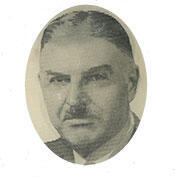
Here you will find contact information for Representative Neil Oliver Staebler, including email address, phone number, and mailing address.
| Name | Neil Oliver Staebler |
| Position | Representative |
| State | Michigan |
| District | At-Large |
| Party | Democratic |
| Status | Former Representative |
| Term Start | January 9, 1963 |
| Term End | January 3, 1965 |
| Terms Served | 1 |
| Born | July 11, 1905 |
| Gender | Male |
| Bioguide ID | S000775 |
About Representative Neil Oliver Staebler
Neil Oliver Staebler (July 11, 1905 – December 8, 2000) was an American politician from the state of Michigan who served one term as a Representative from Michigan in the United States Congress from 1963 to 1965. A lifelong Democrat, he played a prominent role in Michigan and national party politics over several decades and later served on the Federal Election Commission. His congressional service occurred during a significant period in American history, as he participated in the legislative process at the height of the civil rights era and the early years of the Great Society.
Staebler was born in Ann Arbor, Michigan, into a family of German ancestry. He attended local public schools and graduated from Ann Arbor High School in 1922. He went on to the University of Michigan at Ann Arbor, where he received a Bachelor of Arts degree in 1926. His early professional life was rooted in his home state, and his education at Michigan helped establish the connections and civic awareness that would later inform his political career.
During World War II, Staebler entered federal service. He served on the staff of the Office of Price Administration from 1942 to 1943, contributing to the wartime effort to control inflation and manage scarce commodities on the home front. In 1943 he joined the United States Navy, serving on active duty until 1945. This combination of civilian and military service during the war years broadened his experience in federal administration and national policy at a critical moment in U.S. history.
After the war, Staebler emerged as a central figure in Michigan’s Democratic Party. He served as chairman of the Michigan state Democratic central committee from 1950 to 1961, a period in which the party strengthened its position in a state long dominated by Republicans. He was a delegate to the Democratic National Convention from Michigan in 1952, 1956, 1960, 1964, and 1968, reflecting his sustained influence in party affairs. At the national level, he was a member of the Democratic National Committee from 1961 to 1964 and again from 1965 to 1968. In 1962 he also served in academia as a visiting professor at the University of Massachusetts, bringing his practical political experience into the classroom.
Staebler’s entry into Congress followed the reapportionment that resulted from the 1960 census, which granted Michigan an additional seat in the U.S. House of Representatives. Because the state legislature did not create the new 19th congressional district in time for the 1962 elections, the new seat was filled on an at-large basis. Running as a Democrat, Staebler was elected at large to represent Michigan in the 88th Congress, serving from January 3, 1963, to January 3, 1965. As a member of the House of Representatives, he participated in the democratic process and represented the interests of constituents across the state during a period marked by major federal legislative initiatives in civil rights, social welfare, and economic policy.
In 1964, rather than seek reelection to the House, Staebler chose to run for governor of Michigan. He was the Democratic nominee challenging the incumbent Republican governor, George W. Romney. The campaign was unsuccessful, and Romney was returned to office, but Staebler’s candidacy underscored his prominence within the state party and his willingness to forgo a secure congressional seat in pursuit of statewide executive office. After this race, he continued to be active in Democratic politics and national party structures.
In the mid-1970s, Staebler returned to federal service in a regulatory capacity. He was appointed a member of the Federal Election Commission, serving from April 1975 to October 1978. His tenure on the Commission came in the formative years after the enactment of major campaign finance reforms, and he contributed to the development and enforcement of federal election law and oversight of political campaign practices.
Neil Oliver Staebler spent his later years in his native Ann Arbor. He remained associated with the Democratic Party and public affairs even after leaving formal office. He died in Ann Arbor on December 8, 2000, from the effects of Alzheimer’s disease, closing a long life marked by service to his state and country in war, in party leadership, in Congress, and in federal election administration.