Senator Newell Sanders
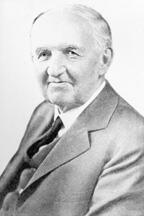
Here you will find contact information for Senator Newell Sanders, including email address, phone number, and mailing address.
| Name | Newell Sanders |
| Position | Senator |
| State | Tennessee |
| Party | Republican |
| Status | Former Representative |
| Term Start | April 11, 1912 |
| Term End | January 24, 1913 |
| Terms Served | 1 |
| Born | July 12, 1850 |
| Gender | Male |
| Bioguide ID | S000038 |
About Senator Newell Sanders
Newell Sanders (July 12, 1850 – January 26, 1939) was a Chattanooga businessman and Republican politician who served for a relatively brief time as a United States Senator from Tennessee. Born on July 12, 1850, he came of age in the years following the American Civil War, a period of profound political and economic transformation that would shape his later business and political career. Although detailed records of his early childhood and family background are limited in the available sources, his subsequent prominence in Chattanooga’s commercial life indicates that he developed strong ties to the emerging industrial and commercial centers of the postwar South.
Sanders’s education and early professional development prepared him for a career in business at a time when Southern cities were rebuilding and expanding their economic base. He eventually settled in Chattanooga, Tennessee, where he established himself as a businessman of note. Chattanooga, strategically located as a rail and river hub, was rapidly industrializing in the late nineteenth and early twentieth centuries, and Sanders’s business activities placed him among the civic and commercial leaders who contributed to the city’s growth. His success in business provided both the resources and the public standing that later facilitated his entry into state and national politics.
By the early twentieth century, Sanders had become a prominent Republican figure in a state where the Democratic Party was generally dominant. His affiliation with the Republican Party aligned him with the national party of business interests and protective tariffs, and he emerged as one of the leading Republicans in Tennessee. His political involvement reflected both his personal convictions and the broader regional tensions of the era, as Tennessee’s political landscape was shaped by the legacy of the Civil War, Reconstruction, and the evolving economic interests of its urban and rural constituencies.
Sanders’s most notable public service came in the United States Senate. A member of the Republican Party, he was appointed to serve as a Senator from Tennessee in the United States Congress from 1912 to 1913, filling a vacancy and thus serving for a relatively brief time. His tenure encompassed one term in office during a significant period in American history, as the nation confronted issues of industrial regulation, progressive reform, and shifting party alignments leading into the presidential election of 1912. During this service in Congress, Sanders contributed to the legislative process, participated in the democratic deliberations of the Senate, and represented the interests of his Tennessee constituents at the federal level.
Although his time in the Senate was short, Sanders’s service occurred at a moment when the role of the federal government in economic and social affairs was expanding. As a Senator, he took part in debates and votes that reflected the concerns of a rapidly modernizing country, including questions of commerce, infrastructure, and governance. His presence in the Senate also underscored the continued, if limited, influence of the Republican Party in Tennessee during an era when Southern politics was largely dominated by Democrats.
After leaving the Senate in 1913, Sanders returned to his business and civic pursuits in Chattanooga. His post-congressional years were spent in the community where he had built his reputation, and he remained identified with both the commercial development of the city and the Republican cause in the state. Living well into the twentieth century, he witnessed the First World War, the Roaring Twenties, and the onset of the Great Depression, periods that further transformed the economic and political landscape he had helped to shape.
Newell Sanders died on January 26, 1939, closing a life that bridged the era from Reconstruction through the interwar years. Remembered primarily as a Chattanooga businessman who briefly served as a United States Senator from Tennessee, he left a record of participation in both the economic development of his city and the national legislative process. His career illustrates the path of a regional business leader who, for a time, carried the concerns of his state to the highest legislative body in the nation.