Representative Newton Martin Curtis
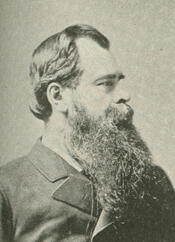
Here you will find contact information for Representative Newton Martin Curtis, including email address, phone number, and mailing address.
| Name | Newton Martin Curtis |
| Position | Representative |
| State | New York |
| District | 22 |
| Party | Republican |
| Status | Former Representative |
| Term Start | December 7, 1891 |
| Term End | March 3, 1897 |
| Terms Served | 3 |
| Born | May 21, 1835 |
| Gender | Male |
| Bioguide ID | C001012 |
About Representative Newton Martin Curtis
Newton Martin Curtis (May 21, 1835 – January 8, 1910) was a Union officer during the American Civil War and a Republican member of the United States House of Representatives from New York. He served three consecutive terms in Congress from 1891 to 1897, representing his constituents during a significant period in American political and economic development and contributing to the legislative process as part of the House Republican majority of the mid-1890s.
Curtis was born on May 21, 1835, in De Peyster, St. Lawrence County, New York. He was educated at the Gouverneur Wesleyan Seminary in Gouverneur, New York, from which he graduated before embarking on a varied early career. Following his studies, he worked as a teacher and read law, becoming a lawyer, and also served as postmaster of De Peyster. In the year immediately preceding the outbreak of the Civil War, he was engaged in farming. Noted for his remarkable physical stature—he stood approximately 6 feet 7 inches tall and weighed about 225 pounds—Curtis attracted attention even in public life. His height was such that President Abraham Lincoln is reported to have joked with him, “Mr. Curtis, how do you know when your feet are cold?” His family, aware of how conspicuous he would be on the battlefield, feared that his size would make him an easy target once the war began.
With the onset of the Civil War, Curtis volunteered for service in the Union Army on May 15, 1861, entering as a captain in Company G of the 16th New York Infantry. He served in the Peninsula Campaign and was wounded in a minor engagement at West Point, Virginia. On October 23, 1862, he transferred to the 142nd New York Volunteer Infantry, where he served as lieutenant colonel until his promotion to colonel on January 21, 1865. As commander of the 142nd New York Infantry, Curtis participated in the Bermuda Hundred Campaign in May 1864 and later took command of the 1st Brigade, 2nd Division, X Corps during the Siege of Petersburg. For his gallant actions at the Battle of New Market Heights, he received a brevet promotion to brigadier general on October 28, 1864.
Curtis’s most celebrated military service occurred during the Union expeditions against Fort Fisher, North Carolina, in late 1864 and early 1865. His brigade was among the few units to go ashore during the first expedition in December 1864, an attack that ultimately failed. He returned for the second assault in January 1865, in which his brigade played a decisive role in the Union victory. During the fighting at the Second Battle of Fort Fisher, Curtis was the first man to pass through the stockade and personally led each assault on the enemy traverses, where he was wounded four times. When a suggestion was made that his men entrench, he reportedly seized a handful of shovels and threw them over the traverse, shouting, “Dig, Johnnies! I’m coming for you!” He then continued to lead the attack at the head of his brigade. For his conspicuous bravery at Fort Fisher, he received a full promotion to brigadier general of volunteers and was awarded the Medal of Honor. He remained in the Army until January 1866 and was brevetted major general of volunteers on March 13, 1865, in recognition of his overall wartime service.
After leaving military service, Curtis embarked on a long career in federal and state public service. In 1866 he was appointed collector of customs for the district of Oswegatchie, New York. The following year he entered the United States Treasury Department as a Special Agent, a position he held from 1867 until 1880, working in the enforcement of federal revenue and customs laws. From 1880 to 1882 he served in the United States Department of Justice, further extending his experience in federal administration. Returning to New York, Curtis entered elective office as a member of the New York State Assembly, representing the 1st District of St. Lawrence County. He served continuously in the Assembly in 1884, 1885, 1886, 1887, 1888, 1889, and 1890, participating in state legislation during a period of industrial expansion and political realignment.
Curtis advanced to national office when he was elected as a Republican to the Fifty-second Congress to fill the vacancy caused by the resignation of Representative Leslie W. Russell. He took his seat in the U.S. House of Representatives on November 3, 1891. He was subsequently re-elected to the Fifty-third and Fifty-fourth Congresses, serving until March 3, 1897. During his three terms in Congress, he represented New York as a member of the Republican Party and took part in debates and legislation on issues of tariffs, currency, and post–Civil War veterans’ affairs that marked the era. In the Fifty-fourth Congress he served as chairman of the House Committee on the Election of the President, Vice President and Representatives in Congress, a committee concerned with the laws and procedures governing federal elections. His tenure in the House coincided with a period of significant political contest over economic policy, and he was recognized as a steadfast representative of his district’s interests.
In his later years, Curtis remained active in veterans’ and historical circles and continued to be associated with military and civic affairs. He was a companion of the New York Commandery of the Military Order of the Loyal Legion of the United States, an organization of Union officers and their descendants. In 1906 he published a memoir of his wartime experiences titled From Bull Run to Chancellorsville, contributing to the historical record of the Union Army’s campaigns in the Eastern Theater. By 1910 he was serving as assistant inspector general of the National Home for Disabled Volunteer Soldiers, reflecting his continuing commitment to the welfare of former servicemen.
Newton Martin Curtis died in New York City on January 8, 1910. He was buried in Ogdensburg Cemetery in Ogdensburg, New York, where a statue was erected in his honor, commemorating both his military valor and his public service. His legacy is further preserved in the naming of the General Newton Martin Curtis Camp No. 142 of the Sons of Union Veterans of the Civil War, recognizing his distinguished record as a Union general, Medal of Honor recipient, and member of the United States House of Representatives from New York.