Representative Nicholas Nichols Cox
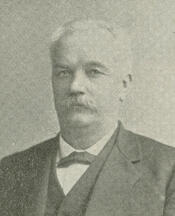
Here you will find contact information for Representative Nicholas Nichols Cox, including email address, phone number, and mailing address.
| Name | Nicholas Nichols Cox |
| Position | Representative |
| State | Tennessee |
| District | 7 |
| Party | Democratic |
| Status | Former Representative |
| Term Start | December 7, 1891 |
| Term End | March 3, 1901 |
| Terms Served | 5 |
| Born | January 6, 1837 |
| Gender | Male |
| Bioguide ID | C000838 |
About Representative Nicholas Nichols Cox
Nicholas Nichols Cox (January 6, 1837 – May 2, 1912) was an American politician, lawyer, Confederate officer, and farmer who represented Tennessee’s 7th congressional district in the United States House of Representatives from 1891 to 1901. A member of the Democratic Party, he served five consecutive terms in Congress during a significant period in American history, participating in the legislative process and representing the interests of his constituents.
Cox was born in Bedford County, Tennessee, on January 6, 1837, the son of Caleb and Nancy Cox. During his childhood he moved with his family to Seguin, Texas, where he attended the common schools and spent part of his youth on the Mexican frontier. He later returned to Tennessee to pursue higher education and studied law at Cumberland University, from which he graduated with a law degree in 1858. That same year he was admitted to the bar and commenced the practice of law at Linden, Tennessee.
On January 6, 1859, Cox married Mary Slayden, the daughter of Thomas Boyd and Jane (Lewis) Slayden. The couple had six children—three sons and three daughters—four of whom survived him at the time of his death. As he built his legal practice and family life on the eve of the Civil War, Cox also became active in Democratic Party politics. In the presidential election of 1860 he served as a presidential elector on the Democratic ticket of John C. Breckinridge and Joseph Lane, reflecting his alignment with Southern Democratic interests in the sectional crisis preceding secession.
With the outbreak of the Civil War, Cox entered Confederate service and rose to the rank of colonel in the Tenth Tennessee Cavalry of the Confederate Army. He served principally under the command of General Nathan Bedford Forrest, participating in cavalry operations in the Western Theater. After the war ended, Cox settled in Williamson County, Tennessee, in 1866. There he turned his attention to agricultural pursuits while maintaining his legal interests, becoming a landowner and farmer in the region as Tennessee adjusted to Reconstruction and its aftermath.
Cox’s prominence in local affairs and his longstanding Democratic affiliation led to his election to the United States House of Representatives. He was elected as a Democrat to the Fifty-second and the four succeeding Congresses, serving from March 4, 1891, to March 3, 1901, as the representative for Tennessee’s 7th congressional district. During his decade in the House of Representatives, he contributed to the legislative process and participated in debates and votes on the economic, social, and political issues confronting the nation in the late nineteenth century. After five terms in office, he declined to be a candidate for renomination in 1900, thereby concluding his congressional career.
Following his retirement from Congress, Cox resumed the practice of law and became active in banking in Franklin, Tennessee. He continued to be engaged in the civic and economic life of his community, drawing on his experience as an attorney, farmer, and former legislator. His residence in the Brentwood area, a suburb of Nashville, became locally notable; the home, known as the Owen-Cox House or Maplelawn, was later recognized for its historical significance and was added to the U.S. National Register of Historic Places in 1988.
Nicholas Nichols Cox died in Franklin, Tennessee, on May 2, 1912, at the age of 75. He was interred at Mount Hope Cemetery in Franklin. At the time of his death, he was survived by four of his six children. His life spanned the antebellum era, the Civil War, Reconstruction, and the emergence of the modern American political system, and he left a legacy as a Confederate officer, Tennessee lawyer and farmer, and five-term Democratic member of the United States House of Representatives.