Senator Nicholas Gilman
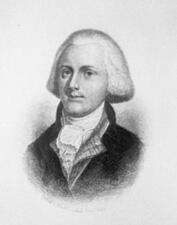
Here you will find contact information for Senator Nicholas Gilman, including email address, phone number, and mailing address.
| Name | Nicholas Gilman |
| Position | Senator |
| State | New Hampshire |
| Party | Republican |
| Status | Former Representative |
| Term Start | March 4, 1789 |
| Term End | March 3, 1815 |
| Terms Served | 6 |
| Born | August 3, 1755 |
| Gender | Male |
| Bioguide ID | G000215 |
About Senator Nicholas Gilman
Nicholas Gilman Jr. (August 3, 1755 – May 2, 1814) was an American Founding Father, a soldier in the Continental Army during the American Revolutionary War, a delegate to the Continental Congress, and a signer of the United States Constitution representing New Hampshire. Born in Exeter in the Province of New Hampshire during the French and Indian War, he was the son of Ann (Taylor) Gilman and Nicholas Gilman, a prominent local merchant and political leader. He was the second son in a family of six surviving children—John, Nicholas, Nathaniel, Elizabeth, Samuel, and Daniel—and also had two brothers who died in infancy. Growing up in a household deeply engaged in public affairs, he was early exposed to the military and civic responsibilities that accompanied citizenship in a New England colony.
Gilman attended local public schools in Exeter and then became a clerk in his father’s trading house, gaining experience in commerce and administration. As tensions mounted between the American colonies and Great Britain, New England merchants, including his father, resented Parliament’s efforts to tighten imperial control and raise revenue, which many colonists viewed as violations of their rights as British subjects. Gilman’s father emerged, along with Nathaniel Folsom and Enoch Poor, as a leader of the Patriot cause in Exeter, representing the community in the New Hampshire Provincial Congresses that met after the battles of Lexington and Concord in 1775 and helped draft the state constitution. During the Revolution, his father served as New Hampshire’s state treasurer. Gilman’s eldest brother, John Taylor Gilman, joined the local militia as a sergeant and marched to fight around Boston, while Nicholas, though remaining in Exeter at first, ardently supported the Patriot cause and likely trained with the local militia regiment.
With the outbreak of the Revolutionary War, Gilman entered the Continental Army and served in the New Hampshire Line. He came to prominence under Colonel Alexander Scammell, whose regiment participated in key campaigns of the war. After the British surrender at Saratoga in 1777, the 3rd New Hampshire Regiment, with which Gilman served, was ordered to reinforce General George Washington’s main army near Philadelphia. Gilman endured the harsh winter encampment at Valley Forge, where the Continental Army was tested by severe deprivation but emerged as a more disciplined and professional force. His administrative abilities were recognized when Washington selected Scammell as Adjutant General of the Continental Army and Scammell, in turn, chose Gilman as his assistant. Gilman was promoted to the rank of captain in June 1778.
For the remainder of the war, Gilman’s duties placed him in close and regular contact with the senior leadership of the Continental Army, including Washington, Baron von Steuben, Henry Knox, and Nathanael Greene. He participated in the major engagements fought by Washington’s main army after Valley Forge, including the Battle of Monmouth and the Yorktown campaign, while continuing to hold his captain’s commission in the New Hampshire Line. The death of Colonel Scammell during the preliminary skirmishing before the Siege of Yorktown deeply affected him and tempered his satisfaction in the decisive American victory. Following the death of his father in late 1783, Gilman retired from military service and returned to Exeter to assume control of the family business. At the close of the Revolution, he was elected one of the 31 original members of the Society of the Cincinnati, reflecting his standing among Continental Army officers.
Gilman’s postwar career as a merchant proved brief, as his wartime experience and family tradition of public service drew him into politics and national affairs. Influenced by the nationalist ideas of Washington and Alexander Hamilton, he emerged as an advocate for a stronger union. In 1786, the New Hampshire legislature appointed him a delegate to the Continental Congress, marking his entry into national political life. That same year he was also selected as one of two New Hampshire representatives to the Annapolis Convention, called to address the nation’s economic difficulties and the weaknesses of the Articles of Confederation, although he was ultimately unable to attend. The outbreak of unrest in western Massachusetts, known as Shays’ Rebellion, and related disturbances such as the Paper Money Riot in New Hampshire, which he helped to suppress, further convinced him of the need to strengthen the national government.
In 1787, Gilman was chosen as a delegate to the Constitutional Convention in Philadelphia. Although he and fellow New Hampshire delegate John Langdon, his father’s former commanding officer, arrived after the convention was well under way, they quickly joined the debates and participated in forging the compromises necessary to produce a Constitution acceptable to all regions. Gilman signed the finished document and later summarized his views by calling it “the best that could meet the unanimous concurrence of the States in Convention; it was done by bargain and Compromise, yet, notwithstanding its imperfections, on the adoption of it depends (in my feeble judgment) whether we shall become a respectable nation, or a people torn to pieces … and rendered contemptible for ages.” During the subsequent struggle over ratification in New Hampshire, he remained in New York as a member of the Continental Congress but worked closely with his brother John, who was a leading advocate of ratification in the state. Together they used their political influence to help secure New Hampshire’s narrow 57–47 vote in favor of the Constitution.
With the new federal government established, Gilman entered congressional service in the House of Representatives. When the First Congress convened in New York in 1789, he took his seat as a member of the United States House of Representatives from New Hampshire and served through the first four Congresses, from 1789 to 1797. During this period, the Gilman brothers rose to prominence in New Hampshire politics: John Taylor Gilman served as governor for a total of fourteen years and became a principal benefactor of Phillips Exeter Academy, while Nicholas combined his national duties with growing involvement in state affairs. After leaving the House, he returned to Exeter and continued his political career, serving a term as a state senator in 1800. His early national service coincided with the formative years of the federal government, and he contributed to the legislative process as the new constitutional system took shape.
Gilman’s party allegiance evolved over time. Initially aligned with the Federalists because of his strong nationalist convictions and support for a more binding union, he later grew concerned about the potential for governmental overreach and the need to protect the interests of ordinary citizens. As a result, he shifted his support to the emerging Democratic-Republican Party led by Thomas Jefferson. In 1801, he accepted an appointment from President Jefferson as a federal bankruptcy commissioner, reflecting his new political alignment. After an unsuccessful bid for the United States Senate in 1802, he was elected to the Senate in 1804 as a Jeffersonian, or Democratic-Republican, and took his seat in 1805. He served as a Senator from New Hampshire in the United States Congress from 1789 to 1815 according to some contemporary accounts, and more precisely as a United States Senator from 1805 until his death in 1814, completing multiple terms in office. A member of the Republican (Democratic-Republican) Party, he contributed to the legislative process during six terms in Congress when his House and Senate service are considered together. In the Senate he was regarded as an influential, if generally quiet, legislator; he rarely spoke at length in debate, but his colleagues recognized his political skill and judgment. On June 17, 1812, he voted against the declaration of war against Great Britain, though the Senate approved the measure by a vote of 19 to 13.
Gilman’s later years were marked by continued national service and enduring ties to his home state. He remained an active and respected member of the Senate during the early years of the War of 1812, representing the interests of his New Hampshire constituents while maintaining his long-standing commitment to a strong but accountable national government. His family’s prominence in Exeter endured; his brother John continued to play a central role in state politics and education, and the family home—later known as the Ladd-Gilman House—would eventually become part of the American Independence Museum and be commemorated by New Hampshire Historical Marker No. 161. Nicholas Gilman died in office on May 2, 1814, while returning home from Washington during a congressional recess. His death placed him among the early members of Congress who died while still serving, and it closed a career that had spanned the Revolution, the framing of the Constitution, and the formative decades of the United States government.