Senator Ninian Edwards
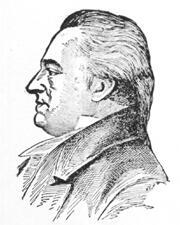
Here you will find contact information for Senator Ninian Edwards, including email address, phone number, and mailing address.
| Name | Ninian Edwards |
| Position | Senator |
| State | Illinois |
| Party | Republican |
| Status | Former Representative |
| Term Start | December 3, 1818 |
| Term End | March 4, 1824 |
| Terms Served | 2 |
| Born | March 17, 1775 |
| Gender | Male |
| Bioguide ID | E000078 |
About Senator Ninian Edwards
Ninian Edwards (March 17, 1775 – July 20, 1833) was an American jurist and politician who became a leading figure in the early political development of Illinois. A member of the Republican Party in the era of the First Party System, he served as the first and only governor of the Illinois Territory from 1809 until the territory achieved statehood in 1818, was then elected as one of the first two United States senators from the new State of Illinois from 1818 to 1824, and later served as the third Governor of Illinois from 1826 to 1830. In a time and place where personal coalitions were more influential than formal parties, Edwards led one of the two principal factions in frontier Illinois politics and played a central role in shaping the institutions and political culture of the state.
Edwards was born in Maryland, where he spent his early years before moving west. Details of his childhood are less documented than his later public career, but his family background and education prepared him for the legal and political professions that would define his life. As part of the broader westward movement of the early republic, he relocated to Kentucky, which was then a rapidly developing frontier state. There he read law and entered public life, beginning a political and judicial career that quickly brought him prominence in the region.
In Kentucky, Edwards served as both legislator and judge, rising steadily through the ranks of the state’s legal system. His abilities as a lawyer and jurist led to his appointment to the Kentucky Court of Appeals, and in 1808 he became Chief Justice of that court, then the highest judicial body in Kentucky. His elevation to Chief Justice marked him as one of the leading legal minds in the trans-Appalachian West and brought him to the attention of national political leaders in Washington, D.C. The following year, President James Madison, who had initially appointed Kentucky politician John Boyle as governor of the newly created Illinois Territory, turned to Edwards for that post after Boyle resigned to accept Edwards’s former position as Kentucky Chief Justice. Friends and allies in Washington helped secure Edwards’s appointment as territorial governor, while Territorial Secretary Nathaniel Pope, a cousin of Edwards, temporarily exercised the powers of acting governor and organized the new territorial government.
The Illinois Territory, created in 1809, encompassed all of what are now the states of Illinois and Wisconsin, as well as parts of present-day Minnesota and Michigan. Its European-American and African-American populations were concentrated largely in the southern region later known as “Egypt.” Edwards was sworn in as territorial governor on June 11, 1809, at the age of 34, making him the youngest man ever to govern Illinois as either a territory or a state. He settled in the American Bottom on land he received as a grant upon his appointment and established a farm he named Elvirade, in honor of his wife. Like most of Illinois’s early governors, Edwards was a slaveholder. Although the Northwest Ordinance of 1787 formally prohibited slavery in the territory, an 1803 “Law Concerning Servants” for the Indiana Territory, carried over into the Illinois Territory, allowed slavery to persist under the guise of long-term indentured servitude. Edwards brought enslaved people with him to Illinois and did not free them. In 1812 he advertised for sale “several likely young negro men and women,” and he later derived income by hiring out some of his “indentured servants” for labor in Missouri. In 1814 he recorded the sale of “my mulatto boy slave named Wallace now in possession of Harry of Ste. Genevieve Missouri Territory to Theodore Hunt,” and in 1815 he sought to sell another “Mulatto Boy” for $400.
As territorial governor, Edwards presided over the formative years of Illinois’s civil and political institutions. Initially attempting to avoid overt partisanship, he soon found that factional politics were an inevitable consequence of his power to appoint officials and distribute patronage. While the national Federalist and Republican parties structured politics in the older states, they never took firm root in frontier Illinois. Instead, loyalties coalesced around personalities, kinship ties, militia service, and access to government jobs. Two rival factions emerged, one centered on Edwards and the other on Judge Jesse B. Thomas, and these groupings dominated Illinois politics during the territorial period and the first years of statehood. Edwards oversaw the territory’s transition from its initial form of government to the more democratic “second grade” territorial government and ultimately to statehood in 1818. During his tenure as territorial governor he also confronted military and Native American affairs, twice calling out the Illinois militia against Native Americans—first during the War of 1812 and later in the Winnebago War—and he signed treaties that secured the cession of Native American lands to the United States.
When Illinois was admitted to the Union in 1818, Edwards’s prominence in territorial affairs made him a natural choice for federal office. On the second day of its session, the Illinois General Assembly elected him to the United States Senate, making him one of the first two senators to represent the new state. Ninian Edwards served as a Senator from Illinois in the United States Congress from 1818 to 1824. A member of the Republican Party, he contributed to the legislative process during two terms in office and participated in the democratic process at a time of significant national expansion and political realignment. His Senate service coincided with major issues such as the aftermath of the War of 1812, debates over western land policy, and the early phases of the sectional controversies that would later intensify. Conflict with political rivals, however, followed him to Washington and damaged him politically, weakening his standing by the time his Senate service concluded.
Despite these setbacks, Edwards remained a powerful figure in Illinois politics. In 1826 he achieved what contemporaries regarded as an unlikely political comeback when he was elected Governor of Illinois, becoming the state’s third chief executive. His gubernatorial administration from 1826 to 1830 was marked by contentious disputes with the state legislature, particularly over the regulation and stability of state banking institutions. Edwards took strong positions on financial policy and state bank regulation, which brought him into repeated conflict with legislators and other political leaders. His term was also shaped by the continuing federal and state policy of Indian removal. As governor, and earlier as territorial governor, he supported and implemented measures that advanced the displacement of Native American communities from Illinois, including the deployment of militia forces and the negotiation and enforcement of land-cession treaties.
At the conclusion of his gubernatorial term in 1830, Edwards retired from public office and returned to private life at his Elvirade estate in the American Bottom. His long career had spanned service as a Kentucky legislator and judge, Chief Justice of the Kentucky Court of Appeals, territorial governor, United States senator, and state governor, and he remained a figure of considerable influence in Illinois even after leaving formal office. Ninian Edwards died of cholera on July 20, 1833. His career left a lasting imprint on the legal and political foundations of Illinois, reflecting both the opportunities and the contradictions of leadership on the early American frontier.