Representative Noah Morgan Mason
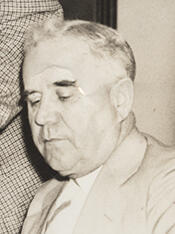
Here you will find contact information for Representative Noah Morgan Mason, including email address, phone number, and mailing address.
| Name | Noah Morgan Mason |
| Position | Representative |
| State | Illinois |
| District | 15 |
| Party | Republican |
| Status | Former Representative |
| Term Start | January 5, 1937 |
| Term End | January 3, 1963 |
| Terms Served | 13 |
| Born | July 19, 1882 |
| Gender | Male |
| Bioguide ID | M000224 |
About Representative Noah Morgan Mason
Noah Morgan Mason (July 19, 1882 – March 29, 1965) was an American politician who served as a U.S. Representative from Illinois from 1937 to 1963. A conservative Republican, he served 13 consecutive terms in the House of Representatives, representing first Illinois’s 12th congressional district and then, after a redrawing of boundaries, the 15th district. Over more than a quarter-century in Congress, he participated actively in the legislative process and represented a largely rural, downstate constituency during a period of profound economic, social, and international change.
Mason was born in Glamorganshire, Wales, on July 19, 1882, the twelfth of thirteen children. In 1888 he immigrated to the United States with his parents, who settled in La Salle, Illinois. His father first worked as a coal miner and later became a farmer. Mason left school at the age of fourteen to help on the family farm, but at his mother’s urging he resumed his education. He attended Dixon College and subsequently graduated from Illinois State Normal University at Normal, Illinois, preparing for a career in education that would precede his entry into politics.
Beginning in 1902, Mason worked in the public schools of Oglesby, Illinois. From 1902 to 1905 he served as a teacher and principal, and he later became superintendent of schools, a position he held from 1908 to 1936. His long tenure as superintendent coincided with a period of expansion and professionalization in public education, and he became a prominent local educational leader. In addition to his school responsibilities, Mason was a member of the Illinois State Normal School Board from 1926 to 1930, contributing to the oversight of teacher training institutions in the state.
Mason’s involvement in public affairs extended beyond education into municipal and state government. From 1918 to 1926 he served as an Oglesby city commissioner, gaining experience in local administration and public policy. He then advanced to state office, serving in the Illinois State Senate from 1930 to 1936. In the state senate he developed a reputation as a conservative legislator, which helped shape his subsequent career in national politics.
In 1936 Mason was elected as a Republican to the 75th United States Congress, and he was reelected to the twelve succeeding Congresses, serving from January 3, 1937, to January 3, 1963. His service in Congress thus spanned the New Deal, World War II, the early Cold War, and the beginning of the civil rights era. As a member of the House of Representatives, Mason participated in the democratic process and represented the interests of his Illinois constituents over 13 terms in office. He served on the influential Committee on Ways and Means, where he was part of the conservative bloc that sought to limit federal spending and regulation. He was also a member of the House Un-American Activities Committee from 1938 to 1943, reflecting his strong anti-communist views.
Mason was known as a staunch conservative Republican who represented a rural downstate district and consistently advocated for states’ rights and limited federal authority. Less flamboyant and less nationally visible than his Illinois colleague Everett McKinley Dirksen, he nonetheless played a significant role in conservative opposition to many New Deal and post–New Deal initiatives. He distrusted President Franklin D. Roosevelt and frequently spoke out against what he regarded as excessive federal spending and regulation. Mason favored higher protective tariffs to shield American businesses and workers, a position that increasingly diverged from the broader Republican Party’s movement toward freer trade. He criticized prominent New Deal figures such as Eveline Burns, Henry A. Wallace, Adolph A. Berle Jr., and Paul Porter as socialists, and he was an isolationist in foreign policy in the pre–World War II years, voting against the Lend-Lease program in 1941.
During the early Cold War, Mason’s anti-communism remained a defining feature of his congressional career. He supported the work of Senator Joseph McCarthy and in 1950 publicly championed McCarthy’s investigations and exposes. At the same time, he often opposed major initiatives of President Dwight D. Eisenhower, despite praising Eisenhower personally and remaining loyal to the Republican Party. Mason opposed, among other measures, the proposal for statehood for Hawaii and supported Senator Pat McCarran’s efforts to sharply restrict immigration to the United States. He also advocated a radical rewriting of the federal tax code, consistent with his broader desire to curtail federal power and reshape national economic policy. On civil rights, he voted against the Civil Rights Acts of 1957 and 1960, and he voted “present” on the proposed Twenty-fourth Amendment to the U.S. Constitution, which sought to abolish the poll tax in federal elections.
After more than a quarter-century in the House, Mason chose not to be a candidate for renomination in 1962 for the Eighty-eighth Congress. He retired from public office at the conclusion of his final term on January 3, 1963, and thereafter lived in Plainfield, Illinois. Noah Morgan Mason died in Joliet, Illinois, on March 29, 1965. He was buried in Plainfield Cemetery in Plainfield, Illinois, closing the life of an immigrant educator-turned-legislator whose long congressional service reflected and helped shape mid-twentieth-century American conservatism.