Representative Noble Jones Gregory
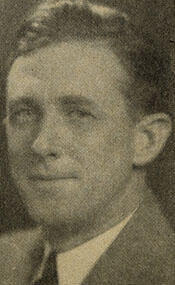
Here you will find contact information for Representative Noble Jones Gregory, including email address, phone number, and mailing address.
| Name | Noble Jones Gregory |
| Position | Representative |
| State | Kentucky |
| District | 1 |
| Party | Democratic |
| Status | Former Representative |
| Term Start | January 5, 1937 |
| Term End | January 3, 1959 |
| Terms Served | 11 |
| Born | August 30, 1897 |
| Gender | Male |
| Bioguide ID | G000447 |
About Representative Noble Jones Gregory
Noble Jones Gregory (August 30, 1897 – September 26, 1971) was an American banker, local education official, and Democratic politician who represented Kentucky’s 1st congressional district in the United States House of Representatives for eleven consecutive terms from 1937 to 1959. His congressional service spanned more than two decades, encompassing the late New Deal era, World War II, the early Cold War, and the beginnings of the modern civil rights movement.
Gregory was born and raised in Mayfield, Graves County, Kentucky. He grew up in a family that would become prominent in state and national politics; one of his siblings, an older brother, William Voris Gregory, also became a politician and served as a United States Representative from Kentucky. The brothers’ careers would become closely intertwined, with Noble Jones Gregory ultimately succeeding William Voris Gregory in Congress after his brother’s death.
Gregory’s early professional life was rooted in finance and local public service. Beginning in 1917, he worked in various positions at the First National Bank of Mayfield, gaining experience in banking and investment that would later shape his post-congressional career. In addition to his work in the private sector, he played a significant role in local educational administration. From 1923 to 1936, he served as secretary-treasurer of the Mayfield Board of Education, managing the financial affairs of the local school system and contributing to the governance of public education in his hometown.
Gregory’s entry into national politics came under sudden and somber circumstances. In 1936 his brother, William Voris Gregory, was the incumbent Democratic Representative for Kentucky’s 1st congressional district and had already been renominated by the Democratic Party for re-election when he died on October 10 of that year. Following this unexpected vacancy, Noble Jones Gregory was nominated by the Democratic Party to run for his late brother’s seat. In the 1936 election he was elected to the United States House of Representatives from Kentucky’s 1st district, which encompassed the far western part of the state. He took office in 1937 and went on to be re-elected ten times, serving a total of eleven terms and 22 years in the House of Representatives, from 1937 to 1959.
As a member of the Democratic Party, Gregory participated actively in the legislative process during a significant period in American history. His tenure in Congress coincided with the implementation and consolidation of New Deal programs, the national mobilization for World War II, the postwar economic expansion, and the early stages of the civil rights era. Representing a district in western Kentucky at a time when the Democratic primary was effectively the decisive contest, he benefited from the region’s overwhelming support for Democratic candidates. In this period, most African American voters in the South, who had historically tended to support the Republican Party, remained largely disenfranchised by state and local laws and practices, shaping the political landscape in which Gregory and his contemporaries operated.
On civil rights issues, Gregory’s record reflected the complex and often cautious stance of many Southern and border-state Democrats of his era. He did not sign the 1956 Southern Manifesto, a document in which numerous Southern members of Congress denounced the Supreme Court’s decision in Brown v. Board of Education and pledged resistance to school desegregation. However, he voted against the Civil Rights Act of 1957, the first major federal civil rights legislation enacted since Reconstruction, which aimed to protect voting rights for African Americans. Through these and other votes, Gregory contributed to the legislative debates that shaped mid-twentieth-century federal policy, while continuing to represent the interests and political attitudes of his Kentucky constituency.
In 1958 Gregory sought re-election to his House seat but faced a strong challenge within his own party. He was defeated in the Democratic primary by Frank Stubblefield, who went on to win the general election and succeed him in representing Kentucky’s 1st district. With the end of his congressional career in 1959, Gregory returned to private life in Mayfield. Drawing on his earlier experience, he re-entered the banking and investment business, resuming work in the financial sector that had first launched his professional life more than four decades earlier.
Noble Jones Gregory died on September 26, 1971. He was interred in Maplewood Cemetery in Mayfield, Kentucky, the community where he had been born, built his early career, and to which he returned after his long service in the United States Congress. His career reflected both local engagement in education and finance and extended national service during some of the most consequential decades of the twentieth century.