Representative Noble Jacob Johnson
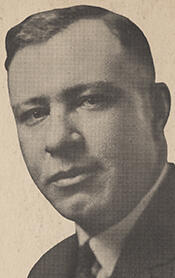
Here you will find contact information for Representative Noble Jacob Johnson, including email address, phone number, and mailing address.
| Name | Noble Jacob Johnson |
| Position | Representative |
| State | Indiana |
| District | 6 |
| Party | Republican |
| Status | Former Representative |
| Term Start | December 7, 1925 |
| Term End | January 3, 1949 |
| Terms Served | 8 |
| Born | August 23, 1887 |
| Gender | Male |
| Bioguide ID | J000165 |
About Representative Noble Jacob Johnson
Noble Jacob Johnson (August 23, 1887 – March 17, 1968) was a United States Representative from Indiana and later an Associate Judge and Chief Judge of the United States Court of Customs and Patent Appeals. A member of the Republican Party, he served in the United States Congress from 1925 to 1949, contributing to the legislative process during eight terms in office and representing his Indiana constituents during a period of significant political, economic, and social change in American history.
Johnson was born in Terre Haute, Vigo County, Indiana, on August 23, 1887. He attended the public schools of Terre Haute, receiving his early education in the local system. Rather than attending a formal law school, he read law, a common method of legal training at the time, and was admitted to the bar in 1911. Following his admission, he commenced the private practice of law in Terre Haute in 1911, beginning a legal career that would lead to both prosecutorial and legislative service.
From 1911 to 1917, Johnson engaged in private practice in Terre Haute before entering public service as a prosecutor. He was appointed deputy prosecuting attorney for the Forty-third Judicial Circuit of Indiana in 1917, serving in that capacity through 1918. After several years in local legal practice, he advanced to the office of prosecuting attorney for the same judicial circuit, holding that position from 1921 to 1924. His work as a prosecutor established his reputation in Indiana legal and political circles and provided a platform for his entry into national politics.
Johnson was elected as a Republican to the Sixty-ninth, Seventieth, and Seventy-first Congresses, serving in the United States House of Representatives from March 4, 1925, to March 3, 1931. During these early terms, he participated in the legislative deliberations of the late 1920s, representing the interests of his Indiana constituents in the House of Representatives. He was an unsuccessful candidate for reelection in 1930 to the Seventy-second Congress, and again an unsuccessful candidate for election in 1936 to the Seventy-fifth Congress. Nonetheless, he returned to Congress when he was elected to the Seventy-sixth Congress and to the four succeeding Congresses, serving from January 3, 1939, until his resignation on July 1, 1948. In total, Noble Jacob Johnson served eight terms in the House, and his congressional career spanned the interwar period, the Great Depression, World War II, and the early postwar years, during which he took part in the democratic process and national policymaking.
Johnson’s long tenure in Congress concluded when he resigned in 1948 to accept a federal judicial appointment. On May 28, 1948, President Harry S. Truman nominated him to a seat on the United States Court of Customs and Patent Appeals, filling the vacancy created by the departure of Judge Oscar E. Bland. The United States Senate confirmed his nomination on June 8, 1948, and he received his commission on June 10, 1948. His service as an Associate Judge on that court continued until July 19, 1956, when he was elevated to the position of Chief Judge of the same tribunal.
Johnson’s elevation to Chief Judge of the United States Court of Customs and Patent Appeals came through a new nomination by President Dwight D. Eisenhower on May 17, 1956, to the seat vacated by Judge Finis J. Garrett. He was confirmed by the Senate on July 19, 1956, and received his commission the same day. He served as Chief Judge and later assumed senior status on August 7, 1958. Johnson had initially been appointed when the court functioned under Article I of the Constitution, but on August 25, 1958, the court was raised to Article III status by operation of law, and from that date he served as an Article III judge. His judicial service, including his time as Chief Judge and then as a senior judge, continued until his death on March 17, 1968.
In his later years, Johnson resided in Washington, D.C., where he had lived since his judicial appointment and where he continued his work on the federal bench. He died in Washington on March 17, 1968, while still in senior judicial status on the United States Court of Customs and Patent Appeals. He was interred in Bethesda Cemetery in West Terre Haute, Indiana, returning in death to the community and state where his legal and political career had begun.