Representative Norman Rond Hamilton
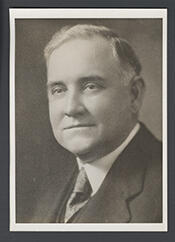
Here you will find contact information for Representative Norman Rond Hamilton, including email address, phone number, and mailing address.
| Name | Norman Rond Hamilton |
| Position | Representative |
| State | Virginia |
| District | 2 |
| Party | Democratic |
| Status | Former Representative |
| Term Start | January 5, 1937 |
| Term End | January 3, 1939 |
| Terms Served | 1 |
| Born | November 13, 1877 |
| Gender | Male |
| Bioguide ID | H000116 |
About Representative Norman Rond Hamilton
Norman Rond Hamilton (November 13, 1877 – March 26, 1964) was an American businessman, newspaper executive, and Democratic politician who served one term as a U.S. Representative from Virginia from 1937 to 1939. Born in Portsmouth, Virginia, he was educated in the city’s public and high schools, an upbringing that rooted him in the Tidewater region he would later represent in Congress and serve in various civic and political capacities.
After completing his schooling, Hamilton entered the field of journalism and publishing. He began his career as a newspaper reporter in nearby Norfolk, working in that capacity from 1895 to 1914. His long tenure as a reporter gave him an intimate knowledge of local affairs and the concerns of citizens in southeastern Virginia. In 1917 he became publisher of the Portsmouth (Virginia) Star, a position he held for decades. Under his leadership, the paper remained a prominent voice in the region until it merged with the Norfolk Ledger in 1955. He later served as an executive of the Norfolk-Portsmouth Newspapers, Inc., reflecting his continued influence in the regional press.
Hamilton’s prominence in business and journalism led naturally to increasing involvement in Democratic Party politics and public service. During the administration of President Woodrow Wilson, he was appointed collector of customs for Virginia, serving from 1914 until 1922. Before the United States entered World War I, he also acted as the port’s neutrality enforcement officer, overseeing compliance with U.S. neutrality laws in the busy harbor of Hampton Roads. During the war itself, he served as chairman of the Port War Board of Hampton Roads from 1916 to 1918, coordinating port activities critical to the national war effort. Beyond his federal responsibilities, Hamilton contributed to education in Virginia as a trustee of Virginia State Teachers’ College from 1922 to 1926.
Hamilton remained an active figure in Democratic Party affairs at the state and national levels over several decades. He was chosen as a delegate to the Democratic National Conventions in 1924, 1928, 1932, 1952, and 1960, participating in the nomination of presidential candidates and the shaping of party platforms across a broad span of twentieth-century political history. During the administration of President Franklin D. Roosevelt, in 1933 he was appointed receiver in Washington, D.C., for five insolvent banks in the District of Columbia. He held this position during the early New Deal banking reforms and resigned in June 1936 in order to seek election to Congress.
Hamilton’s congressional career began with a significant intra-party contest. In 1936 he challenged and defeated incumbent Representative Colgate Darden, a loyalist of the powerful Byrd Organization, in the Democratic primary. He then won election in the general contest, defeating Republican Gerould M. Rumble and Communist candidate Alexander Wright with 88.68 percent of the vote. Taking his seat as a Democrat in the Seventy-fifth Congress, he served from January 3, 1937, to January 3, 1939. During this single term, he participated in the legislative process at a time when the federal government was deeply engaged in New Deal reforms and responses to the lingering effects of the Great Depression, representing the interests of his Virginia constituents in the U.S. House of Representatives.
Despite his initial success, Hamilton’s tenure in Congress was brief. In 1938, Colgate Darden defeated his bid for renomination in the Democratic primary, effectively ending his immediate congressional career. Hamilton later sought a return to the House in 1941, running in a special election to fill a vacancy in the Seventy-seventh Congress, but he was unsuccessful. After leaving Congress, he continued his work in the newspaper business and remained a respected figure in the civic and political life of southeastern Virginia.
Norman Rond Hamilton spent his later years in Norfolk and the surrounding Tidewater area, maintaining the local ties that had defined both his journalistic and political careers. He died in Norfolk, Virginia, on March 26, 1964. He was interred in Oak Grove Cemetery in his native Portsmouth, Virginia, closing a life marked by service in journalism, public administration, party politics, and a term in the United States Congress.