Representative Néstor Montoya
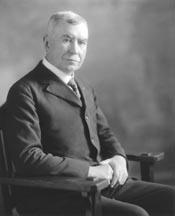
Here you will find contact information for Representative Néstor Montoya, including email address, phone number, and mailing address.
| Name | Néstor Montoya |
| Position | Representative |
| State | New Mexico |
| District | 1 |
| Party | Republican |
| Status | Former Representative |
| Term Start | April 11, 1921 |
| Term End | March 3, 1923 |
| Terms Served | 1 |
| Born | April 14, 1862 |
| Gender | Male |
| Bioguide ID | M000877 |
About Representative Néstor Montoya
Néstor Montoya (April 14, 1862 – January 13, 1923) was a United States Representative from New Mexico and a prominent Hispanic editor and politician who dedicated himself to the inclusion of Hispanics in the political and social life of New Mexico and to the campaign for New Mexico statehood. He was born in Albuquerque, New Mexico, to Teodosio and Encarnación (Cervantes) Montoya. Raised in what was then the New Mexico Territory, he attended local public schools before pursuing further education. In 1881, he graduated from St. Michael’s College in Santa Fe, New Mexico, an institution that played a central role in educating many territorial leaders of his generation.
Following his graduation, Montoya entered federal service in Santa Fe. He worked as a postal clerk for the United States Post Office and later held a position in the United States Treasury Office there. These early appointments acquainted him with federal administration and the workings of government in the territory. In 1889, he turned to journalism, beginning newspaper work that would become a central vehicle for his political advocacy. He owned and edited the Spanish-language newspaper La Bandera Americana, which he used to promote civic participation, defend the rights of Hispanic residents, and advocate for New Mexico’s admission to the Union.
Montoya’s political career developed alongside his work in the press. A member of the Republican Party, he was elected to the New Mexico Territorial House of Representatives, serving from 1892 to 1903. In his final year in that body he was chosen as speaker, underscoring his influence in territorial politics. He subsequently served in the New Mexico Territorial Senate in 1905 and 1906. Beyond elective office, he was active in professional and civic organizations, serving as president of the New Mexico Press Association from 1908 to 1923, a role that reflected his standing among journalists and his continued commitment to shaping public opinion.
Montoya played a significant role in the transition of New Mexico from territory to statehood. In 1910, he was a delegate to the convention that drafted and adopted the Constitution of the State of New Mexico. At the convention he helped write provisions into the new constitution designed to protect the rights of Hispanics in education, voting, and civil liberties, ensuring that Spanish-speaking citizens would have legal safeguards in the new state framework. He also contributed to the development of higher education in the state as a regent of the University of New Mexico from 1916 to 1919, helping guide the institution during its early years.
During the First World War, Montoya’s public service extended to national defense and local administration. He served as a member of the Council of National Defense from 1917 to 1919, participating in efforts to mobilize resources and support for the war. At the county level, he was chairman of the Bernalillo County draft board during the war, overseeing conscription matters, and later served as clerk of Bernalillo County in 1919 and 1920. These positions further strengthened his reputation as a capable administrator and community leader.
Montoya’s long record of territorial and state service culminated in his election to the United States House of Representatives. He was elected as a Republican to the Sixty-seventh Congress and served as a Representative from New Mexico from March 4, 1921, until his death on January 13, 1923. His single term in Congress occurred during a significant period in American history, following World War I and during the early years of New Mexico’s statehood. As a member of the House of Representatives, he participated in the democratic process, represented the interests of his constituents, and contributed to the legislative process. In Congress he served on the Committee on Indian Affairs and the Committee on Public Lands, assignments that were particularly relevant to New Mexico’s large Native American population and its extensive federal land holdings.
Although he was an active member of the House, the Republican Party did not renominate Montoya for a second term, instead choosing Adelina Otero-Warren as the party’s candidate for the subsequent election. His career in national office was thus limited to one term, but it capped decades of involvement in public life, journalism, and advocacy for Hispanic participation in government. Throughout his career, Montoya remained a central figure in efforts to integrate Hispanic New Mexicans fully into the political and social institutions of the state and nation.
Néstor Montoya died in office in Washington, D.C., on January 13, 1923, at the age of 60. He died suddenly at his home in Washington while preparing to go to work after an absence of two days due to illness; he was shaving when he suffered a stroke and collapsed. His death brought an abrupt end to his congressional service and his long record of public engagement. He was buried in Santa Barbara Cemetery in Albuquerque, New Mexico, returning to the city of his birth and to the community whose interests he had championed throughout his life.