Senator Obadiah Gardner
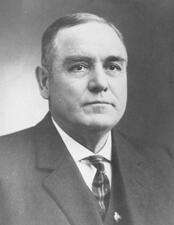
Here you will find contact information for Senator Obadiah Gardner, including email address, phone number, and mailing address.
| Name | Obadiah Gardner |
| Position | Senator |
| State | Maine |
| Party | Democratic |
| Status | Former Representative |
| Term Start | April 4, 1911 |
| Term End | March 3, 1913 |
| Terms Served | 1 |
| Born | September 13, 1852 |
| Gender | Male |
| Bioguide ID | G000060 |
About Senator Obadiah Gardner
Obadiah Gardner (September 13, 1852 – July 24, 1938) was an American politician and businessman from the state of Maine who served as a United States Senator from 1911 to 1913. A member of the Democratic Party, he was active in agriculture, state public service, and international boundary affairs over a long career in public life before and after his single term in the Senate.
Gardner was born near Port Huron, Michigan, on September 13, 1852. In 1864, at the age of twelve, he moved with his parents to Union, Maine, where he attended the local public schools. Seeking further education in business and the liberal arts, he studied at Eastman Business College in Poughkeepsie, New York, and later at the Coburn Classical Institute in Waterville, Maine. These studies prepared him for a career that combined commercial enterprise with agricultural and civic leadership.
After completing his education, Gardner engaged extensively in agricultural and related business pursuits. He became involved in the agriculture business in Maine, including ventures in lumber, lime, and creameries in Rockland, as well as cattle raising elsewhere in the state. His prominence in agricultural circles led to his service on the Maine Board of Agriculture, where he helped shape state policy affecting farmers and rural communities. From 1897 to 1907 he served as master of the Maine State Grange, a leading agricultural organization, giving him a statewide platform as an advocate for agrarian interests and rural economic development.
Gardner’s growing public profile and leadership in agricultural affairs drew him into partisan politics as a Democrat in a state then dominated by Republicans. In 1908 he was the Democratic candidate for governor of Maine, but he was unsuccessful, losing to the Republican nominee, Bert M. Fernald. Despite this defeat, he remained an influential figure in state affairs. In 1911 he was appointed chairman of the Maine Board of State Assessors, a position he accepted but soon resigned when called to higher office in the federal government.
Gardner entered the United States Senate in 1911 during a significant period in American history, marked by the Progressive Era’s political and social reforms. He was appointed, and subsequently elected by the state legislature, to fill the vacancy caused by the death of Senator William P. Frye. Gardner took his seat as a Senator from Maine on September 23, 1911, and served until March 3, 1913. A member of the Democratic Party, he contributed to the legislative process during his one term in office, participating in the democratic process and representing the interests of his Maine constituents. During his tenure, he served alongside fellow Democrat Charles Fletcher Johnson, and their concurrent service marked the first time since 1853 that two Democrats represented Maine in the United States Senate. Gardner was unsuccessful in his bid for re-election in 1913, which ended his brief but historically notable Senate career.
Following his departure from Congress, Gardner continued in public service at the international level. He was appointed a member of the International Joint Commission, an organization created by the United States and Canada to prevent and resolve disputes over shared boundary waters. In this role he worked on issues involving the management and use of transboundary rivers and lakes. Gardner later became chairman of the American delegation to the Commission, a position he held until his retirement from that body in 1923, thereby extending his influence beyond state and national politics into international resource and boundary management.
In his later years, Gardner returned to Rockland, Maine, where he had long maintained business and personal ties, and subsequently moved to Augusta, the state capital. He died in Augusta on July 24, 1938. Obadiah Gardner was interred in Achorn Cemetery in Rockland, Maine, closing a life that spanned from the Civil War era through the early twentieth century and encompassed business enterprise, state agricultural leadership, a term in the United States Senate, and service on a major international commission.