Senator Octaviano Ambrosio Larrazolo
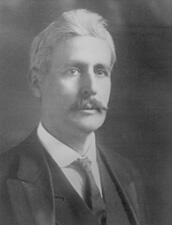
Here you will find contact information for Senator Octaviano Ambrosio Larrazolo, including email address, phone number, and mailing address.
| Name | Octaviano Ambrosio Larrazolo |
| Position | Senator |
| State | New Mexico |
| Party | Republican |
| Status | Former Representative |
| Term Start | December 7, 1928 |
| Term End | March 3, 1929 |
| Terms Served | 1 |
| Born | December 7, 1859 |
| Gender | Male |
| Bioguide ID | L000101 |
About Senator Octaviano Ambrosio Larrazolo
Octaviano Ambrosio Larrazolo Corral (December 7, 1859 – April 7, 1930) was a Mexican-born American lawyer and politician who served as the fourth governor of New Mexico and as a United States senator from New Mexico, becoming the first Hispanic American and first Mexican American to hold a seat in the U.S. Senate. A member of the Republican Party for the latter part of his career, he was a prominent advocate for the civil and political rights of Hispanics in the Southwest and played a significant role in shaping the constitutional framework under which New Mexico entered the Union.
Larrazolo was born in Valle de Allende, in the state of Chihuahua, Mexico, on December 7, 1859, to Don Octaviano Larrazolo, a wealthy landowner, and Doña Donaciana Corral de Larrazolo. Raised in a prosperous household, he learned to read and write at home and briefly attended school in his town, but left formal schooling after being beaten by a teacher. His early years were marked by political upheaval; in 1863, during the French intervention in Mexico, French soldiers ransacked the family home because the Larrazolos supported President Benito Juárez’s resistance to the French-backed regime. The family’s fortunes declined, and by the time he reached adolescence, they had fallen into bankruptcy.
In 1870, at the age of eleven, Larrazolo left Mexico for the United States, traveling to Tucson in the Arizona Territory under the care of Jean Baptiste Salpointe, a French-born Catholic bishop of Arizona. He initially intended to study theology and prepare for the priesthood, both as a vocation and as a means to continue his education despite his family’s financial difficulties. After completing his primary studies under Salpointe’s supervision, he enrolled at St. Michael’s College in Santa Fe, in the New Mexico Territory, where he studied theology and related subjects. He graduated from St. Michael’s in 1876 at the age of eighteen. Although he seriously considered entering the priesthood upon graduation, he instead accepted a position as a schoolteacher, beginning a career in education that took him to various communities, including El Paso County, Texas.
While teaching during the day, Larrazolo began studying law at night, laying the foundation for the legal and political career that would define his public life. On December 11, 1884, he became a naturalized citizen of the United States in order to qualify for admission to the bar and to participate fully in American civic life. That same year, he registered with the Texas branch of the Republican Party, reflecting his early alignment with the party of Abraham Lincoln and Reconstruction. He was admitted to the Texas bar in 1888 and soon established himself as a capable attorney. In 1890 he was elected district attorney for the Western District of Texas and was reelected in 1892, serving in that prosecutorial post until 1894.
In 1895, Larrazolo moved to Las Vegas in the New Mexico Territory, where he continued to practice law and became deeply involved in territorial politics. In contrast to his earlier affiliation in Texas, he aligned himself with the Democratic Party in New Mexico, focusing his efforts on civil rights and political representation for Mexicans and Hispanos, who then constituted roughly two-thirds of the territory’s population. He emerged as a forceful critic of political arrangements that, in his view, marginalized Spanish-speaking citizens. Despite his growing reputation, he struggled to translate his popularity into electoral success; he narrowly lost campaigns for Territorial Delegate to the U.S. Congress in 1900, 1906, and 1908. The 1908 contest was especially close and was marred by credible allegations of electoral fraud.
By 1910, Larrazolo had become an outspoken opponent of what he regarded as machine politics in New Mexico, warning that the territory risked replicating the racial disenfranchisement then entrenched in the American South under Jim Crow laws. In speeches to Hispanic audiences, he urged them to resist political bosses and to insist on constitutional protections for their rights. When New Mexico convened a constitutional convention in 1911 in preparation for statehood, Larrazolo was chosen as one of the Hispanic delegates. At the Democratic state convention he unsuccessfully demanded that half of all statewide nominees be Hispanic, arguing that they should reflect the approximately 60 percent of New Mexico’s population that was of Hispanic descent. Despite this rebuff, he played a central role in securing provisions in the new state constitution that protected the rights of Spanish-speaking and Hispanic-descendant residents. The Bill of Rights included language preserving “inviolate” the civil, political, and religious rights guaranteed to New Mexicans by the Treaty of Guadalupe Hidalgo, and the Education Article authorized training teachers to be proficient in both English and Spanish to better serve Spanish-speaking pupils, while prohibiting separate schools that would segregate children of Spanish descent. Opposition to these protections from some state Democrats contributed to Larrazolo’s eventual break with the party; he rejoined the Republican Party and remained a Republican for the rest of his life.
Larrazolo’s advocacy for Hispanic rights and his growing stature among voters, particularly Spanish-speaking citizens, led the New Mexico Republican Party to nominate him for governor in 1918. The campaign was contentious and exposed divisions within the Hispanic community. His Democratic opponent, Félix García, argued that Larrazolo, having been born in Chihuahua, could not fully understand the concerns of “native New Mexicans.” Nevertheless, Larrazolo won the election and became the fourth governor of New Mexico and the first native-born Mexican to serve as governor of the state. His narrow victory largely quieted questions about his ability to represent the broader Hispanic population. As governor, he confronted labor unrest and national anxieties about radicalism in the aftermath of World War I. During a serious coal-mining strike, he declared martial law to suppress the strike, a decision that drew criticism from labor advocates and civil libertarians. He also faced controversy for pardoning Mexican troops who had participated in raids into New Mexico under the command of revolutionary leader Pancho Villa, arguing that they had acted under military orders and should not be held personally responsible. His support for a state income tax law angered many in his own Republican Party, which traditionally opposed such measures. At the same time, he earned praise for backing the creation of the League of Nations, for championing bilingual education, for defending the civil rights of Mexican immigrants in New Mexico, and for supporting the women’s suffrage amendment to the United States Constitution.
Larrazolo’s independent course as governor, including his willingness to challenge party orthodoxy, led to friction with Republican leaders, and the party declined to renominate him for a second term. After leaving the governorship, he briefly returned to private legal practice in El Paso County, Texas, where he opened a law firm in El Paso with Nick Meyer and handled cases in both New Mexico and Mexico. In 1922 he expanded his practice by opening an office in Albuquerque, New Mexico. He did not remain long out of public life. In 1923, the New Mexico legislature put his name forward for appointment as governor of Puerto Rico, though he was not selected. The attention generated by this consideration helped revive his political prospects in New Mexico. He ran unsuccessfully for a seat on the New Mexico Supreme Court in 1924 but remained a respected figure within the state’s Republican ranks. In 1927 he was elected to the New Mexico House of Representatives, returning to legislative service and continuing his advocacy for Hispanic constituents.
Larrazolo’s service in the United States Congress came at a significant period in American history, marked by postwar adjustment, debates over immigration and civil rights, and shifting party coalitions. In 1927, Democratic U.S. Senator Andrieus A. Jones of New Mexico died in office, creating a vacancy. Larrazolo sought the unexpired term and, running as a Republican, won the special election on November 6, 1928. He thus entered the United States Senate as a senator from New Mexico and served from 1928 to 1929, completing Jones’s remaining term in the 70th Congress. His election made him the first Hispanic American and first Mexican American to serve in the U.S. Senate, and one of the few senators in U.S. history to have been born outside the United States. Elderly and in poor health by the time he took office, he was able to attend only one session of Congress. During his brief tenure, he introduced a legislative measure calling for the establishment of an industrial school in New Mexico for Spanish-speaking youth, intended to promote equal educational and economic opportunity. Although his time in the Senate was short and limited by illness, he participated in the legislative process and represented the interests of his New Mexico constituents as a member of the Republican Party during his single term in office.
Having been ill throughout his Senate service, Larrazolo did not seek a full term. He left the Senate when the 70th Congress adjourned and returned to New Mexico. His health continued to decline, and he died on April 7, 1930. Remembered as a pioneering Hispanic officeholder and a steadfast advocate for the rights of Spanish-speaking Americans, Octaviano Ambrosio Larrazolo left a legacy in New Mexico’s constitutional protections, its early state governance, and in the history of Hispanic and Latino representation in the United States Congress.