Representative Ole Juulson Kvale
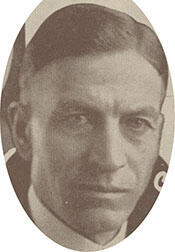
Here you will find contact information for Representative Ole Juulson Kvale, including email address, phone number, and mailing address.
| Name | Ole Juulson Kvale |
| Position | Representative |
| State | Minnesota |
| District | 7 |
| Party | Farmer-Labor |
| Status | Former Representative |
| Term Start | December 3, 1923 |
| Term End | March 3, 1931 |
| Terms Served | 4 |
| Born | February 6, 1869 |
| Gender | Male |
| Bioguide ID | K000349 |
About Representative Ole Juulson Kvale
Ole Juulson Kvale (February 6, 1869 – September 11, 1929) was a Lutheran minister and U.S. Representative from Minnesota who served in the United States Congress from 1923 to 1931 as a member of the Farmer-Labor Party. His congressional career, spanning four terms in office, took place during a significant period in American history, and he participated actively in the legislative and democratic processes while representing the interests of his rural and agrarian constituents.
Kvale was born on February 6, 1869, near Decorah, Winneshiek County, Iowa. He was one of six children born to Jule Qvale (1836–1918) and Gro Qvale (1833–1910), both immigrants from Norway. The family name derived from the Kvåle farm in Vestre Slidre Municipality in the Valdres valley district of Norway, reflecting his strong Norwegian-American heritage. He attended rural schools in Winneshiek County, receiving an education typical of Midwestern farm communities of the late nineteenth century, which laid the foundation for his later academic and theological pursuits.
Kvale pursued higher education at several institutions closely associated with the Norwegian-American Lutheran community. He graduated from Luther College in Decorah, Iowa, in 1890. He then studied theology at Luther Theological Seminary in Minneapolis, Minnesota, from which he graduated in 1893. Demonstrating a continued commitment to scholarship and intellectual development, he later undertook further study at the University of Chicago, earning a degree there in 1914. This combination of liberal arts and theological training prepared him for a long career in the Lutheran ministry and later for public service.
Ordained to the Lutheran ministry in 1894, Kvale began his pastoral career that same year in Orfordville, Wisconsin. He served Lutheran congregations in Orfordville from 1894 to 1917, ministering to immigrant and rural communities and becoming a respected religious leader. After more than two decades in Wisconsin, he moved to Minnesota, where he served a parish in Benson, Swift County. In 1917, he assumed a broader leadership role within the church when he became secretary of the Norwegian Synod, a major Lutheran church body among Norwegian Americans. His work as a pastor and church official placed him at the center of community life in the Upper Midwest and gave him extensive experience in addressing the social and economic concerns of his parishioners.
Kvale’s transition from the pulpit to politics reflected his deep engagement with the issues facing farmers and working people in the early twentieth century. He first sought national office as an Independent Republican candidate for election to the 67th Congress in 1920 but was unsuccessful. Undeterred, he aligned himself with the emerging Farmer-Labor movement, which sought to represent the interests of farmers, laborers, and small producers against larger corporate and financial interests. Running as a Farmer-Labor candidate, he was elected to the 68th Congress and subsequently re-elected to the 69th, 70th, and 71st Congresses. He served in the U.S. House of Representatives from March 4, 1923, until his death in 1929. During these four terms, he contributed to the legislative process and participated in debates and policymaking at a time marked by post–World War I adjustment, agricultural distress, and growing political realignment in the Upper Midwest. As a member of the House, he represented Minnesota’s constituents within the Farmer-Labor framework, advocating for their economic and social concerns.
In his personal life, Kvale married Ida Tonette (Simley) Kvale (1876–1926). The couple had six children, among them Paul John Kvale, who would later follow his father into public service as a United States Representative. The family’s life in Minnesota and Wisconsin reflected the broader experience of Norwegian-American communities, in which church, education, and civic engagement were closely intertwined. His household thus became both a center of religious leadership and a seedbed for continued political involvement.
Ole Juulson Kvale’s congressional service ended abruptly with his death in office. On September 11, 1929, he died in a fire at his summer house near Otter Tail Lake, Minnesota. His passing placed him among the members of the United States Congress who died in office in the first half of the twentieth century. He was interred in Benson Cemetery in Swift County, Minnesota, the community where he had served as a pastor and from which he had risen to national office. His career as a Lutheran minister and Farmer-Labor congressman left a legacy rooted in faith, ethnic heritage, and advocacy for rural and working-class Americans.