Senator Olin DeWitt Talmadge Johnston
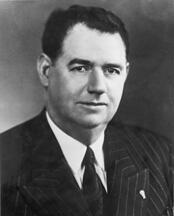
Here you will find contact information for Senator Olin DeWitt Talmadge Johnston, including email address, phone number, and mailing address.
| Name | Olin DeWitt Talmadge Johnston |
| Position | Senator |
| State | South Carolina |
| Party | Democratic |
| Status | Former Representative |
| Term Start | January 3, 1945 |
| Term End | December 31, 1965 |
| Terms Served | 4 |
| Born | November 18, 1896 |
| Gender | Male |
| Bioguide ID | J000195 |
About Senator Olin DeWitt Talmadge Johnston
Olin DeWitt Talmadge Johnston (November 9, 1896 – April 18, 1965) was an American politician from South Carolina who served as the state’s 98th governor and later as a United States senator. A member of the Democratic Party, he represented South Carolina in the United States Senate from January 3, 1945, until his death in 1965, completing four terms in office. His long career spanned the New Deal, World War II, the early Cold War, and the civil rights era, and he became known both for his advocacy of labor and social welfare measures and for his staunch opposition to federal civil rights legislation. He is also infamously remembered for denying clemency in the 1944 case of George Stinney, a 14-year-old African American boy later found to have been wrongfully convicted and executed.
Johnston was born near Honea Path in Anderson County, South Carolina, where his family maintained a farm and worked in the Chiquola Manufacturing Company’s textile mill. His youth was divided between schooling, farm work, and mill labor, and he could attend school only when the family was on the farm, usually during the summer months. Seeking greater educational opportunity, he enrolled in the Textile Industrial Institute (now Spartanburg Methodist College) in Spartanburg, where he completed his high school diploma in thirteen months, graduating in 1915. That fall he entered Wofford College, working his way through school by holding a variety of jobs, but his studies were interrupted by the United States’ entry into World War I.
In 1917 Johnston enlisted in the Army National Guard and served with the 117th Engineer unit, attached to the 42nd “Rainbow” Division in France. He spent eighteen months overseas and attained the rank of sergeant before being discharged in June 1919. He then returned to Wofford College and received his bachelor’s degree in 1921. In the fall of that year he entered the University of South Carolina, where he earned an M.A. in political science in 1923 and an LL.B. in 1924. That same year he established the law firm of Faucette and Johnston in Spartanburg and, in December 1924, married Gladys Atkinson of Spartanburg, who remained his closest political confidante and counselor throughout his career.
Johnston entered public life while still a student. In 1922 he was elected as a Democrat to the South Carolina House of Representatives from Anderson County, serving one term before stepping down in 1924 to concentrate on his law practice. He returned to the House in 1927 as a representative from Spartanburg County and served two additional terms. As a young legislator, he emerged as an advocate for the state’s textile mill workers, and one of his principal early achievements was helping to secure passage of a law requiring mill owners to install sewers in mill villages, improving sanitary conditions for workers and their families. Johnston quickly gained a reputation as a capable and popular campaigner whose political base rested heavily on working-class support.
Johnston first sought the governorship in 1930. He led the field in the Democratic primary but narrowly lost the runoff by about 1,000 votes. Undeterred, he ran again and was elected governor in 1934, serving from 1935 to 1939. In his 1935 inaugural address he declared, “This occasion marks the end of what is commonly known as ‘ring rule’ in South Carolina,” signaling a challenge to entrenched political interests. An ardent supporter of President Franklin D. Roosevelt’s New Deal, Johnston pursued an ambitious reform program. His administration repealed the state’s personal property tax, initiated what is often cited as the nation’s first rural electrification program—a pilot project personally authorized by President Roosevelt—introduced a $3.00 automobile license plate, and created the Industrial Commission, the Labor Department, the Planning and Development Board, and the Ports Authority. He also championed legislation to aid textile workers, although many of his proposals met resistance in the Lowcountry-dominated state senate. In 1935 he secured passage of the Alcoholic Beverage Control Law to regulate alcohol sales after the end of national Prohibition, and in 1937 he signed the South Carolina Public Welfare Act, establishing a state system for social security, workers’ compensation, and unemployment compensation. In labor disputes, where earlier governors had used the National Guard to crush strikes, Johnston deployed the Guard and martial law to protect strikers, seal off mill precincts from strikebreakers, and sometimes forced mill management to accept him as mediator, even finding state jobs for strikers whom mills refused to rehire.
Johnston’s reformist zeal brought him into a celebrated confrontation with the powerful State Highway Commission. After attempting to dismiss several commissioners and facing their refusal to vacate their posts, he ordered the National Guard to occupy the Highway Department offices. The ensuing struggle, one of the most famous clashes between a governor and a legislature in South Carolina history, ended in defeat for Johnston; he lost the power to appoint highway commissioners, a prerogative that the governor’s office never regained. Barred by law from succeeding himself in 1938, Johnston sought to extend his New Deal agenda to the national level by challenging U.S. Senator Ellison D. “Cotton Ed” Smith, an outspoken opponent of Roosevelt’s policies. The contest drew national attention, as Smith was among the senators targeted in Roosevelt’s unsuccessful 1938 “purge” of conservative Democrats. Johnston, a strong New Dealer, lost the race, and many observers believed he might have prevailed had Roosevelt not intervened on Smith’s behalf or had Johnston more actively courted the state’s influential textile mill owners or taken a more explicit stand in favor of preserving racial segregation. Although Johnston did not advocate for African American civil rights, he generally downplayed segregation as an issue, emphasizing instead public welfare and labor reform. Smith, by contrast, had long campaigned on a two-plank platform to “keep the Negro down and the price of cotton up” and had dramatized his commitment to segregation by walking out of the 1936 Democratic National Convention when a Black minister was scheduled to give the invocation.
Johnston further alienated segments of South Carolina’s business community when he supported Roosevelt’s push for additional labor reforms, including the Fair Labor Standards Act of 1938. James F. Byrnes, South Carolina’s other U.S. senator and himself a prominent New Dealer, opposed the measure on grounds that it would render the state’s textile mills uncompetitive. Byrnes, who had been re-elected in 1936 with more than 87 percent of the vote, declined to endorse Johnston and instead backed Smith’s re-election. After losing the 1938 Senate race, Johnston again sought a Senate seat in a 1941 special election to replace Byrnes, who had been appointed to the U.S. Supreme Court, but he was defeated by Governor Burnet R. Maybank. Johnston returned to state politics and, in 1942, won a narrow victory in the Democratic primary for governor, then ran unopposed in the general election, securing a second, nonconsecutive term that lasted from 1943 until his resignation on January 3, 1945. With the onset of World War II, labor issues receded in prominence during his second term, and Johnston focused more on preserving racial segregation. In response to the U.S. Supreme Court’s decision in Smith v. Allwright (1944), which declared racially segregated primaries unconstitutional, he signed laws designed to allow political parties in South Carolina to operate as private organizations beyond the reach of federal court rulings on segregation.
During his second governorship Johnston became directly involved in one of the most controversial criminal cases in South Carolina history. In 1944, George Stinney, a 14-year-old African American boy from Alcolu, South Carolina, was convicted after a one-day trial of murdering two white girls, 11-year-old Betty June Binnicker and 8-year-old Mary Emma Thames, and was sentenced to death in the electric chair. Appeals for clemency reached Governor Johnston, who denied them. In a written response to one appeal, he asserted that Stinney had killed the smaller girl to rape the larger one, then killed the larger girl and raped her body, returning twenty minutes later to attempt another rape, claims he said Stinney had admitted. These statements were later reported to have been based on rumor and were contradicted by contemporaneous medical examination reports. Stinney was executed in 1944, and in 2014, seventy years later, his conviction was posthumously overturned, with the case widely recognized as a grave miscarriage of justice and wrongful execution. Johnston’s role in denying clemency has become a lasting and infamous aspect of his legacy.
Johnston finally achieved his long-sought seat in the United States Senate in the 1944 election, defeating “Cotton Ed” Smith in a rematch of their 1938 contest. He resigned the governorship on January 3, 1945, the day he was sworn into the Senate. He was re-elected three times and served continuously until his death in 1965, representing South Carolina during a significant period in American history. In the Senate, Johnston served on the Committees on Agriculture and Forestry, the District of Columbia, the Judiciary, and the Post Office and Civil Service. In 1950 he became chairman of the Post Office and Civil Service Committee, earning the nickname “Mr. Civil Service” for his leadership and his attention to the needs and interests of postal and other federal employees. He was a member of the conservative Southern Democratic coalition on many issues, particularly those involving race and federal authority, yet he retained a populist orientation on economic policy.
As a senator, Johnston was a strong advocate of public power projects, parity programs for farmers, an expansive and robust Social Security system, and federal provision of lunches for needy schoolchildren. He generally opposed foreign aid, which he viewed as favoring foreign interests at the expense of American industry and consumers. Unlike most Southern Democrats, he opposed the anti-union Taft–Hartley Act in 1947, reflecting his long-standing support for organized labor. In the 1960s he voted in favor of President Lyndon B. Johnson’s “war on poverty” initiatives in 1964 and supported the creation of Medicare shortly before his death in 1965. At the same time, like virtually all Deep South politicians of his era, he was firmly opposed to federal civil rights measures. He opposed all major civil rights legislation and in 1956 signed the Southern Manifesto, which denounced the Supreme Court’s decision in Brown v. Board of Education and resisted the desegregation of public schools. This combination of economic populism and racial conservatism characterized much of his Senate career.
Johnston was deeply entrenched in South Carolina politics and enjoyed enduring electoral strength. He is noted as possibly the only senator to have defeated two future U.S. senators in primary contests. In 1950 he turned back a challenge in the Democratic primary from Strom Thurmond, then a former governor and future long-serving senator. In 1962, while Johnston was seeking re-nomination, Governor Ernest F. “Fritz” Hollings attacked him as “the tool of the Northern labor bosses,” but Johnston defeated Hollings by a two-to-one margin. In the ensuing general election he overcame the state’s first serious Republican Senate challenger in many years, journalist W. D. Workman Jr. In each of these races Johnston occupied the more liberal position on economic and labor issues, even as he remained aligned with other Southern Democrats on segregation and civil rights. Throughout his two decades in the Senate, he participated actively in the legislative process and represented the interests of his South Carolina constituents during a period of profound national change.
Olin D. Johnston died in Columbia, South Carolina, on April 18, 1965, following a long battle with cancer; he also suffered from pneumonia at the time of his death. He thus became one of the members of Congress who died in office in the mid-twentieth century. In tributes following his passing, Senator George Aiken of Vermont observed that “during his entire career in the Senate, he worked for those who needed his help most and whom it would have been easy to ignore and neglect.” At the dedication of the Johnston Room at the South Caroliniana Library, Governor Robert McNair described him as “a working man, and those who made his public life possible were working people…. He was a man of conviction who arrived at a time when hard decisions had to be made.” Johnston was interred in the cemetery of Barkers Creek Baptist Church near Honea Path, where he had attended Sunday services in his boyhood. His political legacy extended into the next generation: his daughter, Elizabeth Johnston Patterson, served as a Democratic member of the U.S. House of Representatives from South Carolina’s 4th congressional district from 1987 to 1993. In the 1986 general election she defeated Greenville Mayor Bill Workman, the son of W. D. Workman Jr., whom her father had defeated in his final Senate race in 1962. Patterson later became the unsuccessful Democratic nominee for lieutenant governor of South Carolina in 1994.