Representative Oliver Payne Bolton
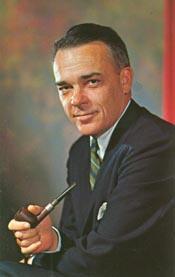
Here you will find contact information for Representative Oliver Payne Bolton, including email address, phone number, and mailing address.
| Name | Oliver Payne Bolton |
| Position | Representative |
| State | Ohio |
| District | 11 |
| Party | Republican |
| Status | Former Representative |
| Term Start | January 3, 1953 |
| Term End | January 3, 1965 |
| Terms Served | 3 |
| Born | February 22, 1917 |
| Gender | Male |
| Bioguide ID | B000608 |
About Representative Oliver Payne Bolton
Oliver Payne Bolton (February 22, 1917 – December 13, 1972) was an American lawyer, publisher, and Republican politician who represented Ohio in the United States House of Representatives from 1953 to 1957 and from 1963 to 1965. A member of a prominent political family, he was part of the first mother-and-son pair to serve simultaneously in Congress when he entered the House in 1953 alongside his mother, Representative Frances P. Bolton. His father, Chester C. Bolton, had also served in Congress, and his great-grandfather Henry B. Payne represented Ohio in both the House of Representatives and the United States Senate.
Bolton was born in Cleveland, Ohio, on February 22, 1917. He grew up in a family deeply involved in public service and Republican politics. His father, Chester Castle Bolton, represented Ohio’s 22nd congressional district in the U.S. House of Representatives from 1929 until his death in office in 1939. Following Chester Bolton’s death, Oliver’s mother, Frances Payne Bolton, won a special election in 1940 to succeed her husband and served in Congress until 1969. Through his great-grandfather Henry B. Payne, who served as both a U.S. Representative and U.S. Senator from Ohio in the nineteenth century, Bolton was heir to a long tradition of political engagement that shaped his early outlook and later career.
Bolton received his early education at Milton Academy in Milton, Massachusetts, from which he graduated in 1935. He went on to attend Harvard University, earning his degree in 1939. After military service, he pursued legal studies at Case Western Reserve University School of Law in Cleveland, graduating in 1947. That same year he was admitted to the bar and began the practice of law in Cleveland, establishing himself professionally in his home state before entering electoral politics.
Following his graduation from Harvard, Bolton joined the Ohio National Guard and served in the 170th Cavalry. After the United States entered World War II, he was called to active duty in the United States Army, serving through 1946. His military service included a year in the Pacific Theater of Operations with the V Amphibious Corps. After the war, he returned to Ohio, completed his legal education, and entered both law and political activity. He became chairman of the Ohio Young Republicans in 1948 and 1949 and served as the Young Republicans national committeeman from Ohio in 1950 and 1951, roles that increased his visibility within the state and national Republican Party. From 1952 to 1963 he was also active in the newspaper business, publishing the Lake County News-Herald in Ohio and the Dover Daily Reporter, thereby combining law, politics, and media in his early career.
Bolton’s entry into Congress followed a redistricting that reshaped his mother’s constituency. In 1952, congressional redistricting removed a portion of Frances Bolton’s district and allocated it to Ohio’s 11th congressional district. Oliver Bolton ran as a Republican for the newly configured district and won election to the 83rd Congress, taking office on January 3, 1953. His victory created a historic first: he and his mother served simultaneously in the House of Representatives, the first mother-and-son duo in congressional history. He was reelected to the 84th Congress and served two consecutive terms, participating in the legislative process during a significant period in American history marked by the early Cold War and domestic postwar adjustment. In 1956 he suffered a heart attack and declined to run for a third consecutive term. After leaving Congress in January 1957, he served briefly as director of commerce for the state of Ohio from February to August 1957, overseeing aspects of the state’s economic and commercial activities.
Bolton returned to elective politics in the early 1960s. In the 1962 midterm elections he ran again for the U.S. House of Representatives and defeated incumbent Democrat Robert E. Cook, regaining a seat in Congress and serving in the 88th Congress from 1963 to 1965. During this term he participated in major legislative debates of the era and voted in favor of the Civil Rights Act of 1964, supporting one of the landmark civil rights measures of the twentieth century. In 1964, instead of seeking reelection to his district seat, he chose to run for Ohio’s at-large House seat vacated by Robert Taft Jr., who was running for the U.S. Senate. The 1964 election occurred in the context of President Lyndon B. Johnson’s landslide victory over Senator Barry Goldwater, and in that Democratic wave Bolton lost the at-large race to Robert E. Sweeney, ending his congressional service in January 1965. Across his nonconsecutive three terms, from 1953 to 1957 and from 1963 to 1965, he represented Ohio as a Republican and contributed to the work of the House during a period of significant national and international change.
After his final departure from Congress, Bolton moved into the private sector. He joined the Cleveland-based investment banking firm Prescott, Merrill, Turben & Co., where he applied his legal, political, and economic experience to finance and business. He also remained involved in communications; among his later ventures was co-founding a radio station in Chardon, Ohio, which operated under the call letters WBKC and later became known as WATJ. These activities reflected his continuing engagement with public affairs and regional economic life even after his electoral career had concluded.
On October 4, 1940, Bolton married Adelaide Brownlee. The couple had three children, two sons and one daughter, and the family maintained close ties to Ohio and to the broader Bolton–Payne political lineage. His descendants continued to have international social connections; his granddaughter Beatrice Gratry married Count Aymeric de Rougé, owner of the Château de Baronville near Paris, France. Oliver Payne Bolton died of heart failure on December 13, 1972, in Palm Beach, Florida. He was buried in Lake View Cemetery in Cleveland, Ohio, a resting place for many of the city’s and the state’s leading figures, underscoring his place within a notable Ohio political family and his own record of public service.