Representative Oliver Walter Frey
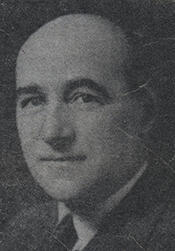
Here you will find contact information for Representative Oliver Walter Frey, including email address, phone number, and mailing address.
| Name | Oliver Walter Frey |
| Position | Representative |
| State | Pennsylvania |
| District | 9 |
| Party | Democratic |
| Status | Former Representative |
| Term Start | March 9, 1933 |
| Term End | January 3, 1939 |
| Terms Served | 3 |
| Born | September 7, 1887 |
| Gender | Male |
| Bioguide ID | F000382 |
About Representative Oliver Walter Frey
Oliver Walter Frey (September 7, 1887 – August 26, 1939) was an American lawyer, politician, and World War I veteran who served three terms as a Democratic member of the U.S. House of Representatives from Pennsylvania from 1933 to 1939. Over the course of his congressional tenure, he represented his constituents during a period of profound economic and political change in the United States and contributed to the legislative process as a member of the Democratic Party.
Born on September 7, 1887, Frey came of age in the late nineteenth and early twentieth centuries, a time marked by rapid industrialization and social transformation in the United States. Details of his early family life and upbringing are not extensively documented in the public record, but his later professional and military service indicate a background that prepared him for both legal practice and public office. His formative years led him toward higher education and ultimately to a career in the law.
Frey pursued legal studies and entered the legal profession as an attorney, establishing himself as an American lawyer before entering national politics. His training and work as a lawyer provided him with a grounding in statutory interpretation and public policy that would later inform his legislative activities. In addition to his legal career, he served in the United States military during World War I, joining the ranks of Americans who took part in the nation’s war effort. His status as a World War I veteran placed him among a generation of political leaders whose outlook was shaped by wartime service and the international issues of the early twentieth century.
Following his military service, Frey continued his legal and civic activities and became increasingly involved in Democratic Party politics in Pennsylvania. His professional background and public engagement positioned him to seek elective office at the federal level. By the early 1930s, amid the economic dislocation of the Great Depression, he emerged as a successful Democratic candidate for the U.S. House of Representatives, reflecting both his personal standing and the broader political realignment of the era.
Oliver Walter Frey served as a Representative from Pennsylvania in the United States Congress from 1933 to 1939. Elected as a Democrat, he took his seat in the House of Representatives at the outset of the New Deal period, when Congress was called upon to address the severe economic crisis facing the nation. During his three terms in office, he participated in the democratic process, contributed to the legislative work of the House, and represented the interests of his constituents in Pennsylvania. His service coincided with major federal initiatives in banking reform, economic recovery, labor relations, and social welfare, and he took part in the deliberations and votes that shaped federal policy during this transformative period.
As a member of the House of Representatives, Frey’s role included consideration of legislation, service on committees, and advocacy on behalf of the people of his district. A member of the Democratic Party, he supported the party’s national program while also attending to local concerns important to his Pennsylvania constituency. His congressional career, spanning from the 73rd through the 75th Congresses, placed him at the center of national debates over the scope of federal authority and the government’s responsibility in responding to economic hardship.
Oliver Walter Frey’s congressional service ended in 1939, concluding six years in the national legislature. He died shortly thereafter, on August 26, 1939, bringing to a close a public career that combined legal practice, military service in World War I, and three terms in the U.S. House of Representatives. His life and work reflected the experiences of many early twentieth-century American public officials who moved from the professions and wartime service into elective office during a period of significant national challenge and change.