Senator Oliver Hampton Smith
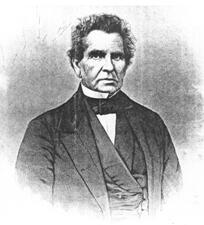
Here you will find contact information for Senator Oliver Hampton Smith, including email address, phone number, and mailing address.
| Name | Oliver Hampton Smith |
| Position | Senator |
| State | Indiana |
| Party | Whig |
| Status | Former Representative |
| Term Start | December 3, 1827 |
| Term End | March 3, 1843 |
| Terms Served | 2 |
| Born | October 23, 1794 |
| Gender | Male |
| Bioguide ID | S000599 |
About Senator Oliver Hampton Smith
Oliver Hampton Smith (October 23, 1794 – March 19, 1859) was a United States Representative and Senator from Indiana and a prominent Whig Party politician during a formative period in American political and legal history. He served in the United States Congress in both houses, including service as a Senator from Indiana from 1837 to 1843, and contributed to the legislative process during two terms in federal office.
Smith was born on Smith’s Island, near Trenton, New Jersey, though some sources state that he was born at the Smith Family Farmstead in Upper Makefield Township, Pennsylvania. He attended the common schools in his youth before moving west as a young man. In 1818 he settled in Lawrenceburg, Indiana, reflecting the broader westward migration of the early nineteenth century. Two years later, in 1820, he was admitted to the bar after studying law, and he commenced the practice of law in Connersville, Indiana, establishing himself as a capable attorney on the developing frontier.
Smith’s early public career began in state politics and legal service. From 1822 to 1824 he served as a member of the Indiana House of Representatives, participating in the legislative affairs of the young state. He was then appointed prosecuting attorney for the third judicial district, serving from 1824 to 1825. In this capacity he became known for his role as chief prosecutor in the trials of Andrew Sawyer, John Bridge Sr., and John Bridge Jr., three of the perpetrators of the Fall Creek massacre, a notable early Indiana case involving the murder of Native Americans and one of the first instances in which white men were executed under American law for crimes against Indigenous people.
Smith entered national politics as a member of the U.S. House of Representatives. He was elected to the Twentieth Congress as a representative from Indiana and served from March 4, 1827, to March 3, 1829. His tenure in the House placed him in the midst of the contentious politics of the late 1820s, as new party alignments were forming around Andrew Jackson and his opponents. Smith was an unsuccessful candidate for reelection in 1828, temporarily ending his service in the lower chamber but not his involvement in public life.
A committed member of the Whig Party, Smith later returned to Congress in the upper chamber. He was elected as a Whig to the United States Senate from Indiana and served from March 4, 1837, to March 3, 1843. His Senate service coincided with a significant period in American history marked by economic upheaval, debates over federal power, and the evolution of the two-party system. While in the Senate, he was chairman of the Committee on Engrossed Bills during the Twenty-sixth Congress and a member of the Committee on Public Lands during the Twenty-seventh Congress, positions that involved oversight of legislative procedure and the disposition and regulation of the vast public domain in the expanding United States. As a senator, he participated in the democratic process and represented the interests of his Indiana constituents during a time of rapid national growth and political change. He was an unsuccessful candidate for reelection to the Senate in 1843.
After leaving the Senate, Smith moved to Indianapolis, Indiana, where he resumed the practice of law. He remained a figure of some political prominence in the state and was mentioned for higher office, but in 1845 he declined to be a candidate for Governor of Indiana. In addition to his legal work, he engaged in the railroad business in Indianapolis, reflecting the growing importance of rail transportation to the economic development of Indiana and the Midwest in the mid-nineteenth century.
Oliver Hampton Smith died in Indianapolis on March 19, 1859. He was interred in Crown Hill Cemetery in that city, a resting place for many of Indiana’s leading political and civic figures. His career, spanning service in the Indiana House of Representatives, the U.S. House of Representatives, and the U.S. Senate, placed him among the notable Indiana Whigs who helped shape both state and national policy in the decades before the Civil War.