Representative Oliver Cicero Wiley
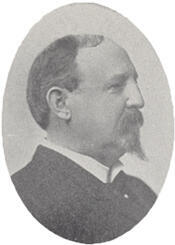
Here you will find contact information for Representative Oliver Cicero Wiley, including email address, phone number, and mailing address.
| Name | Oliver Cicero Wiley |
| Position | Representative |
| State | Alabama |
| District | 2 |
| Party | Democratic |
| Status | Former Representative |
| Term Start | December 2, 1907 |
| Term End | March 3, 1909 |
| Terms Served | 1 |
| Born | January 30, 1851 |
| Gender | Male |
| Bioguide ID | W000469 |
About Representative Oliver Cicero Wiley
Oliver Cicero Wiley (January 30, 1851 – October 18, 1917) was an American businessman, academic administrator, and Democratic politician who served briefly as a U.S. Representative from Alabama from 1908 to 1909. He was born in Troy, Pike County, Alabama, the youngest child of Cornelia Appling and James McCaleb Wiley. His father was a physician and lawyer who rose to become a circuit court judge, and Oliver grew up in a family of five children, including his brother Ariosto Appling Wiley, whom he would later succeed in Congress. Raised in a Baptist household, he would remain active in church and civic life throughout his career.
Wiley received his early education in the primary schools of Troy. The outbreak and aftermath of the Civil War curtailed opportunities for extensive formal schooling in the region, but he pursued further training at Bryant and Stratton’s business college in Nashville, Tennessee. This business education prepared him for a career in commerce and industry, and upon completion of his studies he entered into a mercantile partnership, marking his first significant engagement in the business world.
Returning to Troy, Wiley became a prominent local businessman and industrialist. He was one of four founding partners of the Troy Fertilizer Company and served as its president, helping to develop agricultural and commercial interests in southeastern Alabama. In the early twentieth century the company was acquired by Standard Chemical and Oil, and Wiley remained as an executive in the enlarged enterprise. He was also instrumental in the founding of the Alabama Midland Railway and served as its president from 1887 to 1892. Under his leadership, the railway operated a profitable line between Montgomery, Alabama, and Bainbridge, Georgia; the first locomotive on the line was named in his honor. The railroad later figured in a significant regulatory dispute that reached the United States Supreme Court, which in 1897 issued an opinion favorable to the railroad in a case involving rate-setting authority. The Alabama Midland Railway was eventually merged into the Atlantic Coast Line in 1902.
Wiley’s prominence in business and community affairs led naturally to involvement in local and state politics. In Troy he served for five years as a member of the town council, where he participated in municipal governance and local improvements. Within the Democratic Party, he was chairman of the Democratic executive committee of Pike County from 1884 to 1886 and served as a member of the Democratic State executive committee in 1888, helping to shape party organization and strategy during a period of Democratic dominance in Alabama politics. A lifelong temperance advocate, he was active in public debates over alcohol regulation and was also involved in several civic and fraternal organizations, including the Odd Fellows and the Masonic Order.
Following the death of his brother, Representative Ariosto Appling Wiley, in 1908, Oliver Wiley became a candidate in the special election to fill the resulting vacancy in Alabama’s representation in the U.S. House of Representatives. A member of the Democratic Party, he was elected as a Democrat to the Sixtieth Congress and served from November 3, 1908, to March 3, 1909. As part of the arrangement surrounding his nomination, Wiley agreed to act as a caretaker and not to seek the seat in the subsequent regular election. His service in Congress thus encompassed a single, brief term during a significant period in American political history, when questions of regulation, economic development, and social reform were increasingly prominent.
Although he did not succeed in passing any legislation during his short tenure, Wiley was an active legislator and participant in the democratic process. He introduced a number of bills and amendments that reflected his interests and those of his constituents. Among his principal concerns were the role of state governments in the ongoing national debate over alcohol prohibition, postal rates for the delivery of newspapers, and pensions for veterans of the Spanish–American War. In representing his Alabama district, he contributed to the legislative deliberations of the House of Representatives and sought to advance the interests of his constituents. As planned, he did not run for re-election, and the seat was subsequently won by Stanley Hubert Dent, Jr., who would hold it until 1921.
After leaving Congress, Wiley returned to Troy and resumed his business and civic activities. He served as president of the board of directors of the State normal college at Troy, Alabama, an institution that would later evolve into Troy University, and in that capacity he played a role in the oversight and development of teacher education in the state. He also served as a director of the Farmers & Merchants’ National Bank at Troy, further cementing his position as a leading figure in the town’s commercial and financial life. His post-congressional years were marked by continued engagement in local affairs and support for educational and economic institutions in his community.
On June 25, 1874, Wiley married Augusta Murphree, and the couple had four children. Known for his Baptist faith and his advocacy of temperance, he remained active in church and fraternal organizations throughout his life. Oliver Cicero Wiley died in Troy, Alabama, on October 18, 1917. He was interred in Oakwood Cemetery in Troy, closing a life that combined business leadership, local and state party service, academic administration, and a brief but notable term in the United States Congress as a Representative from Alabama from 1907 to 1909, or more precisely from November 3, 1908, to March 3, 1909.