Senator Ollie Murray James
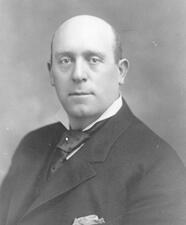
Here you will find contact information for Senator Ollie Murray James, including email address, phone number, and mailing address.
| Name | Ollie Murray James |
| Position | Senator |
| State | Kentucky |
| Party | Democratic |
| Status | Former Representative |
| Term Start | November 9, 1903 |
| Term End | March 3, 1919 |
| Terms Served | 6 |
| Born | July 27, 1871 |
| Gender | Male |
| Bioguide ID | J000051 |
About Senator Ollie Murray James
Ollie Murray James (July 27, 1871 – August 28, 1918) was an influential American politician of the Democratic Party who represented Kentucky in both the United States House of Representatives and the United States Senate. He was born in a rural area of Crittenden County, Kentucky, where he grew up in modest circumstances that helped shape his identification with ordinary citizens and their concerns. His early life in the Kentucky countryside laid the foundation for his future political aspirations, fostering an interest in public affairs and debate from a young age. As a boy and young man he followed political developments closely and displayed an early talent for oratory, which would later become a hallmark of his public career.
James’s formal education and early professional pursuits were directed toward public service and political engagement. Although he did not follow the traditional path of extended university study, he read widely and trained himself in the skills of argument and persuasion that would define his public life. He studied assiduously to prepare himself for participation in political affairs and the law, and he eventually read law and was admitted to the bar, beginning the practice of law in Marion, Kentucky. His early involvement in local political organizations and Democratic Party activities in Kentucky brought him to the attention of party leaders, who recognized his talent as an orator and organizer. These formative experiences in local politics provided him with practical knowledge of legislative issues and constituent concerns, and they prepared him for higher office at the state and national levels.
By the late nineteenth and early twentieth centuries, James had become a prominent figure in Kentucky Democratic politics. He participated actively in party conventions and campaigns, gaining a reputation as one of the state’s most effective stump speakers. His commanding presence and ability to connect with rural and small-town audiences made him a valuable asset to the Democratic Party in an era when public speaking was central to political persuasion. Through these activities he developed a broad network of political allies and supporters across Kentucky, positioning him for election to national office.
James entered national politics with his election to the United States House of Representatives, where he served from March 4, 1903, until 1912. During this period, he represented Kentucky as a Democrat in an era marked by rapid industrialization, progressive reform movements, and significant changes in American governance. In the House, he established himself as a capable legislator and a vigorous advocate for the interests of his constituents. He demonstrated a strong command of parliamentary procedure and a willingness to engage in extended debate, and his oratorical skills made him a prominent figure on the House floor and within the Democratic caucus. His reputation grew steadily as he participated in major legislative discussions of the day and helped articulate Democratic positions on issues of national importance.
In 1912, James decided to leave his position in the House to pursue a seat in the United States Senate. At that time, U.S. Senators were chosen by state legislatures, and he sought election through the Kentucky General Assembly. He won that election on January 9 and 16, 1912, and was subsequently sworn in as a United States Senator on March 4, 1913. His Senate service, which continued until his death in 1918, coincided with the administration of President Woodrow Wilson and the nation’s involvement in World War I, a period of intense legislative activity on issues ranging from economic regulation and progressive domestic reforms to national defense and wartime mobilization. Throughout his tenure, James was known for his commanding presence and powerful voice, which made him a formidable debater and a conspicuous figure in Senate proceedings.
As a Senator, James served as chairman of the Senate Committee on Patents, where he played a significant role in shaping legislation related to intellectual property and innovation. In this capacity, he dealt with questions affecting inventors, industrial development, and the legal framework for protecting new technologies at a time when the United States was rapidly expanding its industrial and scientific capabilities. His work on the committee reflected both his interest in modern economic issues and his broader commitment to ensuring that federal law kept pace with technological change. This leadership on patent matters added a specialized dimension to his legislative record and complemented his broader participation in debates on national policy during the Wilson administration and World War I.
James’s capabilities as a debater were widely recognized and often feared in the Senate. More than six feet tall and large in proportion, with an immense head and a smoothly shaven face that reflected every feeling, he presented an imposing figure in any legislative assembly. He possessed a powerful voice that could, in the words of contemporaries, absorb all other sounds, ensuring that his interventions commanded attention. Journalist and historian Claude G. Bowers observed that in cold print James’s speeches sometimes lacked polish and finish, but in person he relied on sheer force, and his delivery accentuated the power of his argument. In debate, Bowers wrote, James “rode the whirlwind to direct the storm,” overwhelming his opponents with ridicule when he could not defeat them with logic, and leaving observers feeling sympathy for his rhetorical “victims.” His stature, both physical and intellectual, contributed to his reputation as a significant and sometimes intimidating figure in the legislative process.
Tragically, Ollie Murray James’s life and career were cut short when he died during his term of office in a hospital in Baltimore, Maryland, on August 28, 1918, at the age of 47. His death occurred while he was still actively engaged in Senate work during a critical period in American and world history. Colleagues in both chambers of Congress remembered him for his contributions to the Senate, his service in the House, and his long-standing role in the Democratic Party. Following his death, memorial addresses were delivered in both the House of Representatives and the Senate, later collected and published in a volume titled “Ollie M. James, late a Representative from Kentucky, Memorial Addresses Delivered in the House of Representatives and Senate,” issued with a frontispiece in 1920. These tributes reflected the high regard in which he was held and secured his place in Kentucky’s rich political history and in the broader record of early twentieth-century American legislative life.