Representative Omar Burleson
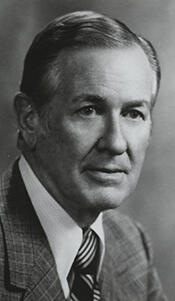
Here you will find contact information for Representative Omar Burleson, including email address, phone number, and mailing address.
| Name | Omar Burleson |
| Position | Representative |
| State | Texas |
| District | 17 |
| Party | Democratic |
| Status | Former Representative |
| Term Start | January 3, 1947 |
| Term End | January 3, 1979 |
| Terms Served | 16 |
| Born | March 19, 1906 |
| Gender | Male |
| Bioguide ID | B001111 |
About Representative Omar Burleson
Omar Truman Burleson (March 19, 1906 – May 14, 1991) was an American attorney, county judge, Federal Bureau of Investigation agent, World War II naval officer, and long-serving Democratic member of the United States House of Representatives from Texas. First elected in 1946 from Texas’s 17th congressional district, he served sixteen consecutive terms in Congress from January 3, 1947, until his resignation on December 31, 1978, contributing to the legislative process during a significant period in American history.
Burleson was born in Anson, the seat of Jones County, north of Abilene, Texas. He attended the public schools of Anson and went on to pursue higher education at Abilene Christian College and Hardin-Simmons University, both located in Abilene. Seeking a legal career, he enrolled at Cumberland University in Lebanon, Tennessee, where he studied law and graduated in 1929. That same year he was admitted to the bar and returned to Texas, establishing a law practice in Gorman in Eastland County. The onset of the Great Depression reduced private legal business, prompting him to seek opportunities in public service.
In 1930 Burleson was elected County Attorney of Jones County, Texas, beginning his first public office in 1931 and serving in that capacity until 1934. He was then elected as a judge in Jones County, serving from 1934 to 1940, a period during which he consolidated his reputation in local legal and civic affairs. In 1940 he entered federal service as a special agent of the Federal Bureau of Investigation, a position he held into 1941. He soon transitioned to Capitol Hill, serving in 1941 and 1942 as secretary and staff member to U.S. Representative Sam Russell of Texas’s 17th congressional district. With Russell’s support, Burleson was appointed general counsel for the Housing Authority in the District of Columbia in 1942, at a time when the District lacked home rule and was administered directly by Congress through its committees.
After the United States entered World War II, Burleson joined the United States Navy, serving from December 1942 to April 1946. He was assigned to the South Pacific Theater, where he contributed to the nation’s war effort before returning to civilian life at the close of the conflict. By the time of his first election to Congress, he was an experienced attorney, judge, FBI agent, and veteran of World War II.
In 1946 Burleson was elected as a Democrat to represent Texas’s 17th congressional district in the Eightieth Congress, a largely rural district that included the area where he had built his early legal and political career. He took office on January 3, 1947, and was re-elected to the fifteen succeeding Congresses, serving continuously until his resignation on December 31, 1978, after deciding not to seek reelection. Over more than three decades in the House of Representatives, he participated in the democratic process and represented the interests of his constituents during an era marked by the Cold War, the civil rights movement, and significant domestic and international change.
Because of his seniority, Burleson rose to influential committee positions. He served as chairman of the Committee on House Administration during the Eighty-fourth through Ninetieth Congresses, overseeing matters related to the internal operations of the House. He also chaired the Joint Committee on the Library from the Eighty-fourth through the Ninetieth Congresses, and the Joint Committee on Printing in the Eighty-fourth Congress, positions that gave him a role in the administration of the Library of Congress and federal printing and publication policy. A conservative Democrat, he was one of the majority of the Texas delegation who declined to sign the 1956 Southern Manifesto, which opposed the Supreme Court’s decision in Brown v. Board of Education declaring segregated public schools unconstitutional. Nonetheless, he consistently opposed major federal civil rights legislation: he voted against the Civil Rights Acts of 1957, 1960, 1964, and 1968, opposed ratification of the Twenty-fourth Amendment to the Constitution, and voted against the Voting Rights Act of 1965, which expanded federal authority to prevent racial discrimination in voting.
Burleson chose not to run for reelection in 1978, bringing his long congressional career to a close. He resigned his seat effective December 31, 1978, and was succeeded by fellow conservative Democrat Charles Stenholm of Stamford, also in Jones County, who operated a large cotton farm and resided in Abilene, Texas. After leaving Congress, Burleson lived in Abilene, remaining in the region that had shaped his early life and political base.
Omar Truman Burleson died in Abilene, Texas, on May 14, 1991. He was interred at Mount Hope Cemetery in his hometown of Anson, Jones County. In recognition of his long public service, a statue of Burleson was installed at the Jones County Courthouse in Anson, commemorating his early career as County Attorney and county judge as well as his more than three decades in the United States House of Representatives.