Representative Orren Cheney Moore
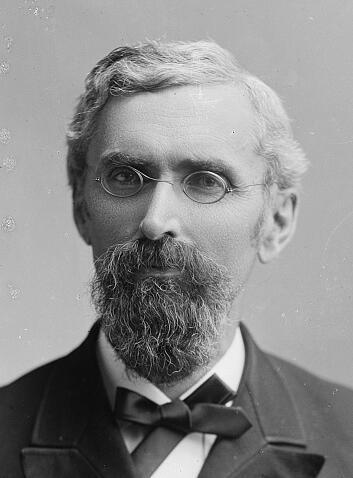
Here you will find contact information for Representative Orren Cheney Moore, including email address, phone number, and mailing address.
| Name | Orren Cheney Moore |
| Position | Representative |
| State | New Hampshire |
| District | 2 |
| Party | Republican |
| Status | Former Representative |
| Term Start | December 2, 1889 |
| Term End | March 3, 1891 |
| Terms Served | 1 |
| Born | August 10, 1839 |
| Gender | Male |
| Bioguide ID | M000910 |
About Representative Orren Cheney Moore
Orren Cheney Moore (August 10, 1839 – May 12, 1893) was a United States Representative from New Hampshire and a prominent Republican journalist and state legislator in the late nineteenth century. Born in New Hampton, Belknap County, New Hampshire, he was raised in the public school system, where he received his early education. As a young man he learned the trade of printer, an occupation that provided his entry into the world of journalism and publishing and shaped much of his later public career.
Moore’s education in the printing trade led him into journalism at a time when newspapers were central to political life in New England. After working in the field and gaining experience as a printer and writer, he settled in Nashua, New Hampshire, which became his long-term home and the base of his professional and political activities. In 1869 he established the Nashua Daily Telegraph, a newspaper that became an influential voice in local and state affairs. As editor and publisher, Moore used the Telegraph to advocate Republican principles and to comment on public policy, thereby increasing his visibility and influence within the party and among his fellow citizens.
Moore’s political career began during the Civil War era, reflecting the close ties between journalism and politics in his time. A member of the Republican Party, he was first elected to the New Hampshire House of Representatives in 1863 and was reelected in 1864, serving during a period when the state was heavily engaged in supporting the Union war effort. He returned to the New Hampshire House in 1875, 1876, and 1878, participating in legislative deliberations on postwar economic and social issues. His repeated elections to the state legislature underscored his standing in the community and his reputation as a reliable party man and legislator.
In addition to his service in the lower house of the state legislature, Moore held several important positions in New Hampshire’s state government. In 1878 he served as a member of the State tax commission, contributing to the oversight and evaluation of the state’s tax structure at a time of industrial and demographic change. He then advanced to the New Hampshire Senate, where he served from 1879 to 1881, taking part in upper-chamber deliberations on statewide policy. From 1884 to 1888 he served as chairman of the state railroad commission, a key regulatory body during an era when railroads were central to commerce, transportation, and economic development. He was again elected to the New Hampshire House of Representatives in 1887, continuing his long association with state legislative service.
Moore’s long record in state politics and his prominence as a newspaper editor led to his election to national office. He was elected as a Republican to the Fifty-first Congress and served one term in the United States House of Representatives from March 4, 1889, to March 3, 1891, representing New Hampshire as a member of the House of Representatives. His service in Congress occurred during a significant period in American history, marked by debates over tariffs, veterans’ pensions, and federal regulation of commerce. During this term he participated in the legislative process and represented the interests of his New Hampshire constituents in the national legislature. A committed Republican, he aligned with his party’s positions on economic and administrative issues of the day.
In 1890 Moore was an unsuccessful candidate for reelection to the Fifty-second Congress, bringing his federal legislative career to a close after one term. Following his departure from Congress, he resumed his former pursuits as editor and publisher of the Nashua Daily Telegraph, returning to the journalistic work that had first established his public reputation. He continued to be an influential figure in Nashua and in New Hampshire Republican circles through his newspaper and his longstanding connections in state politics.
Orren Cheney Moore died in Nashua, New Hampshire, on May 12, 1893. His death brought to an end a career that combined journalism, state service, and national legislative experience. He was interred in Woodlawn Cemetery in Nashua, where he is remembered as a significant nineteenth-century New Hampshire newspaperman and public servant who contributed to both state and national political life.