Senator Orrice Abram Murdock
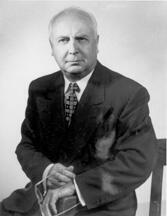
Here you will find contact information for Senator Orrice Abram Murdock, including email address, phone number, and mailing address.
| Name | Orrice Abram Murdock |
| Position | Senator |
| State | Utah |
| Party | Democratic |
| Status | Former Representative |
| Term Start | March 9, 1933 |
| Term End | January 3, 1947 |
| Terms Served | 5 |
| Born | July 18, 1893 |
| Gender | Male |
| Bioguide ID | M001082 |
About Senator Orrice Abram Murdock
Orrice Abram Murdock Jr. (July 18, 1893 – September 15, 1979) was an American attorney and Democratic politician who served as a member of both chambers of the United States Congress for Utah and later as a member of the National Labor Relations Board. Born in Austin, Nevada, he moved with his parents in 1898 to Beaver, Utah, where he was raised. He attended the public schools of Beaver and then Murdock Academy, a local Latter-day Saint secondary school, before pursuing higher education at the University of Utah in Salt Lake City.
After completing his studies at the University of Utah, Murdock read law and prepared for a legal career. He was admitted to the bar in 1922 and commenced the practice of law in Beaver, Utah. Even before formal admission to the bar, he had begun to participate in local public affairs. He served as a member of the Beaver city council in 1920 and 1921, marking his entry into elective office. Following his admission to the bar, he held a series of local legal and governmental positions that established his reputation in Utah legal and political circles.
Murdock’s early public career was closely tied to his legal work in Beaver County. He served as county attorney in 1923–1924, 1927–1928, and again in 1931–1932. In addition, he was city attorney of Beaver from 1926 to 1933, providing legal counsel to the municipal government over a period that spanned the late 1920s and the early years of the Great Depression. He also sought higher prosecutorial office as the Democratic candidate for district attorney for Utah’s fifth district in 1928, although he was unsuccessful in that race. These roles, combining legal practice with public service, positioned him for subsequent election to national office.
In 1932, amid the national political realignment accompanying the election of Franklin D. Roosevelt, Murdock ran for the United States House of Representatives as a Democrat. He was elected to the Seventy-third Congress and was reelected to the three succeeding Congresses, serving from March 4, 1933, to January 3, 1941. During this period, he represented Utah in the House at a time of far-reaching federal legislative activity in response to the Great Depression. A member of the Democratic Party, he contributed to the legislative process over these four consecutive terms, participating in the enactment of New Deal measures and representing the interests of his Utah constituents.
Instead of seeking reelection to the House in 1940, Murdock challenged incumbent Senator William H. King for the Democratic nomination to the United States Senate. The contest reflected broader national divisions within the Democratic Party. King had opposed President Franklin D. Roosevelt’s proposal to expand the Supreme Court and had resisted Roosevelt’s bid for an unprecedented third term, while Murdock was regarded as a “100% New Dealer” who strongly supported the President and his policies. Murdock defeated King for the Democratic nomination and then won the general election, entering the Senate on January 3, 1941. He served as a Senator from Utah in the United States Congress from 1941 to 1947, a period that encompassed World War II and the immediate postwar years. Over this single Senate term, which brought his total congressional service to what was sometimes described as five terms in office, he continued to participate actively in the democratic process and in legislation affecting both Utah and the nation.
Murdock sought reelection in 1946 but was defeated by Republican Arthur Vivian Watkins, ending his Senate service on January 3, 1947. After leaving Congress, he returned to private life in Utah, resuming the practice of law and engaging in agricultural pursuits and livestock raising. His post-congressional career soon took on a national dimension when he was appointed to the National Labor Relations Board. From 1947 to 1957, he served as a member of the National Labor Relations Board, participating in the administration and interpretation of federal labor law during a decade marked by significant developments in labor-management relations. In 1960, he further contributed to federal labor policy as a member of the Atomic Energy Labor-Management Relations Panel, which addressed labor issues in the growing atomic energy sector.
In his later years, Murdock resided in the Washington, D.C., area. He died of natural causes in Bethesda, Maryland, on September 15, 1979. His remains were returned to his longtime home community in Utah, and he was interred in Mountain View Cemetery in Beaver, Utah, closing a public career that had spanned local, state, and national service over several decades.