Representative Orrin Larrabee Miller
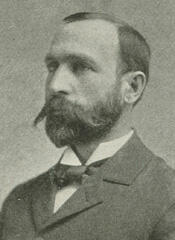
Here you will find contact information for Representative Orrin Larrabee Miller, including email address, phone number, and mailing address.
| Name | Orrin Larrabee Miller |
| Position | Representative |
| State | Kansas |
| District | 2 |
| Party | Republican |
| Status | Former Representative |
| Term Start | December 2, 1895 |
| Term End | March 3, 1897 |
| Terms Served | 1 |
| Born | January 11, 1856 |
| Gender | Male |
| Bioguide ID | M000749 |
About Representative Orrin Larrabee Miller
Orrin Larrabee Miller (January 11, 1856 – September 11, 1926) was an American lawyer, jurist, and politician who served as a Republican member of the United States House of Representatives for Kansas’s 2nd congressional district from 1895 to 1897. During his single term in Congress, he represented his Kansas constituents in the House of Representatives and contributed to the legislative process at a time of significant political and economic change in the United States.
Miller was born on January 11, 1856, in Newburgh, Penobscot County, Maine. He was educated in the local common schools and later attended the Maine Central Institute in Pittsfield, Maine, from which he graduated. After completing his formal schooling, he studied law, preparing for admission to the bar through the traditional method of legal apprenticeship rather than through a formal law school, as was common in the nineteenth century. He was admitted to the bar in 1880, marking the beginning of a professional career that would combine legal practice, judicial service, and elective office.
Upon his admission to the bar in 1880, Miller began his legal career in Bangor, Maine. That same year, he moved west to Kansas City, Kansas, reflecting the broader migration and development patterns of the post–Civil War era as professionals and entrepreneurs relocated to the growing communities of the Midwest. Establishing himself in Kansas City, he entered private practice and quickly became an active member of the local bar, building the legal and political connections that would support his later judicial and congressional service.
Miller’s judicial career commenced when he was appointed district judge for the twenty-ninth judicial district of Kansas in 1887. He was subsequently elected to that position, underscoring the confidence placed in him by both appointing authorities and the electorate. He served as district judge from 1887 until 1891, presiding over a range of civil and criminal matters during a period of rapid regional growth and legal development. In 1891 he resigned from the bench in order to resume the private practice of law, returning to Kansas City, Kansas, where he continued to expand his professional activities.
In addition to his general practice, Miller served for many years as counsel for several large railroad corporations, a role of considerable importance in an era when railroads were central to the economic life of Kansas and the broader Midwest. His work in this capacity placed him at the intersection of law, commerce, and public policy, and further elevated his standing within the Republican Party and the business community. These experiences helped shape his understanding of regulatory and economic issues that would later come before Congress.
Miller was elected as a Republican to the Fifty-fourth Congress, representing Kansas’s 2nd congressional district, and served from March 4, 1895, to March 3, 1897. His term in the House of Representatives coincided with a significant period in American history marked by debates over monetary policy, economic recovery following the Panic of 1893, and the evolving role of the federal government in commerce and industry. As a member of the House, he participated in the democratic process and represented the interests of his Kansas constituents in national legislative deliberations. He declined to be a candidate for renomination in 1896, thereby limiting his congressional service to a single term.
After leaving Congress in 1897, Miller returned to Kansas City, Kansas, where he resumed the full-time practice of law. He continued to be active as an attorney, maintaining his association with major railroad interests and other clients, and remained a respected figure in the legal and civic life of the community. He practiced law in Kansas City until his death there on September 11, 1926. Orrin Larrabee Miller was interred at Woodlawn Cemetery, leaving a record of service that spanned local judicial office, national legislative responsibility, and long-standing engagement in the legal affairs of his adopted state.