Representative Orville Zimmerman
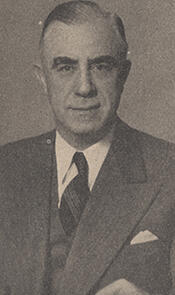
Here you will find contact information for Representative Orville Zimmerman, including email address, phone number, and mailing address.
| Name | Orville Zimmerman |
| Position | Representative |
| State | Missouri |
| District | 10 |
| Party | Democratic |
| Status | Former Representative |
| Term Start | January 3, 1935 |
| Term End | January 3, 1949 |
| Terms Served | 7 |
| Born | December 31, 1880 |
| Gender | Male |
| Bioguide ID | Z000009 |
About Representative Orville Zimmerman
Orville Zimmerman (December 31, 1880 – April 7, 1948) was a Democratic U.S. Representative from Missouri who served in the United States Congress from 1935 until his death in 1948. Born on a farm near Glenallen in Bollinger County, Missouri, he grew up in a rural setting that shaped his familiarity with agricultural and small-town concerns, which later informed his representation of his constituents in Congress.
Zimmerman attended the public schools of Bollinger County and continued his studies at Mayfield-Smith Academy in Marble Hill, Missouri. Pursuing higher education at a time when relatively few rural Missourians did so, he enrolled at Southeast Missouri State College in Cape Girardeau, from which he graduated in 1904. Immediately after completing his college education, he embarked on a career in education, serving as principal of Dexter High School in Dexter, Missouri, from 1904 to 1908. His experience as an educator and school administrator provided him with firsthand knowledge of public education issues that would remain a recurring theme in his later public service.
Seeking to expand his professional opportunities, Zimmerman entered the law department of the University of Missouri at Columbia and graduated in 1911. He was admitted to the bar that same year and commenced the practice of law in Kennett, Missouri, in Dunklin County, where he established himself as a local attorney. His legal practice in Kennett, combined with his earlier work in education, helped him build a reputation as a community leader and contributed to his growing involvement in civic affairs.
During World War I, Zimmerman served his country as a private in the United States Army in 1918. Although his military service was brief and at an enlisted rank, it placed him among the many Americans who joined the armed forces during the nation’s wartime mobilization and added a record of national service to his credentials. After the war, he returned to Kennett, where he resumed his legal practice and deepened his engagement in local educational governance.
Zimmerman’s commitment to education was reflected in his long tenure on the board of education of Kennett, on which he served from 1928 to 1936. In this role he participated in overseeing the local public school system during a period marked by the economic strains of the Great Depression. At the same time, he extended his influence in higher education as a member of the board of regents of Southeast Missouri State College, serving from 1933 until 1948. His service on the board of regents connected him to statewide educational policy and institutional development at his alma mater over a fifteen-year span.
Building on his legal career and educational leadership, Zimmerman entered national politics as a member of the Democratic Party. He was elected as a Democrat to the U.S. House of Representatives in 1934 and took his seat in the Seventy-fourth Congress on January 3, 1935. He was subsequently re-elected six additional times, serving continuously through the Seventy-fifth, Seventy-sixth, Seventy-seventh, Seventy-eighth, and Seventy-ninth Congresses and into the Eightieth Congress. His seven terms in office coincided with a transformative era in American history, encompassing the New Deal, World War II, and the early postwar period. During these years, Zimmerman contributed to the legislative process in the House of Representatives, participating in debates and votes on domestic recovery, wartime measures, and postwar adjustments, and representing the interests of his Missouri constituents within the broader framework of Democratic Party policies.
Zimmerman remained in office until his death in Washington, D.C., on April 7, 1948, while still serving as a member of the Eightieth Congress. His passing brought an end to more than a decade of continuous congressional service and to his concurrent role on the board of regents of Southeast Missouri State College. He was interred at Oak Ridge Cemetery in Kennett, Missouri, returning to the community where he had practiced law, served on the local board of education, and built the foundation of his public career.