Representative Oscar Callaway
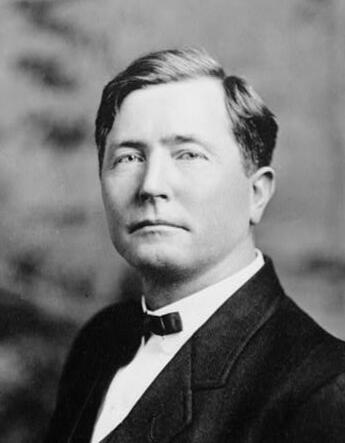
Here you will find contact information for Representative Oscar Callaway, including email address, phone number, and mailing address.
| Name | Oscar Callaway |
| Position | Representative |
| State | Texas |
| District | 12 |
| Party | Democratic |
| Status | Former Representative |
| Term Start | April 4, 1911 |
| Term End | March 3, 1917 |
| Terms Served | 3 |
| Born | October 2, 1872 |
| Gender | Male |
| Bioguide ID | C000056 |
About Representative Oscar Callaway
Francis Oscar Callaway (October 2, 1872 – January 31, 1947) was a three-term Democratic U.S. Representative from Texas’ twelfth congressional district, serving from 1911 to 1917. Born in Harmony Hill (then known as Nip-and-Tuck) in Rusk County, Texas, he moved with his parents in 1876 to Comanche County, Texas, where he was raised. His early life in rural Texas, including later work as a rancher, shaped his views on agriculture, local governance, and fiscal restraint that would later characterize his public career.
Callaway pursued higher education at the University of Texas at Austin, attending from 1897 to 1899. He then enrolled in the university’s law department, from which he graduated in 1900. Admitted to the bar that same year, he began practicing law in Comanche County. Almost immediately, he entered public service as prosecuting attorney of Comanche County, holding that office from 1900 to 1902. On December 29, 1904, he married Stella Couch. Alongside his legal practice, he became active in Democratic Party politics, serving as a delegate to Democratic State conventions in 1896, 1898, and 1900–1916, and again from 1920 to 1926, thereby establishing himself as a consistent figure in Texas Democratic circles well before and after his congressional tenure.
Callaway’s political prominence in Texas culminated in his election to the U.S. House of Representatives as a Democrat. He was elected to the Sixty-second, Sixty-third, and Sixty-fourth Congresses, serving from March 4, 1911, to March 3, 1917, as the representative of Texas’ twelfth district. During these three terms in office, he contributed to the legislative process at a time of significant national change, including the Progressive Era reforms and the mounting international tensions that preceded U.S. entry into World War I. As a member of the House of Representatives, he participated in the democratic process and represented the interests of his Texas constituents, bringing to Washington the perspective of a rural attorney, rancher, and fiscal conservative.
Within Congress, Callaway held several committee assignments that placed him at the center of debates over federal spending and administrative oversight. He served on the Committee on Expenditures in the Treasury Department from 1912 to 1913, and on the Committee on Expenditures in the Department of the Interior from 1914 to 1915. For the remainder of his incumbency he served on the influential Naval Affairs Committee. His tenure on these committees was marked by outspoken fiscal conservatism and sharp questioning of federal expenditures. He was particularly vigorous in opposing large river and harbor appropriations bills, including proposals to make the Trinity and Brazos rivers navigable, which he viewed as excessive or unwarranted uses of public funds.
Callaway came to national attention in 1916 through his strong opposition to the naval appropriation bill and the broader Preparedness Movement. He argued that a well-organized civilian army could repel any invasion, contended that battleships had been rendered obsolete by submarines, and maintained that the large military expenditures advocated by preparedness proponents disproportionately benefited munitions manufacturers and other business interests. His rhetoric in these debates was sometimes so forceful that some of his remarks about fellow members of Congress were ordered expunged from the Congressional Record. In 1917 he further charged that leading business interests were purchasing newspapers to promote the preparedness campaign, a claim that prompted his colleague J. Hampton Moore to call for an investigation. Callaway’s opposition to preparedness and to expanding military appropriations became a major factor in his unsuccessful bid for renomination in 1916, when he lost the Democratic primary to James Clifton Wilson. His service in Congress concluded on March 3, 1917.
After leaving Congress, Callaway returned to his ranch near Comanche, Texas. There he resumed the practice of law in Comanche while also engaging in agricultural pursuits and stock raising, continuing the rural and professional life that had preceded his years in Washington. He remained active in Democratic Party affairs through his participation in state conventions into the 1920s, but he did not again hold national office. He lived out his later years in Comanche, where he maintained his legal and agricultural interests until his death.
Francis Oscar Callaway died in Comanche, Texas, on January 31, 1947. He was interred in Oakwood Cemetery in Comanche. His career reflected the concerns of early twentieth-century Texas Democrats—particularly skepticism of large federal expenditures and war preparedness—during a formative period in American political and military history.