Representative Oscar Raymond Luhring
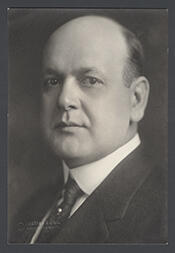
Here you will find contact information for Representative Oscar Raymond Luhring, including email address, phone number, and mailing address.
| Name | Oscar Raymond Luhring |
| Position | Representative |
| State | Indiana |
| District | 1 |
| Party | Republican |
| Status | Former Representative |
| Term Start | May 19, 1919 |
| Term End | March 3, 1923 |
| Terms Served | 2 |
| Born | February 11, 1879 |
| Gender | Male |
| Bioguide ID | L000505 |
About Representative Oscar Raymond Luhring
Oscar Raymond Luhring (February 11, 1879 – August 18, 1944) was an American lawyer, legislator, and jurist who served as a United States Representative from Indiana and later as an Associate Justice of the District Court of the United States for the District of Columbia. A member of the Republican Party, he contributed to the legislative process during two terms in Congress and subsequently held significant positions in the federal executive and judicial branches.
Luhring was born on February 11, 1879, in Haubstadt, Gibson County, Indiana, the grandson of German immigrants. He attended the public schools in Indiana before pursuing legal studies at the University of Virginia School of Law, where he received a Bachelor of Laws degree in 1900. That same year he was admitted to the bar and commenced the practice of law in Evansville, Indiana, establishing the professional foundation for his later career in public service.
Early in his career, Luhring became active in state and local government. He served as a member of the Indiana House of Representatives from 1903 to 1904. He then entered prosecutorial work in the First Judicial Circuit of Indiana, first as a deputy prosecuting attorney from 1904 to 1908, and then as prosecuting attorney from 1908 to 1912. Through these roles he gained experience in criminal law and public administration while maintaining his private practice in Evansville.
Luhring was elected as a Republican to the United States House of Representatives, representing Indiana in the 66th and 67th Congresses. His congressional service extended from March 4, 1919, to March 3, 1923, a significant period in American history marked by the aftermath of World War I and major domestic adjustments. As a member of the House of Representatives, he participated in the democratic process, contributed to the legislative work of Congress, and represented the interests of his Indiana constituents. He was an unsuccessful candidate for reelection in 1922 to the 68th Congress, concluding his two terms in office in March 1923.
After leaving Congress, Luhring continued his federal service in the executive branch. From 1923 to 1925 he served in Washington, D.C., as a special assistant to the United States Secretary of Labor. In 1925, President Calvin Coolidge appointed him Assistant United States Attorney General for the Criminal Division of the United States Department of Justice, a position he held until 1930. In this capacity he oversaw aspects of federal criminal enforcement during a period that included Prohibition and evolving federal criminal law.
Luhring’s judicial career began with his nomination by President Herbert Hoover on June 23, 1930, to a new Associate Justice seat on the Supreme Court of the District of Columbia, a court later redesignated the District Court of the United States for the District of Columbia on June 25, 1936, and now known as the United States District Court for the District of Columbia. The new seat was authorized by 46 Stat. 785. He was confirmed by the United States Senate on July 3, 1930, and received his commission the same day. As an Associate Justice of this important federal trial court, he served for more than fourteen years, presiding over a wide range of federal cases in the nation’s capital.
Oscar Raymond Luhring’s service on the federal bench continued until his death on August 18, 1944, in Washington, D.C. His judicial service terminated on that date. He was initially interred in Abbey Mausoleum in Arlington County, Virginia, and was later reinterred in National Memorial Park in Falls Church, Virginia. His career, spanning state legislation, federal prosecution, congressional representation, executive service, and federal judicial office, reflected a lifetime of engagement with the legal and governmental institutions of the United States.