Representative Oscar William Swift
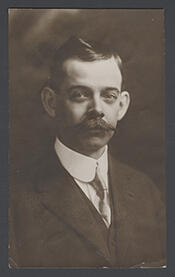
Here you will find contact information for Representative Oscar William Swift, including email address, phone number, and mailing address.
| Name | Oscar William Swift |
| Position | Representative |
| State | New York |
| District | 9 |
| Party | Republican |
| Status | Former Representative |
| Term Start | December 6, 1915 |
| Term End | March 3, 1919 |
| Terms Served | 2 |
| Born | April 11, 1869 |
| Gender | Male |
| Bioguide ID | S001118 |
About Representative Oscar William Swift
Oscar William Swift (April 11, 1869 – June 30, 1940) was an American attorney and Republican politician who served as a U.S. Representative from New York from 1915 to 1919. Over the course of two terms in the United States House of Representatives, he contributed to the legislative process during a significant period in American history and represented the interests of his New York constituents.
Swift was born in Paines Hollow, Herkimer County, New York, on April 11, 1869, the son of Judson Swift and Julia E. (Peters) Swift. In 1877 his family moved west to Michigan and settled in Adrian, where he was raised. He attended the public schools there, receiving his early education in the local system before pursuing higher studies. His upbringing in both rural New York and the growing communities of Michigan exposed him to diverse regional perspectives that would later inform his public service.
Swift attended the University of Michigan at Ann Arbor, where he continued his education before deciding to pursue a career in law. He subsequently moved to New York City to undertake formal legal training at New York Law School. He graduated from New York Law School in 1896 and was admitted to the bar in 1897. Following his admission, he commenced the practice of law in New York City, establishing himself as an attorney at a time when the city was rapidly expanding as a commercial and legal center. In 1899 he married Jessie A. William of Brooklyn, New York. The couple made their home in Brooklyn and became the parents of four children: Dorothy, Harriet, Josephine, and Warren.
Building on his legal career and community standing, Swift became active in Republican Party politics in New York. A member of the Republican Party, he sought federal office and was elected to the United States House of Representatives in the 1914 election. He was reelected in 1916, serving in the Sixty-fourth and Sixty-fifth Congresses from March 4, 1915, to March 3, 1919. His service in Congress occurred during a pivotal era that included the lead-up to and participation of the United States in World War I, as well as major domestic debates over economic policy and national preparedness. As a member of the House of Representatives, Oscar William Swift participated in the democratic process, contributed to the legislative work of the chamber, and represented the interests of his New York constituents during these consequential years.
Swift’s congressional tenure encompassed two full terms, during which he aligned with the Republican caucus on national issues of the day. Although specific committee assignments and sponsored measures are less prominently recorded, his role as a voting member of the House placed him at the center of deliberations over wartime legislation, fiscal measures, and evolving federal responsibilities in the 1910s. In 1918 he was an unsuccessful candidate for reelection, bringing his formal congressional service to a close at the expiration of his second term on March 3, 1919.
After leaving Congress, Swift returned to private life and resumed the practice of law in New York City. He continued to reside in Brooklyn, maintaining his professional activities at the bar and remaining part of the city’s legal and civic community. He lived there until his death in Brooklyn on June 30, 1940. Oscar William Swift was interred at Kensico Cemetery in Valhalla, Westchester County, New York, closing the career of an attorney and legislator who had participated in national governance during a transformative period in American history.