Representative Otho Robards Singleton
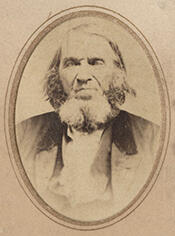
Here you will find contact information for Representative Otho Robards Singleton, including email address, phone number, and mailing address.
| Name | Otho Robards Singleton |
| Position | Representative |
| State | Mississippi |
| District | 5 |
| Party | Democratic |
| Status | Former Representative |
| Term Start | December 5, 1853 |
| Term End | March 3, 1887 |
| Terms Served | 9 |
| Born | October 14, 1814 |
| Gender | Male |
| Bioguide ID | S000445 |
About Representative Otho Robards Singleton
Otho Robards Singleton (October 14, 1814 – January 11, 1889) was a U.S. Representative from Mississippi, a member of the Democratic Party, and a member of the Confederate States Congress during the American Civil War. Over the course of his long public career, he served nine terms in the United States House of Representatives between 1853 and 1887, representing Mississippi during a period of profound national upheaval and reconstruction.
Singleton was born near Nicholasville, Jessamine County, Kentucky. He was the son of Lewis Singleton, a hemp manufacturer who owned a factory near Keene, Kentucky. His grandfather, Louis Singleton, served as sheriff of Jessamine County and as a Kentucky state senator, giving the family an early connection to public life. Raised in this environment, Singleton attended the common schools before pursuing higher education in his native state.
For his formal education, Singleton studied at St. Joseph’s College in Bardstown, Kentucky, from which he graduated, and then continued his legal studies at the law department of the University of Lexington. After completing his legal training, he was admitted to the bar in 1838. That same year he moved to Mississippi and commenced the practice of law in Canton, Madison County, establishing himself professionally in what would become his adopted state and the base of his political career.
Singleton’s entry into public office began at the state level in Mississippi. He was elected to the Mississippi House of Representatives, serving in 1846 and 1847. He then advanced to the Mississippi State Senate, where he served from 1848 to 1854. During these years he built a reputation as a Democratic legislator and became a recognized figure in state politics, which laid the groundwork for his subsequent election to national office.
Singleton was first elected as a Democrat to the Thirty-third Congress, serving as a U.S. Representative from Mississippi from March 4, 1853, to March 3, 1855. Although he was an unsuccessful candidate for reelection immediately thereafter, he returned to Congress as a Democrat in the Thirty-fifth and Thirty-sixth Congresses, serving from March 4, 1857, until January 12, 1861. On that date he withdrew from the House of Representatives as Mississippi seceded from the Union, aligning himself with his state at the outset of the Civil War. His service in Congress during these antebellum and secession years placed him at the center of the nation’s intensifying sectional conflict.
During the Civil War, Singleton continued his legislative career in the government of the Confederacy. He served as a representative from Mississippi in both the First Confederate Congress and the Second Confederate Congress from 1861 to 1865. In this capacity he participated in the legislative process of the Confederate States of America, representing Mississippi’s interests during the war and contributing to the debates and policies of the Confederate legislature.
After the Civil War and the end of Reconstruction, Singleton resumed his role in the national legislature. He was elected as a Democrat to the Forty-fourth Congress and to the five succeeding Congresses, serving from March 4, 1875, to March 3, 1887. This postwar service, spanning six consecutive terms, brought his total House tenure to nine terms. During these years he again took part in the federal legislative process, representing Mississippi in the period of reconciliation and adjustment that followed the conflict. He was not a candidate for renomination in 1886, concluding his congressional career at the end of his term in 1887.
In his personal life, Singleton married, though his wife predeceased him. He had at least two children who survived to adulthood. His son, Dr. Richard H. Singleton, born May 9, 1844, became a prominent physician in Louisville, Kentucky, and was a member of the Indiana, Kentucky, and Mississippi medical societies, reflecting a professional career of regional stature. His daughter, Kate Singleton, married Junius M. Smith and resided in North Carolina, extending the family’s connections beyond Mississippi and Kentucky.
Otho Robards Singleton died in Washington, D.C., on January 11, 1889, two years after leaving Congress. His body was returned to Mississippi, and he was interred in Canton Cemetery in Canton, Mississippi. His long public life, spanning service in state legislatures, the United States Congress both before and after the Civil War, and the Confederate Congress during the conflict, made him a significant Mississippi political figure in the mid-nineteenth century.