Senator Otis Ferguson Glenn
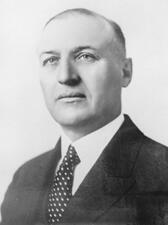
Here you will find contact information for Senator Otis Ferguson Glenn, including email address, phone number, and mailing address.
| Name | Otis Ferguson Glenn |
| Position | Senator |
| State | Illinois |
| Party | Republican |
| Status | Former Representative |
| Term Start | December 3, 1928 |
| Term End | March 3, 1933 |
| Terms Served | 1 |
| Born | August 27, 1879 |
| Gender | Male |
| Bioguide ID | G000238 |
About Senator Otis Ferguson Glenn
Otis Ferguson Glenn (August 27, 1879 – March 11, 1959) was a Republican United States Senator from the State of Illinois who served one term in the U.S. Senate from 1928 to 1933. His congressional service took place during a significant period in American history, spanning the late 1920s and the onset of the Great Depression, during which he participated in the legislative process and represented the interests of his Illinois constituents.
Glenn was born in Mattoon, Coles County, Illinois, on August 27, 1879. He attended the public schools of his hometown before pursuing higher education in law. He enrolled at the University of Illinois at Urbana-Champaign, where he studied law and completed his legal education in 1900. Shortly after his graduation from law school, he was admitted to the bar and began the practice of law in Murphysboro, Jackson County, Illinois, establishing himself as a local attorney at the turn of the twentieth century.
Glenn quickly entered public service through local legal office. He was elected State’s Attorney for Jackson County, Illinois, serving his first term from 1906 to 1908. After returning to private practice for several years, he was again elected State’s Attorney and served a second term from 1916 to 1920. In this capacity he was responsible for prosecuting criminal cases and representing the county in legal matters, gaining experience and public visibility that helped launch his broader political career.
In 1920, Glenn was elected to the Illinois State Senate as a member of the Republican Party. He served one term in the state legislature, from 1920 until 1924. During his tenure in the Illinois Senate, he participated in state-level lawmaking and helped shape legislation affecting his district and the state as a whole, further solidifying his reputation as a capable Republican legislator and positioning himself for higher office.
Glenn’s entry into the United States Senate came under unusual circumstances. In 1928, Frank L. Smith resigned the U.S. Senate seat from Illinois that he had won in 1926 after the Senate twice refused to seat him over concerns related to his campaign and credentials. A special election was called to fill the vacancy, and Glenn emerged as the Republican nominee. In that election he defeated Democrat Anton Cermak, a prominent Chicago political figure and future mayor of Chicago, by a margin of 54.5 percent to 44.9 percent. Glenn took his seat in the United States Senate on December 3, 1928, to serve out the remainder of Smith’s term.
As a United States Senator from Illinois, Glenn served from December 3, 1928, to March 3, 1933. A member of the Republican Party, he contributed to the legislative process during a single term in office, serving during the final year of the Coolidge administration and throughout the presidency of Herbert Hoover. His term coincided with the stock market crash of 1929 and the early years of the Great Depression, a period in which Congress grappled with economic crisis, banking instability, and rising unemployment. In this context, Glenn participated in the democratic process at the federal level and worked to represent the interests of his Illinois constituents during a time of national hardship.
Glenn sought to continue his service in the Senate but faced increasingly difficult political conditions as the Great Depression eroded Republican strength. In the 1932 election, he ran for re-election but was defeated by Democrat William H. Dieterich, who received 52.2 percent of the vote to Glenn’s 46.0 percent. Glenn remained active in politics and again sought a Senate seat in 1936, challenging Democratic incumbent J. Hamilton Lewis. In that race he was again unsuccessful, losing by a margin of 56.5 percent to 40.7 percent, reflecting the broader national shift toward the Democratic Party during the New Deal era.
After his defeat and the conclusion of his Senate service, Glenn returned to Illinois and resumed his legal career. He established a law practice in Chicago, where he continued to work as an attorney. Although no longer in public office, his earlier service as State’s Attorney, state senator, and United States Senator had given him a long record of participation in public affairs at both the state and national levels.
Otis Ferguson Glenn died on March 11, 1959, at Portage Point in Onekama Township, Manistee County, Michigan. He was interred at Onekama Cemetery in Onekama, Michigan. His career reflected the trajectory of an early twentieth-century Midwestern lawyer who rose from local legal office to the United States Senate and served during one of the most consequential economic and political periods in American history.