Representative O. C. Fisher
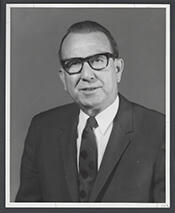
Here you will find contact information for Representative O. C. Fisher, including email address, phone number, and mailing address.
| Name | O. C. Fisher |
| Position | Representative |
| State | Texas |
| District | 21 |
| Party | Democratic |
| Status | Former Representative |
| Term Start | January 6, 1943 |
| Term End | January 3, 1975 |
| Terms Served | 16 |
| Born | November 22, 1903 |
| Gender | Male |
| Bioguide ID | F000152 |
About Representative O. C. Fisher
Ovie Clark Fisher (November 22, 1903 – December 9, 1994) was an American attorney, non-academic historian, and Democratic politician who served for 32 years as the U.S. Representative for Texas’s 21st congressional district. Over the course of 16 consecutive terms in the United States House of Representatives, from 1943 to 1975, he contributed to the legislative process during a significant period in American history, representing a large rural district in West Texas and Hill Country communities.
Fisher was born on November 22, 1903, in Junction, Kimble County, Texas, to Jobe Bazilee Fisher and Rhoda Catherine Clark Fisher. Raised in the Texas Hill Country, he developed a lifelong interest in the history and development of his native region, which later informed his work as a local historian and author. On September 11, 1927, he married Marian E. De Walsh; the couple had one child, a daughter named Rhoda. His early life in Kimble County and his family background in rural Texas would remain central themes in his later historical writings.
Fisher pursued higher education at several institutions. He attended the University of Texas at Austin and the University of Colorado at Boulder before enrolling at Baylor University in Waco, Texas. At Baylor, he studied law and received his LL.B. degree. He was admitted to the Texas bar in 1929, marking the beginning of a long legal and public service career. His legal training and early practice provided the foundation for his subsequent roles as a county attorney, district attorney, state legislator, and ultimately a member of Congress.
After admission to the bar, Fisher practiced law in San Angelo in West Texas for two years. In 1931, he was elected county attorney for Tom Green County, Texas, an office he used to build his reputation as a capable local prosecutor and public official. He advanced to state-level office when he was elected to the Texas House of Representatives, where he represented the 53rd District from 1935 to 1937. Following his legislative service in Austin, Fisher returned to prosecutorial work and served as district attorney for the 51st Judicial District of Texas from 1937 to 1943. These roles in county and district offices, combined with his legislative experience, positioned him as a prominent Democratic figure in West Texas on the eve of World War II.
In 1942, Fisher was elected as a Democrat to the United States House of Representatives from Texas’s 21st congressional district and took his seat in the 78th Congress in January 1943. He remained in the House through the 93rd Congress, serving continuously until January 1975. Over this 32-year span, he was reelected 14 times, facing only nominal opposition in his first 13 reelection campaigns, a reflection of the long-standing dominance of rural conservative Democrats in Texas politics during much of the mid-twentieth century. His tenure in Congress coincided with major national developments, including World War II, the Cold War, the civil rights movement, the Great Society programs, and the Watergate era, and he participated in the democratic process on behalf of his constituents throughout these transformative decades.
Fisher’s congressional record placed him among the more conservative Democrats of his region and era, particularly on civil rights issues. He was one of five U.S. representatives from Texas to sign the “Southern Manifesto” in 1956, a document protesting the U.S. Supreme Court’s decision in Brown v. Board of Education and opposing federal efforts to desegregate public schools. Consistent with this stance, he voted against the Civil Rights Act of 1957, the Civil Rights Act of 1960, the Civil Rights Act of 1964, and the Civil Rights Act of 1968. He also opposed the 24th Amendment to the U.S. Constitution, which abolished the poll tax in federal elections, and voted against the Voting Rights Act of 1965. These positions reflected the views of many white rural constituents in his district at the time and illustrated the broader resistance among Southern and border-state Democrats to federal civil rights legislation.
By the early 1970s, the political landscape in Texas was changing, and Fisher’s electoral dominance began to face new challenges. In the 1972 general election, Republican challenger Doug Harlan, despite spending very little money, held Fisher to 57 percent of the vote. Political observer Paul Burka of Texas Monthly described Harlan’s showing as “one of the first indications that the dominance of the rural conservative Democrats in Texas politics could not be sustained.” With Harlan preparing for a rematch in 1974 and after undergoing heart surgery in 1973, Fisher announced that he would not stand for reelection to a 16th term in 1974. The Democratic Party nominated Robert Krueger as his successor, and Krueger went on to defeat Harlan, who made his second and final race for Congress that year. Fisher’s retirement in January 1975 ended more than three decades of continuous congressional service.
In addition to his legal and political career, Fisher was a prolific non-academic historian and author, focusing largely on Texas history, regional biography, and political reminiscence. His works included “It Occurred in Kimble: The Story of a Texas County” (1937), a local history of his home county; “The Texas Heritage of the Fishers and the Clarks” (1963), a genealogical and historical study of his family lines; and “King Fisher: His Life and Times” (1967), co-authored with J. C. Dykes, a biography of the nineteenth-century Texas gunman King Fisher. He contributed to “Great Western Indian Fights” (1960) as part of the Members of the Potomac Corral of the Westerners, and later wrote “Cactus Jack: A Biography of John Nance Garner” (1978), a study of the former vice president from Texas. His later works included “From New Deal to Watergate” (1980), a political memoir and commentary; “Political Miscellany” (1980); “The Speaker of Nubbin Ridge: The Story of the Modern Angora Goat” (1985); and “John Berry and His Children” (1988), co-authored with Jack Pope, Gertrude Anderson, and Geneva Gillman. These publications underscored his enduring interest in Texas history, politics, and rural life.
Fisher was active in civic and fraternal organizations throughout his life. He held membership in the Freemasons, the Order of the Eastern Star, the Knights of Pythias, Rotary International, and the Acacia fraternity, reflecting his engagement with community, professional, and social networks beyond elective office. His papers and archival materials, documenting both his political career and his historical research, are housed at Baylor University, which serves as the repository for the O. C. Fisher Papers. In recognition of his long service and regional influence, San Angelo Lake, a reservoir managed by the United States Army Corps of Engineers, was renamed O. C. Fisher Reservoir in 1975. San Angelo State Park lies along the shores of this reservoir, further commemorating his association with the West Texas region he represented for so many years.
Ovie Clark Fisher died on December 9, 1994. His long career as an attorney, legislator, congressman, and historian left a substantial record in Texas political history and in the historical literature of the state, particularly concerning the Hill Country, West Texas, and the political evolution of Texas in the mid-twentieth century.