Senator Ozora Pierson Stearns
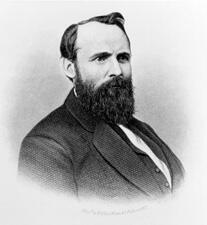
Here you will find contact information for Senator Ozora Pierson Stearns, including email address, phone number, and mailing address.
| Name | Ozora Pierson Stearns |
| Position | Senator |
| State | Minnesota |
| Party | Republican |
| Status | Former Representative |
| Term Start | March 4, 1871 |
| Term End | December 31, 1871 |
| Terms Served | 1 |
| Born | January 15, 1831 |
| Gender | Male |
| Bioguide ID | S000824 |
About Senator Ozora Pierson Stearns
Ozora Pierson Stearns (January 15, 1831 – June 2, 1896) was an American politician, attorney, and Union Army officer who served as a United States Senator from Minnesota. A member of the Republican Party, he contributed to the legislative process during one term in office in 1871, representing the interests of his constituents during a significant period in American history. Over the course of his career he also served as mayor of Rochester, Minnesota, county attorney of Olmsted County, a judge of the Minnesota district courts, and a regent of the University of Minnesota.
Stearns was born on January 15, 1831, in De Kalb, New York, the tenth of eleven children. In 1833, when he was still a small child, the Stearns family moved west to Madison, Ohio, where he was raised. His early life in the Western Reserve region of Ohio exposed him to the reformist and abolitionist currents that were influential in that area during the mid-nineteenth century, shaping the outlook that would later inform his public service and military career.
Stearns pursued higher education at Oberlin College, an institution known for its progressive stance on coeducation and abolition. He later enrolled at the University of Michigan, from which he graduated in 1858. He continued at the same institution’s law department, completing his legal studies in 1860. That same year he was admitted to the bar and moved to Minnesota, where he commenced the practice of law in Rochester, then a growing community in the southeastern part of the state.
Soon after establishing his practice, Stearns entered public life. In 1861 he was elected prosecuting attorney of Olmsted County, Minnesota. He formed a law partnership with Charles M. Start in 1863, a collaboration that coincided with his rising prominence in local affairs. After the Civil War, he served as mayor of Rochester from 1866 to 1868, guiding the city during a period of postwar growth and development. His early legal and municipal service provided the foundation for his later state and national roles.
During the American Civil War, Stearns served in the Union Army, initially as a first lieutenant in the 9th Minnesota Volunteer Infantry Regiment. He later became colonel of the 39th United States Colored Infantry, one of the African American regiments organized under federal authority. As colonel, he led the 39th United States Colored Infantry at the Battle of the Crater on July 30, 1864, a major engagement during the Siege of Petersburg in Virginia. His wartime service, culminating in the rank of colonel, reflected both his leadership abilities and his participation in the broader Union effort, including the employment of Black troops in combat.
Stearns was elected as a Republican to the United States Senate from Minnesota on January 18, 1871, to fill the vacancy caused by the death of Senator Daniel S. Norton. He took his seat in the 41st Congress on January 23, 1871, and served until March 3, 1871. Although his tenure was brief, encompassing the closing weeks of the 41st Congress, he participated in the democratic process at the federal level during the Reconstruction era, aligning with the Republican Party’s policies in the aftermath of the Civil War.
After his service in the Senate, Stearns continued his legal and judicial career in Minnesota. In 1872 he moved to Duluth, on the shore of Lake Superior, where he formed a law partnership with J. D. Ensign, who would later serve as mayor of Duluth. In 1874 Governor Cushman Kellogg Davis appointed Stearns as judge of the eleventh judicial district of Minnesota. He was re-elected three times and served on the district bench until 1895. Reflecting on the early days of his judicial service in a sparsely developed region, Stearns later recalled that “there was not a court-house in the district. We held court where we could—in churches, in stores, school-houses, and sometimes in places not quite so respected.”
In addition to his judicial duties, Stearns was active in educational and business affairs. He served as a regent of the University of Minnesota from 1890 to 1895, contributing to the governance of the state’s principal public university. In Duluth he held leadership and directorial roles in several enterprises, including serving as president and treasurer of the Lakeside Land Company, and as a director of the West Duluth Land Company, the Duluth Electric Light and Power Company, the Masonic Temple Association, the Duluth Building and Loan Association, and the Duluth Union National Bank. These positions reflected his engagement in the civic and economic development of Duluth and the surrounding region.
Stearns married Sarah Burger Stearns, who became a prominent advocate for women’s rights and served as the first president of the Minnesota Woman Suffrage Association. Their marriage linked his public career with the emerging women’s suffrage movement in the state. In 1891 Stearns suffered a stroke, and as his health declined he and his wife moved to California in 1894, settling in Pacific Beach. He died there on June 2, 1896. His remains were cremated in Los Angeles, California, and his ashes were interred in Forest Hill Cemetery in Duluth, Minnesota, closing a life that had spanned the antebellum era, the Civil War, Reconstruction, and the rapid growth of Minnesota as a state.