Representative Pablo Ocampo
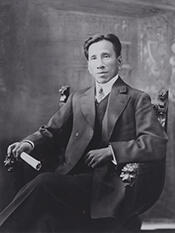
Here you will find contact information for Representative Pablo Ocampo, including email address, phone number, and mailing address.
| Name | Pablo Ocampo |
| Position | Representative |
| State | Philippine Islands |
| District | At-Large |
| Party | Unknown |
| Status | Former Representative |
| Term Start | December 2, 1907 |
| Term End | March 3, 1911 |
| Terms Served | 2 |
| Born | January 25, 1853 |
| Gender | Male |
| Bioguide ID | O000020 |
About Representative Pablo Ocampo
Pablo de León Ocampo, Sr. (January 25, 1853 – February 5, 1925) was a Filipino lawyer, nationalist, and statesman who served as a Representative from the Philippine Islands in the United States Congress from 1907 to 1911. As the inaugural holder of the office of Resident Commissioner from the Philippine Islands to the United States Congress, serving alongside Benito Legarda, he completed two terms in Washington and contributed to the legislative process during a significant period in American and Philippine history. A member of the Union Nacionalista, sometimes recorded in contemporary accounts as of unknown party affiliation in U.S. records, he participated in the democratic process in the House of Representatives and represented the interests of his Filipino constituents at a time when the Philippines was transitioning from Spanish colonial rule to American administration.
Ocampo was born in Quiapo, Manila, in the Spanish Philippines on January 25, 1853. He was the son of Andrés Ocampo, who served as gobernadorcillo of Santa Cruz, Manila, during the Spanish period, and Macaria de León Ocampo. Raised in a milieu of local civic leadership and under the structures of Spanish colonial governance, he developed early familiarity with public affairs and the legal and administrative systems that shaped life in nineteenth-century Manila.
For his education, Ocampo attended the Colegio de San Juan de Letran, where he completed his secondary studies, and then pursued legal training at the University of Santo Tomas in Manila. He studied law at San Juan de Letran College and the University of Santo Tomas, from which he graduated with a law degree in March 1882. Following his admission to practice, he established himself as a lawyer in Manila, entering a profession that would provide the foundation for his later work in both the revolutionary and colonial political orders.
Ocampo’s early professional career was rooted in the Spanish colonial legal system. In 1888 he was appointed court reporter of Manila, and in 1889 he was promoted to public prosecutor in the court of first instance in Tondo, Manila. He later served as defensor de oficio (public defender) and secretary of the Colegio de Abogados, the local bar association. Although not an active supporter of the Philippine Revolution in its initial phase, he was drawn into national politics during the establishment of the First Philippine Republic. He became a member of the Malolos Congress, formally known as the National Assembly, which served as the constituent assembly of the new republic. In that body he represented the provinces of Príncipe, Lepanto, Bontoc, and Infanta, was elected secretary, and sat on the committee that drafted the Malolos Constitution. During this period he also taught civil law and political economy at the short-lived Universidad Científico-Literaria de Filipinas, an institution organized under the revolutionary government.
With the outbreak of the Philippine–American War in February 1899, Ocampo took part in efforts to end hostilities. He joined Gracio Gonzaga, Florentino Torres, Gregorio del Pilar, and Lorenzo Zialcita on a commission that met with U.S. military governor Elwell S. Otis to seek a cessation of fighting. On July 3, 1899, President Emilio Aguinaldo appointed him sole representative of the Revolutionary Government in the city of Manila and head of its intelligence office, at a time when Aguinaldo and his forces were retreating northward. Later that year, on September 16, 1899, Ocampo became editor of La Patria, a nationalist newspaper that provided a platform for his advocacy of Filipino interests. His writings attracted the attention and displeasure of American authorities. On January 7, 1901, Governor-General Arthur MacArthur Jr. ordered his deportation to Guam. On January 16, 1901, Ocampo was transported aboard the American vessel Rosecrans along with other prominent revolutionaries, including Apolinario Mabini, Julian Gerona, Maximo Hizon, Pío del Pilar, Mariano Llanera, and Artemio Ricarte. He remained in exile for nearly two years, returning to the Philippines only after President William McKinley granted him amnesty; he took an oath of allegiance to the United States in 1902.
Following his return, Ocampo’s political stance moderated in comparison with his earlier nationalist positions. He did not initially support the demand for immediate independence advanced by some Filipino leaders. Instead of joining the Partido Independista Inmediatista, he affiliated with the Union Nacionalista. In 1907 he ran for a seat in the 1st Philippine Legislature to represent the southern district of Manila, but he and his running mates Benito Valdez, Rafael del Pan, and Manuel Ravago were defeated by Fernando María Guerrero. Later that year, however, on November 22, 1907, the Philippine Assembly elected Ocampo as the first Resident Commissioner of the Philippines to the United States, a nonvoting representative in the U.S. House of Representatives. He prevailed over Rafael del Pan, Justo Lukban, Jaime C. de Veyra, and Alberto Barretto in the Assembly vote. The Philippine Commission selected Benito Legarda to the companion Resident Commissioner seat, and on December 21, 1907, Ocampo and Legarda sailed for Washington, D.C., becoming the first Filipino Resident Commissioners seated in the United States Congress. During his tenure from 1907 to 1911, encompassing two terms in office, Ocampo’s position evolved to align with the dominant political sentiment in the Philippines, and he came to advocate immediate independence.
As Resident Commissioner, Ocampo held that it was not for the United States to determine whether Filipinos were prepared for self-government. He argued that the grant of independence would itself encourage Filipinos to strengthen their institutions and improve the national economy. In the U.S. House of Representatives he participated in debates affecting the Philippines and opposed measures he believed detrimental to Filipino interests. He strongly resisted the Payne–Aldrich Tariff Act, which permitted virtually unlimited entry of American products into the Philippine market while subjecting Philippine exports such as sugar and tobacco to restrictive import duties in the United States. Ocampo also took part in international parliamentary activities; he was included in the American delegation to the 15th Inter-Parliamentary Union conference held in Berlin, Germany, from September 17 to 19, 1908. His congressional service occurred during a formative period in American colonial policy in the Pacific, and he used his platform to articulate Filipino aspirations for political and economic autonomy.
After nearly two years in Washington, Ocampo returned to electoral politics in the islands. In 1909 he again ran for the southern district of Manila, this time for the 2nd Philippine Legislature, and was elected. As a member of the Philippine Assembly he opposed the passage of the Negotiable Instruments Law and served on key committees, including appropriations, metropolitan relations, and the committee for the city of Manila. On four occasions he presided as head of the committee of the whole house, reflecting his continued prominence in legislative affairs. Following his legislative service, Ocampo entered municipal government. He served as second vice mayor of Manila from August 8, 1911, to March 6, 1920, participating in the administration of the capital during a period of urban growth and ongoing adjustment to American colonial rule. After leaving the vice mayoralty, he retired from active politics.
Ocampo’s personal life was closely intertwined with a family that would remain influential in Philippine public and cultural life. On September 5, 1885, he married Juana Zamora Ocampo. The couple had twelve children, of whom six survived to adulthood: Concepción Ocampo Santiago, Jesús, Pedro, Mariano, Rosario Ocampo Alejandro, and Pacita Ocampo Campos. Concepción married Francisco Santiago, later known as the “Father of the Kundiman Art Song.” Jesús’s son, Pablo “Pabling” V. Ocampo III, served in the Philippine Congress representing a district of Manila prior to the declaration of martial law by President Ferdinand Marcos, and Pabling’s daughter, Sandy Ocampo, later became representative of the 6th District of Manila in the Philippine Congress. Rosario played a notable role in the postwar religious and cultural life of Antipolo, helping to rebuild the Antipolo Cathedral after its destruction in World War II and serving as caretaker of the image of Our Lady of Peace and Good Voyage (Nuestra Señora de la Paz y del Buen Viaje), also known as the Virgin of Antipolo (Birhen ng Antipolo), until her death. Pacita married Federico Díaz Campos, who became a colonel in the Philippine Constabulary Medical Corps.
Pablo de León Ocampo, Sr. died on February 5, 1925, at the age of 72. His remains are interred in the Ocampo–Campos family mausoleum in Antipolo, Rizal. In recognition of his contributions to Philippine political development and his role as one of the earliest Filipino representatives in the United States Congress, a major thoroughfare in Metro Manila, formerly Vito Cruz Street, was renamed Pablo Ocampo Street in his honor. Along this road stands a monument featuring his likeness, located between the Rizal Memorial Coliseum and the Century Park Hotel in Malate, Manila, commemorating his service in both Philippine and American legislative institutions and his efforts to guide the Philippines through the transition from Spanish colonial rule toward eventual commonwealth status under the United States.