Representative Page Belcher
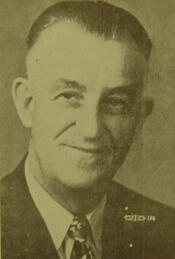
Here you will find contact information for Representative Page Belcher, including email address, phone number, and mailing address.
| Name | Page Belcher |
| Position | Representative |
| State | Oklahoma |
| District | 1 |
| Party | Republican |
| Status | Former Representative |
| Term Start | January 3, 1951 |
| Term End | January 3, 1973 |
| Terms Served | 11 |
| Born | April 21, 1899 |
| Gender | Male |
| Bioguide ID | B000323 |
About Representative Page Belcher
Page Henry Belcher (April 21, 1899 – August 2, 1980) was an American Republican politician and U.S. Representative from Oklahoma who served in the United States Congress from 1951 to 1973. Over the course of 11 consecutive terms in the House of Representatives, he represented first Oklahoma’s 8th congressional district and, after reapportionment, the Tulsa-based 1st congressional district, contributing to the legislative process during a significant period in mid‑twentieth‑century American history.
Belcher was born on April 21, 1899, in Jefferson, in northern Oklahoma, to George Harvey Belcher and Jessie Ray. He attended public schools in Jefferson and Medford, Oklahoma, reflecting the rural and small‑town environment that shaped his early life. He later enrolled at Friends University, a private non-denominational Christian institution in Wichita, Kansas. During World War I, he served as a private in the Student Army Training Corps at the University of Oklahoma, where he also studied law and played on the 1918 Oklahoma Sooners football team. These experiences combined military training, higher education, and athletics, and helped prepare him for a career in law, business, and public service.
Following the war, Belcher returned to Oklahoma and became manager of his father’s automobile dealership, gaining experience in business and local economic affairs. Maintaining his interest in the law, he continued his legal studies and was admitted to the bar in 1936, beginning a legal practice in Enid, Oklahoma. His entry into elective office came earlier, however, when he was elected county clerk of Garfield County in 1934, a position he held from 1934 to 1938. In addition to his county responsibilities, he served on the Enid Board of Education and as judge of Enid’s municipal court, roles that broadened his experience in local governance and public administration.
Belcher’s involvement in Republican Party politics deepened in the early 1940s. He served as executive assistant to U.S. Representative Ross Rizley during Rizley’s first term in Congress from 1941 to 1943, and he later managed several of Rizley’s reelection campaigns. Within the party structure, Belcher became Republican chairman of Oklahoma’s 8th congressional district and served as executive secretary of the Oklahoma Republican Party. These positions enhanced his visibility and influence in state politics and laid the groundwork for his own congressional career.
In 1950, Belcher was elected to the U.S. House of Representatives as a Republican from Oklahoma’s 8th congressional district. He served as the last representative of that district for two years, from 1951 until it was eliminated in congressional reapportionment following the 1950 Census. When most of the 8th district’s territory was merged with the Tulsa-based 1st district, Belcher sought and won election there, beginning a long tenure representing the 1st district that continued until his retirement in 1973. During a mid-decade redistricting in 1967, his home in Enid was drawn out of the district; Belcher responded by moving to Tulsa in order to remain a resident of the area he represented. Throughout his 11 terms in Congress, he participated actively in the democratic process and represented the interests of his Oklahoma constituents during a period marked by the Cold War, the civil rights movement, and major changes in federal domestic policy.
In Congress, Belcher served on the House Committee on Agriculture and its wheat subcommittee, eventually rising to become the ranking Republican member of the committee. In that capacity, he played a significant role in shaping agricultural policy, particularly on issues affecting wheat producers and rural communities in Oklahoma and the surrounding region. He also facilitated passage of legislation related to the Arkansas River Navigation System, helping to advance a major infrastructure project that improved navigation, commerce, and economic development along the river in Oklahoma and neighboring states.
Belcher’s voting record on civil rights and equality legislation reflected both regional pressures and his own judgments on specific measures. He broke with many of his colleagues from the South and border states by refusing to sign the 1956 Southern Manifesto, a document opposing the Supreme Court’s decision in Brown v. Board of Education. He voted in favor of the Civil Rights Acts of 1957 and 1960, supported the 24th Amendment to the U.S. Constitution abolishing the poll tax in federal elections, and backed the Voting Rights Act of 1965. However, he voted against the Civil Rights Acts of 1964 and 1968. In 1971, he was the sole Republican in Oklahoma’s congressional delegation to vote for the Equal Employment Opportunity Act, underscoring his occasional willingness to diverge from party and regional lines on key questions of employment discrimination and civil rights enforcement.
Politically, Belcher generally enjoyed relatively easy reelection campaigns, as the Tulsa area tended to be favorable to Republican candidates. Nonetheless, he faced notable challenges at several points in his career. In 1958, he was nearly defeated amid widespread discontent among farmers over the Eisenhower administration’s agricultural policies. Later, in 1970, he confronted a strong opponent in James R. Jones, a former official in the Johnson administration, and was reelected with only about 55 percent of the vote. With Jones preparing for a rematch in 1972, Belcher announced in June of that year that he would retire from Congress, citing his age and poor health. Jones subsequently won the seat in the 1972 election.
Belcher married Gladys Collins on June 16, 1922. The couple had two children, a son, Page Henry Belcher Jr., and a daughter, Carol. He was a member of the Methodist Church and participated in several civic and fraternal organizations, including the Kiwanis, the American Legion, and the Independent Order of Odd Fellows. In recognition of his contributions to the state, he was inducted into the Oklahoma Hall of Fame. After leaving Congress in 1973, Belcher moved to Midwest City, Oklahoma. He died there on August 2, 1980, at the age of 81, and was buried at Memorial Park Cemetery in Enid, Oklahoma. In honor of his long public service, the federal courthouse in Tulsa was named the Page Belcher Federal Building, and the city of Tulsa also commemorated him through the Page Belcher golf course.