Representative Paine Wingate
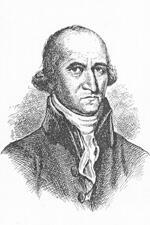
Here you will find contact information for Representative Paine Wingate, including email address, phone number, and mailing address.
| Name | Paine Wingate |
| Position | Representative |
| State | New Hampshire |
| District | -1 |
| Party | Unknown |
| Status | Former Representative |
| Term Start | March 4, 1789 |
| Term End | March 3, 1795 |
| Terms Served | 2 |
| Born | May 14, 1739 |
| Gender | Male |
| Bioguide ID | W000633 |
About Representative Paine Wingate
Paine Wingate (May 14, 1739 – March 7, 1838) was an American preacher, farmer, jurist, and statesman from Stratham, New Hampshire, who served New Hampshire in the Continental Congress and in both the United States Senate and House of Representatives. He was born the sixth of twelve children in Amesbury, in the Province of Massachusetts Bay, in 1739. His father, also named Paine Wingate, was a minister there, and the younger Wingate was raised in a religious household that emphasized education and public service.
Wingate pursued higher education at Harvard College, from which he graduated in 1759. After completing his studies, he prepared for the ministry in the Congregational Church, reflecting both his family background and the dominant religious tradition of New England at the time. In 1763 he was ordained a minister of the Congregational Church and became pastor in Hampton Falls, New Hampshire. He served in that capacity for more than a decade. In 1776, amid the upheavals of the American Revolution, Wingate gave up his ministry and moved to Stratham, New Hampshire, where he took up farming, establishing himself as both a landowner and an active member of the local community.
Wingate soon entered public life in New Hampshire. He was elected to several terms in the New Hampshire House of Representatives, where he gained experience in legislative affairs during the critical years of the Revolution and its aftermath. In 1781 he served as a delegate to the New Hampshire state constitutional convention, participating in the framing of the state’s fundamental law. His reputation as a thoughtful and principled legislator led to further responsibilities at the national level.
In 1788 Wingate served as a delegate to the Continental Congress. Despite his own background as a preacher, he successfully proposed that the salaries for the two chaplains of the Continental Congress be cut by 25 percent, a measure likely motivated at least in part by the Confederation government’s severe financial difficulties. During this period he was a strong advocate for ratification of the United States Constitution. Writing in March 1788, he argued that “[t]hose who are well-wishers to their country, and best know the situation we are in, are most sensible of the necessity of its adoption, and great pains are taken to obtain the end,” underscoring his conviction that a stronger federal framework was essential to the nation’s future.
With the establishment of the new federal government, New Hampshire appointed Wingate to the first United States Senate, in which he served from March 4, 1789, until March 3, 1793. His service in the Senate occurred during a significant period in American history, as the institutions and practices of the new government were being defined. Between 1789 and 1794 the Senate’s deliberations were conducted in secret, a practice Wingate supported. He defended secrecy by observing, “How would all the little domestic transactions of even the best regulated family appear if exposed to the world; and may not this apply to a larger body?” He believed that keeping the Senate “a little more out of view would conduce to its respectability in the opinion of the country.” While in the Senate, he served on the committee that drafted the Judiciary Act of 1789, which established the federal court system. Wingate was disappointed that the act, in his view, “will not extend to a tenth part of the causes which might by the Constitution have come into the federal court,” leaving the remaining nine-tenths of cases arising under the Constitution and federal laws to the state courts. He voted against the bill, though it ultimately passed.
After completing his Senate term, Wingate continued his national legislative service in the lower chamber. He was then elected as a Representative from New Hampshire in the United States Congress, serving in the United States House of Representatives from March 4, 1793, to March 3, 1795. A member of what later historians would associate with the emerging Federalist alignment, though listed in some records as of unknown party, Paine Wingate contributed to the legislative process during two terms in office. As a member of the House of Representatives, he participated in the democratic process during the formative years of the republic and represented the interests of his New Hampshire constituents as the new federal government’s policies and precedents took shape.
Following his national legislative career, Wingate returned to New Hampshire and entered the judiciary. He succeeded Daniel Newcomb as an associate justice of the New Hampshire Supreme Court, serving from 1798 to 1808. On the bench he developed a reputation for firmness and decisiveness. According to contemporary jurist Theophilus Parsons, “it was of great importance, that your Judge Wingate should form a correct opinion before he pronounces it—for after that, law, reason, and authority will be unavailing,” a remark that testified both to Wingate’s strength of conviction and to the weight his judgments carried in the state’s highest court.
In his later years Wingate lived quietly in Stratham, continuing his interests in farming and public affairs. With the death of James Madison in 1836, he drew renewed attention as one of the last surviving public figures of the founding era. Before he died at age ninety-eight in 1838, Wingate was one of only two surviving delegates to the Continental Congress, along with John Armstrong Jr., and he was the last surviving member of the first United States Congress. For several years he had also been the oldest living graduate of Harvard. His family connections extended into the highest levels of national politics: his wife, Eunice Wingate, was the sister of Timothy Pickering, who served as United States Secretary of State. Eunice Wingate lived to be over one hundred years old, dying in 1843. Paine Wingate died in Stratham on March 7, 1838, and he and his wife are buried in the Stratham Cemetery.