Senator Paris Gibson
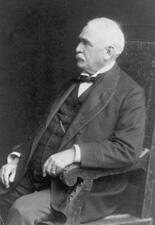
Here you will find contact information for Senator Paris Gibson, including email address, phone number, and mailing address.
| Name | Paris Gibson |
| Position | Senator |
| State | Montana |
| Party | Democratic |
| Status | Former Representative |
| Term Start | December 2, 1901 |
| Term End | March 3, 1905 |
| Terms Served | 1 |
| Born | July 1, 1830 |
| Gender | Male |
| Bioguide ID | G000164 |
About Senator Paris Gibson
Paris Gibson (July 1, 1830 – December 16, 1920) was an American entrepreneur, civic developer, and Democratic politician who served as a United States Senator from Montana from 1901 to 1905. He was born in Brownfield, Oxford County, Maine, where he spent his early years before pursuing higher education in New England. Demonstrating academic promise, he enrolled at Bowdoin College in Brunswick, Maine, and graduated in 1851, an education that helped prepare him for a long career in business, public service, and politics.
Soon after completing his studies, Gibson entered public life in his native state. In 1853 he was elected to the Maine legislature, marking his first formal role in government. After his early political experience in Maine, he moved west to Minnesota, where he combined entrepreneurial ventures with civic engagement. At St. Anthony’s Falls, he built the North Star Woolen Mill, an industrial enterprise that sought to capitalize on the region’s water power. In Minnesota he also became involved in higher education governance, serving on the University of Minnesota Board of Regents from 1871 through 1879. During this period he further demonstrated his commitment to community institutions as a founding trustee of Lakewood Cemetery in Minneapolis.
Gibson’s business interests in Minnesota ultimately proved unsuccessful, and he abandoned these failed ventures to seek new opportunities farther west. In 1880 he traveled to the Great Falls of the Missouri River in what would become the state of Montana. There he quickly recognized the falls’ potential for producing hydroelectric power and for supporting a major urban and industrial center. Convinced of the site’s promise, he turned to his friend, the prominent railroad magnate James J. Hill, and persuaded him to invest in a townsite at the falls. Gibson also urged Hill to extend his railroad through the new community, linking it to regional and national markets.
As a result of these efforts, the city of Great Falls, Montana, was founded in 1883, with Paris Gibson playing the leading role in its establishment and serving as its mayor. Under his leadership, Great Falls developed as a planned industrial and commercial hub. By 1887, rail lines associated with Hill’s system connected Great Falls to Butte and Helena, enhancing its role as a regional center of trade for farmers and ranchers. Although the main line of Hill’s Great Northern Railway ultimately bypassed Great Falls to the north, the city nevertheless grew into a significant urban center. Its dams on the Missouri River supplied hydroelectric power that supported ore processing, grain milling, and other industries, fulfilling much of Gibson’s original vision for the community.
In addition to his municipal leadership, Gibson became active in territorial and state politics in Montana. He served as a member of the Montana State Senate, further consolidating his role as one of the state’s leading Democratic figures. His prominence in Montana public life positioned him for higher office at the national level. When United States Senator William A. Clark resigned his seat, the Montana legislature elected Gibson, a Democrat, to fill the vacancy. He entered the United States Senate on March 7, 1901, and served one full term, leaving office on March 3, 1905. During his tenure in the Senate, he participated in the legislative process during a significant period in American history, representing the interests of Montana’s constituents and contributing to national debates as a member of the Democratic Party. He did not seek re-election at the end of his term.
Gibson’s personal life was closely tied to Great Falls, the city he helped found. He married Valeria Goodenow Sweat, and together they had four children. Two of their children died in early childhood, at the ages of one and two, while two sons, Philip and Theodore, survived to adulthood. Both sons, however, later suffered severe health problems. In 1912 Philip was committed to the state mental hospital at Warm Springs, Montana, for “exhaustion of paresis,” also known as “general paralysis of the insane,” where he died. Some time later, Theodore experienced a similar condition and was likewise sent to Warm Springs, where he also died. The family’s residence in Great Falls, including the home associated with their son Theodore and built in 1890, remained a notable local landmark; in 2010 it was purchased by Kelly Parks, who has asserted that the house is haunted by the ghost of Valeria Gibson.
Paris Gibson spent his later years in Great Falls, remaining a respected elder statesman and symbol of the city’s origins and development. He continued to be associated with the civic and economic life of the community he had helped to create, even after his formal political career had ended. Gibson died in Great Falls, Montana, on December 16, 1920. He was buried in Highland Cemetery in Great Falls, leaving a legacy as both a key founder of one of Montana’s principal cities and a former United States Senator who had represented the state during the early years of the twentieth century.