Representative Patricia Schroeder
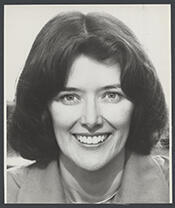
Here you will find contact information for Representative Patricia Schroeder, including email address, phone number, and mailing address.
| Name | Patricia Schroeder |
| Position | Representative |
| State | Colorado |
| District | 1 |
| Party | Democratic |
| Status | Former Representative |
| Term Start | January 3, 1973 |
| Term End | January 3, 1997 |
| Terms Served | 12 |
| Born | July 30, 1940 |
| Gender | Female |
| Bioguide ID | S000142 |
About Representative Patricia Schroeder
Patricia Nell Scott Schroeder (July 30, 1940 – March 13, 2023) was an American politician and attorney who represented Colorado’s 1st congressional district in the United States House of Representatives from January 3, 1973, to January 3, 1997. A member of the Democratic Party, she was the first female U.S. Representative elected from Colorado and served 12 consecutive terms in Congress. Known for her sharp wit, advocacy on family and women’s issues, and work on defense and government reform, she briefly sought the Democratic presidential nomination in the 1988 election cycle and became a prominent figure in late twentieth-century American politics.
Schroeder was born Patricia Nell Scott in Portland, Oregon, on July 30, 1940, the daughter of Bernice (Scott), a first-grade teacher, and Lee Combs Scott, a pilot who owned an aviation insurance company. During her childhood, the family moved to Des Moines, Iowa, where she attended local schools and developed an early interest in aviation, earning her airman certificate at the age of fifteen. She graduated from Theodore Roosevelt High School in Des Moines in 1958. That same year she left Iowa to attend the University of Minnesota, where she majored in history and joined the Chi Omega sorority. She received a Bachelor of Arts degree in 1961 and then enrolled at Harvard Law School, one of a small number of women in her class, earning her Juris Doctor in 1964.
On August 18, 1962, while still a law student, she married James W. “Jim” Schroeder, a Harvard Law School classmate. After their graduation they moved to Denver, Colorado, where Jim joined a law firm and the couple settled permanently. They had two children, Scott William, born in 1966, and Jamie Christine, born in 1970. Schroeder began her legal career with the National Labor Relations Board, serving as a field attorney from 1964 to 1966. She subsequently worked as legal counsel for Planned Parenthood and taught in Denver’s public schools, combining legal advocacy with grassroots community involvement. These early professional experiences, particularly in labor and reproductive health, helped shape her later legislative priorities on workplace rights, family policy, and women’s health.
Schroeder’s path to elective office emerged from Colorado politics in the early 1970s. In 1970, her husband ran unsuccessfully for a seat in the Colorado General Assembly, losing by only 42 votes. That same year, in Colorado’s 1st congressional district—based in Denver—20-year Democratic incumbent Byron Rogers lost a primary challenge to Craig Barnes, and Republican Mike McKevitt captured the seat in the general election, becoming the first Republican to represent the district since Dean M. Gillespie in 1947. As Democrats searched for a candidate to reclaim the seat ahead of the 1972 election, Jim Schroeder asked a reluctant potential candidate if his wife might run, prompting the retort, “What about yours?” The comment spurred Patricia Schroeder to consider a political career, and she decided to run for Congress on a platform that emphasized opposition to the Vietnam War, environmental protection, and childcare.
Initially regarded as a long-shot candidate, Schroeder received no institutional support from the Democratic National Committee or national women’s organizations. Nonetheless, she mounted an energetic grassroots campaign while the incumbent, McKevitt, remained largely in Washington until the final week. In the November 1972 election, held amid President Richard Nixon’s landslide re-election, Schroeder narrowly defeated McKevitt by just over 8,000 votes. At age 32, she became the second-youngest woman ever elected to Congress and the first woman elected to the U.S. House from Colorado. Years later, after submitting a Freedom of Information Act request, she learned that during this first campaign the Federal Bureau of Investigation had placed her and her staff under surveillance, even recruiting her husband’s barber as an informant and paying a man to break into her home to obtain trivial campaign materials—an episode she cited as evidence of the excesses of J. Edgar Hoover’s FBI.
During her 24 years in the House of Representatives, Schroeder became one of the most visible and influential liberal voices in Congress. She was the first woman to serve on the House Armed Services Committee, where she advocated arms control, reduced military spending, and greater oversight of defense policy. She also served on the original Select Committee on Children, Youth, and Families, established in 1983, reflecting her long-standing focus on family and child welfare. Known for bringing her young children and even diapers to the House floor in her early years, she became a national symbol of the challenges of balancing congressional service and motherhood. Her legislative work on work-family balance made her a key architect of the Family and Medical Leave Act of 1993 and the 1985 Military Family Act, which expanded support and protections for military families. She was also active in efforts to reform Congress itself, challenging the concentration of power in committee chairs, sparring with Speaker Carl Albert over the use of secretive “hideaway” offices, and questioning why members who lived in their offices were not taxed on that benefit.
Schroeder described herself as a “fiscally conservative liberal.” She opposed President Ronald Reagan’s 1981 tax cuts, arguing that the federal government could not afford them, and later voted against the Tax Reform Act of 1986 because she favored a more progressive rate structure. Her voting record reflected a blend of social liberalism and fiscal caution: in 1986 she received a 95 percent rating from Americans for Democratic Action, while the National Taxpayers Union ranked her as more fiscally conservative than Republican Representative Jack Kemp. In 1989 she voted against the administration of President George H. W. Bush more frequently than any other House member, opposing it 79 percent of the time, and she often broke with her own party on “party unity” votes. Schroeder also gained national attention for her sharp, often humorous commentary. The Washington Post noted that she was “known for her barbed wit”; she famously coined the phrase “Teflon President” to describe Reagan’s ability to avoid political damage from controversy, a metaphor she said came to her while frying eggs in a Teflon pan. Responding to doubts about whether a mother could serve in Congress, she once remarked, “I have a brain and a uterus, and they both work.” In a 1995 House debate, after Representative Duke Cunningham told Representative Bernie Sanders to “sit down, you socialist,” Schroeder asked, “Parliamentary inquiry, Mr. Chairman—do we have to call the Gentleman a gentleman if he’s not one?”
Schroeder’s national profile led to frequent speculation about higher office. In 1984 she was mentioned as a possible vice-presidential running mate for Democratic nominee Walter Mondale, although the nomination ultimately went to Representative Geraldine Ferraro of New York. In 1987 she chaired the presidential campaign of Senator Gary Hart of Colorado until his withdrawal from the race. After Hart’s exit, she seriously considered entering the 1988 Democratic presidential contest herself. She explored a candidacy through the summer of 1987 but announced in a widely publicized, emotional press conference on September 29, 1987, that she would not run. The tears she shed during that announcement drew criticism from conservatives and some feminists alike, and Schroeder later said she continued to receive hate mail about the episode decades afterward, pointing to what she viewed as a double standard that tolerated emotional displays by male politicians but not by women. Nonetheless, she remained a central figure in Democratic politics and continued to champion family policy, publishing Champion of the Great American Family: A Personal and Political Book in 1989, which combined memoir with discussion of parental leave, child care, family economics, and family planning.
Over the course of her congressional career, Schroeder was repeatedly returned to office by large margins in Colorado’s 1st district, which reverted to its traditional Democratic alignment after her initial victory. She was re-elected eleven times and faced only one relatively close contest after 1972, when she received 53 percent of the vote; in all other elections she never fell below 58 percent. Her tenure coincided with major national debates over the Vietnam War’s aftermath, the Cold War, the expansion of women’s rights, and the restructuring of federal social and economic policy, and she played a visible role in many of those discussions. She also became a cultural figure: she was featured in the 1979 Supersisters trading card set, inducted into the Colorado Women’s Hall of Fame in 1985 and the National Women’s Hall of Fame in 1995, and was parodied on Saturday Night Live in 1988, when Nora Dunn portrayed her as moderator of a Republican primary debate, joking about her 1987 withdrawal from the presidential race. During the 1995 budget debates, she publicly denounced radio host Rush Limbaugh on the House floor after he joked that he would buy his mother a can opener in response to Democratic warnings that cuts could force seniors to eat dog food. She contributed an essay, “Running for Our Lives: Electoral Politics,” to the 2003 anthology Sisterhood Is Forever: The Women’s Anthology for a New Millennium, and in 2006 she received a Foremother Award from the National Research Center for Women & Families for her lifetime of achievements. In 2010 she was elected to the National Governing Board of Common Cause, reflecting her long-standing interest in government accountability and democratic reform.
Schroeder chose not to seek re-election in 1996, expressing dissatisfaction with the direction of the House under the Republican majority that had taken control in 1995. She left Congress at the conclusion of her twelfth term on January 3, 1997, after what she jokingly described in her farewell press conference as “spending 24 years in a federal institution.” She was succeeded by Colorado state house minority whip Diana DeGette, a fellow Democrat. Schroeder reflected on her congressional career in her 1998 memoir, 24 Years of House Work…and the Place Is Still a Mess: My Life in Politics, which offered a candid account of her experiences as a woman in Congress and her efforts to advance family policy, defense reform, and institutional change. In 2015, in recognition of her environmental and oversight work, the visitor center at the Rocky Mountain Arsenal National Wildlife Refuge near Denver was named in her honor, acknowledging her role in investigating the site’s nerve gas stores and pressing for its cleanup and conversion to public use.
After leaving Congress, Schroeder embarked on a second major career in the publishing industry. In 1997 she became president and chief executive officer of the Association of American Publishers (AAP), a position she held for 11 years. In that role she advocated for stronger copyright protections and represented publishers’ interests in major legal and policy debates. She supported the government’s position in Eldred v. Ashcroft, a Supreme Court case upholding extended copyright terms, and opposed Google’s early plans to digitize books and make limited content available online without what she viewed as adequate compensation to rights holders. She also criticized libraries for distributing electronic content without payment to publishers, authors, and others in the industry, telling The Washington Post that these stakeholders “aren’t rich … they have mortgages.” Schroeder served on the National Leadership Advisory Group for Braille Literacy, encouraging publishers to make books more accessible to blind readers and those with reading difficulties, and sat on the panel of judges for the PEN/Newman’s Own Award. She continued to write and speak about public affairs, including a 2012 Huffington Post column describing her experience narrating the children’s story “The House that Went on Strike,” released as a smartphone app and later profiled in Wired.
In her later years, Schroeder remained active in civic and political causes. After stepping down from the AAP, she and her husband moved to Celebration, Florida, a master-planned community developed by the Walt Disney Company, a relocation facilitated in part by her acquaintance with former Disney CEO Michael Eisner. From Florida she continued to engage in Democratic politics, endorsing Representative Alan Grayson for re-election in Florida’s 8th congressional district in 2010 and again in 2012, citing his positions on women’s issues; Grayson lost in 2010 but won in 2012. Schroeder served on the board of the League of Women Voters of Florida and supported the Campaign for the Establishment of a United Nations Parliamentary Assembly, an effort to promote democratic reform of the United Nations system. She remained a visible public figure and was portrayed by Jan Radcliff in the 2016 HBO film Confirmation, about the 1991 Supreme Court confirmation hearings of Clarence Thomas.
Patricia Scott Schroeder died on March 13, 2023, at a hospital in Celebration, Florida, from complications of a stroke, at the age of 82. In earlier years she had joked that she wanted a brick made from her cremated remains “to hold doors open for other women,” a reflection of her commitment to expanding opportunities for women in politics and public life. Her remains were instead interred at the historic Congressional Cemetery in Washington, D.C., a final resting place for many of the legislators with whom she served.