Representative Patrick Henry Drewry
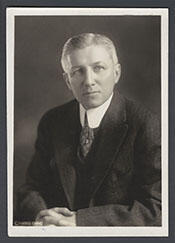
Here you will find contact information for Representative Patrick Henry Drewry, including email address, phone number, and mailing address.
| Name | Patrick Henry Drewry |
| Position | Representative |
| State | Virginia |
| District | 4 |
| Party | Democratic |
| Status | Former Representative |
| Term Start | May 19, 1919 |
| Term End | January 3, 1949 |
| Terms Served | 15 |
| Born | May 24, 1875 |
| Gender | Male |
| Bioguide ID | D000496 |
About Representative Patrick Henry Drewry
Patrick Henry Drewry (May 24, 1875 – December 21, 1947) was an American lawyer and Democratic politician from Virginia who served in the Virginia Senate from 1912 to 1920 and represented Virginia’s 4th congressional district in the United States House of Representatives from 1920 until his death in 1947. Over the course of 15 terms in Congress, he was an influential member of the House Naval Affairs Committee and played a notable role in naval expansion efforts during World War II. A member of the Democratic Party throughout his public life, he contributed steadily to the legislative process during a significant period in American history, participating in the democratic process and representing the interests of his constituents for nearly three decades.
Drewry was born on May 24, 1875, in Petersburg, Virginia, one of three surviving sons of Dr. Emmett Arrington Drewry (1838–1891) and his second wife, Altazera (née Laughton). His father, a physician, had served as a surgeon with the 9th Virginia Infantry during the American Civil War and later helped found the Medical Society of Virginia. The Drewry family was well established in the region; his paternal grandfather, James Drewry (1808–1878), was a major landowner in Southampton County, Virginia, where the town of Drewryville was named in the family’s honor. Civic engagement ran in the family: his cousin, Dr. William Francis Drewry, served as mayor of Petersburg and as superintendent of Central State Hospital. This family background in medicine, public service, and local leadership helped shape Patrick Drewry’s later interest in public affairs and charitable causes.
Drewry was educated in the local public schools of Petersburg, including Petersburg High School, and later attended McCabe’s University School. He went on to Randolph-Macon College in Ashland, Virginia, from which he graduated in 1896. After completing his undergraduate studies, he pursued legal training at the University of Virginia School of Law. He was admitted to the bar in 1901 and began practicing law in Petersburg, establishing himself as a local attorney. His alma mater later recognized his public service and professional accomplishments when Randolph-Macon College awarded him an honorary LL.D. degree in 1946, a year before his death.
In his early professional and civic life, Drewry became active in religious, historical, and financial institutions in Petersburg. He was a devoted member of Washington Street Methodist Church and authored a history of the congregation, reflecting his interest in local heritage and religious life. He also joined the Sons of Confederate Veterans and rose to serve as commander of the A. P. Hill Camp, the Petersburg chapter of that organization. In addition to his legal practice, he was a director of the Petersburg Savings and American Trust Company, indicating his involvement in the city’s financial and business affairs. On the personal front, Drewry married Mary Elizabeth Metcalf in Palmyra, Missouri, in 1906. The couple settled in Petersburg and had three sons, further anchoring his ties to the community he would later represent in the state senate and in Congress.
Drewry’s formal political career began within the dominant Democratic political structure in Virginia. A member of the Martin Organization, which later evolved into the Byrd Organization, he won election in 1911 to the Senate of Virginia, succeeding Spanish–American War veteran Charles T. Lassiter, brother of Major General William Lassiter and the late Congressman Francis Rives Lassiter. Representing the city of Petersburg and neighboring Dinwiddie County, he served part-time in the Virginia Senate from 1912 until 1920, winning reelection during that period. In Richmond he became known as an advocate for medical and charitable causes and sponsored the state’s vital statistics bill, which improved the recording of births and deaths in Virginia. A fiscal conservative, he chaired the Economy and Efficiency Commission of Virginia from 1916 to 1918, and he also served as chairman of the state auditing committee from 1916 to 1920 and as chairman of the state advisory board in 1919. Within the Democratic Party, he was active as a delegate to the Democratic state conventions in 1912, 1916, 1920, and 1924, and he served as a delegate to the Democratic National Convention in 1916.
Drewry entered national politics in 1920. He was elected as a Democrat to the Sixty-sixth Congress to fill the vacancy caused by the death of Representative Walter A. Watson, thus beginning his service in the U.S. House of Representatives on April 27, 1920. In that year he was elected to the House unopposed in a special election and then won reelection with 92.6 percent of the vote in the general election, defeating Republican F. L. Mason. He went on to win reelection to the Sixty-seventh and thirteen succeeding Congresses, serving continuously from 1920 until his death in 1947. His electoral record reflected the strength of his position in his district and within the state Democratic organization: in 1922 he was reelected with 86.2 percent of the vote against Republican Herbert Rogers and Independent W. H. Gill; in 1924, 1926, 1928, and 1930 he was reelected unopposed. In 1932 he was reelected as part of the Democratic ticket for Virginia’s at-large congressional district, winning 8.2 percent in a 24-way race. He continued to dominate his contests thereafter, winning 94.4 percent of the vote in 1934 against Socialist Dan Killinger and Independent Mary F. Leslie; 90.4 percent in 1936 against Republican John Martin and Socialist Dan Killinger; running unopposed in 1938; winning 96.0 percent of the vote in 1940 against Socialist Cyrus Hotchkiss; running unopposed again in 1942 and 1944; and securing reelection in 1946 with 87.1 percent of the vote against Republican Andrew S. Condrey.
During his long tenure in the House of Representatives, Drewry became particularly associated with naval affairs and fiscal oversight. He was a long-serving member, and later ranking member, of the House Naval Affairs Committee, where he was involved in shaping naval policy and supporting naval expansion efforts during World War II. His expertise in this area led to repeated appointments as a member of the Board of Visitors to the United States Naval Academy at Annapolis, beginning in 1925 and on several subsequent occasions. Within the national party structure, he served on the Democratic National Congressional Committee from 1923 to 1927, helping to guide the party’s House campaign strategy. He also held a leadership position in the broader party apparatus, serving as chairman of the Democratic National Committee in 1935. Throughout his congressional career, he participated in the legislative deliberations of a period that spanned the aftermath of World War I, the Great Depression, the New Deal era, World War II, and the early postwar years, consistently representing the interests of his Virginia constituents.
Patrick Henry Drewry died in Petersburg, Virginia, on December 21, 1947, while still serving in Congress, placing him among the members of the United States Congress who died in office between 1900 and 1949. In contrast to his father, who had been buried in the family graveyard in Drewryville, he was interred in historic Blandford Cemetery in Petersburg, as were his brothers who had practiced in Norfolk and Martinsville and were buried in those respective communities. His death brought to a close more than three decades of continuous public service at the state and national levels, rooted in the city and region where his family had been established for generations.