Representative Patrick J. Kennedy
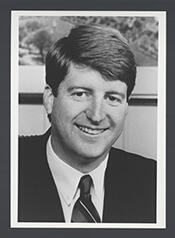
Here you will find contact information for Representative Patrick J. Kennedy, including email address, phone number, and mailing address.
| Name | Patrick J. Kennedy |
| Position | Representative |
| State | Rhode Island |
| District | 1 |
| Party | Democratic |
| Status | Former Representative |
| Term Start | January 4, 1995 |
| Term End | January 3, 2011 |
| Terms Served | 8 |
| Born | July 14, 1967 |
| Gender | Male |
| Bioguide ID | K000113 |
About Representative Patrick J. Kennedy
Patrick Joseph Kennedy, commonly known as Patrick J. Kennedy, is an American politician and mental health advocate who served as a Representative from Rhode Island in the United States Congress from January 3, 1995, to January 3, 2011. A member of the Democratic Party, he represented Rhode Island’s 1st congressional district for eight consecutive terms. He is a member of the Kennedy political family and is the great-grandson of Patrick Joseph “P. J.” Kennedy (1858–1929), a prominent Boston politician who served in the Massachusetts House of Representatives and the Massachusetts State Senate.
Kennedy was born on July 14, 1967, in Brighton, Massachusetts, and grew up in a family deeply involved in public service and national politics. He is the son of Senator Edward M. “Ted” Kennedy of Massachusetts and Joan Bennett Kennedy, and thus the nephew of President John F. Kennedy and Senator Robert F. Kennedy. Raised in the Boston area and in the broader milieu of the Kennedy family’s public life, he was exposed from an early age to political campaigns, legislative work, and the expectations of civic engagement that characterized the Kennedy legacy.
Kennedy attended Phillips Academy in Andover, Massachusetts, and later enrolled at Providence College in Providence, Rhode Island. While at Providence College, he became actively involved in politics and public affairs, laying the groundwork for his own political career. His decision to build his political base in Rhode Island, rather than in Massachusetts, reflected both his ties to the state through his education and his desire to establish an independent political identity within the broader Kennedy family tradition.
Kennedy’s formal political career began in the Rhode Island House of Representatives, where he served from 1989 to 1995. Elected at a young age, he quickly became known for his energy and focus on issues affecting health care and education. His tenure in the state legislature provided him with legislative experience and a direct connection to Rhode Island constituents, positioning him for higher office. During this period, he developed a reputation as an accessible and engaged public servant, attentive to local concerns while increasingly interested in national policy questions.
In 1994, Kennedy was elected to the United States House of Representatives as a Democrat from Rhode Island’s 1st congressional district, taking office on January 3, 1995. His service in Congress occurred during a significant period in American history marked by partisan realignments, debates over health care reform, and evolving domestic and foreign policy challenges. As a member of the House of Representatives, Patrick Joseph Kennedy participated in the democratic process and represented the interests of his constituents over eight terms in office. He served on key committees, including the House Appropriations Committee, and became particularly identified with health policy, mental health parity, and substance use disorder treatment. Kennedy played a central role in advancing mental health legislation, most notably as a co-sponsor and leading advocate of the Paul Wellstone and Pete Domenici Mental Health Parity and Addiction Equity Act, which sought to ensure that mental health and addiction treatment benefits were covered by insurers on par with medical and surgical benefits.
Throughout his congressional career, Kennedy contributed to the legislative process on a wide range of issues, including veterans’ health care, education funding, and biomedical research. He was active in the Democratic Party’s efforts to expand access to health services and to strengthen federal support for scientific and medical innovation. His work in Congress reflected both his personal commitment to health policy and the broader Kennedy family tradition of engagement in social welfare and civil rights issues. He also publicly addressed his own struggles with mental health and addiction, which informed his legislative priorities and helped reduce stigma around these issues.
Kennedy chose not to seek re-election in 2010, concluding his service in the House of Representatives on January 3, 2011, after sixteen years in office. Following his departure from Congress, he continued to play a prominent role in national discussions on mental health and addiction policy. He became a leading advocate and organizer in this field, working with nonprofit organizations and policy groups to promote improved access to care, parity in insurance coverage, and greater public awareness. In his later life, he has remained closely associated with efforts to reform mental health systems in the United States, extending the public service legacy he established during his eight terms representing Rhode Island in the United States Congress and carrying forward the long-standing political tradition of the Kennedy family that began with his great-grandfather, P. J. Kennedy, in Massachusetts state politics.