Representative Patrick Brett O’Sullivan
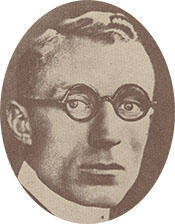
Here you will find contact information for Representative Patrick Brett O’Sullivan, including email address, phone number, and mailing address.
| Name | Patrick Brett O’Sullivan |
| Position | Representative |
| State | Connecticut |
| District | 5 |
| Party | Democratic |
| Status | Former Representative |
| Term Start | December 3, 1923 |
| Term End | March 3, 1925 |
| Terms Served | 1 |
| Born | August 11, 1887 |
| Gender | Male |
| Bioguide ID | O000123 |
About Representative Patrick Brett O’Sullivan
Patrick Brett O’Sullivan (August 11, 1887 – November 10, 1978) was a Democratic U.S. Representative from Connecticut and a long-serving member of the Connecticut judiciary. Born in Derby, New Haven County, Connecticut, he was raised in that community and attended the local public schools. His early life in Derby, a small industrial city along the Naugatuck River, provided the foundation for a career that combined law, politics, and judicial service at both the state and federal levels.
O’Sullivan pursued higher education at several prominent institutions. He graduated from Yale University in New Haven in 1908, and continued his studies at Georgetown University in Washington, D.C., receiving a degree there in 1909. He then returned to New Haven to study law, earning his degree from Yale Law School in 1913. That same year he was admitted to the bar and commenced the practice of law in his hometown of Derby, beginning a legal career that would span several decades and intersect with public service in multiple branches of government.
Early in his career, O’Sullivan became active in local government and Democratic Party politics. He served as corporation counsel of Derby from 1914 to 1917, advising the city on legal matters and representing its interests. In 1916 he was a delegate to the Democratic National Convention, reflecting his growing prominence within the party. He was elected to the Connecticut State Senate and, in 1917, served as its minority leader, playing a key role in organizing and articulating the Democratic position in the upper chamber of the state legislature.
With the United States’ entry into the First World War, O’Sullivan left elective office to enter military service. In 1918 he resigned from the State Senate to enlist in the United States Navy. His decision to leave a leadership position in the legislature to serve in the armed forces underscored his commitment to national service during a period of global conflict. After the war, he returned to Connecticut and resumed his legal and political activities, positioning himself for higher office.
O’Sullivan was elected as a Democrat to the Sixty-eighth Congress, serving as a Representative from Connecticut from March 4, 1923, to March 3, 1925. His single term in the U.S. House of Representatives occurred during a significant period in American history, marked by postwar economic adjustment and the early years of the 1920s. As a member of the House of Representatives, he participated in the legislative process and represented the interests of his Connecticut constituents, contributing to debates and votes on national policy. A member of the Democratic Party, he sought reelection in 1924 to the Sixty-ninth Congress but was unsuccessful, bringing his congressional service to a close after one term.
Following his departure from Congress, O’Sullivan returned to the practice of law and entered academic life. He resumed his legal work in Connecticut and served as an associate professor of law at Yale Law School, where he helped train a new generation of lawyers. His combined experience as a practitioner, legislator, and veteran informed his teaching and enhanced his reputation in the state’s legal community. This period of professional activity laid the groundwork for his later judicial career.
O’Sullivan’s most enduring public service came on the bench. He was appointed a judge of the Connecticut Superior Court in 1931 and served in that capacity until 1950. That year he was elevated to the Connecticut Supreme Court, where he served as an associate justice from 1950 to 1957. In 1957 he became chief justice of the Connecticut Supreme Court, serving from April 9 to August 11 of that year, when he reached the state’s mandatory retirement age. Although his tenure as chief justice was brief, it capped more than a quarter-century of judicial service and placed him at the head of the state’s highest court.
After mandatory retirement from the Supreme Court, O’Sullivan continued to serve the judiciary and the state. He remained active as a state trial referee in New Haven, assisting with the disposition of cases and contributing his experience to the administration of justice. In 1965 he played a prominent role in state constitutional reform as co-chairman of the Connecticut Constitutional Convention, helping to guide deliberations on changes to the state’s fundamental governing document. In his later years he resided in Orange, Connecticut. Patrick Brett O’Sullivan died there on November 10, 1978, and was interred in St. Lawrence Cemetery in West Haven, Connecticut.