Senator Patrick Joseph Sullivan
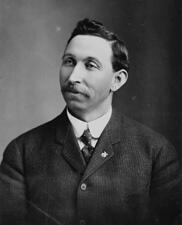
Here you will find contact information for Senator Patrick Joseph Sullivan, including email address, phone number, and mailing address.
| Name | Patrick Joseph Sullivan |
| Position | Senator |
| State | Wyoming |
| Party | Republican |
| Status | Former Representative |
| Term Start | December 5, 1929 |
| Term End | November 20, 1930 |
| Terms Served | 1 |
| Born | March 17, 1865 |
| Gender | Male |
| Bioguide ID | S001060 |
About Senator Patrick Joseph Sullivan
Patrick Joseph Sullivan (March 17, 1864 – April 8, 1935) was an American politician and businessman who served as a Republican United States Senator from Wyoming from 1929 to 1930. Over the course of his public career, he held local, state, and national offices, including a term as mayor of Casper, Wyoming, and membership in the Wyoming House of Representatives, before his appointment to the United States Senate during a pivotal period in American history.
Sullivan was born on March 17, 1864, on a farm at Kilcrohane, west of Bantry, County Cork, Ireland, in what was then a predominantly rural and agrarian region. He was baptized on March 28, 1864, in Muintervara Parish. Growing up in Ireland in the late nineteenth century, he experienced the economic and social conditions that led many Irish families to seek opportunity abroad. In 1888, he emigrated to the United States, landing in New York City before moving west to the Territory of Wyoming, which was then still in the process of development and settlement.
After his arrival in Wyoming, Sullivan settled first in Rawlins, where he engaged in sheep raising, building his initial livelihood in the livestock industry. In 1892, he moved to the emerging community of Casper, Wyoming, a center of ranching and, increasingly, energy development. There he expanded his interests beyond sheep raising to include banking, oil production, and various other commercial enterprises. His success in business and his growing prominence in the community provided a foundation for his entry into public life and Republican Party politics.
Sullivan’s political career began at the state level. He was elected to the Wyoming House of Representatives, serving his first term from 1894 until 1896. After a brief interval, he returned to the state legislature and served again from 1898 until 1900. Concurrent with his early legislative service, he was elected mayor of Casper, holding that office from 1897 until 1899; other sources record his mayoral tenure as 1897 to 1898, reflecting the close succession of his local and state responsibilities. As mayor, he helped guide Casper during a period of growth and consolidation, while his legislative work in the Wyoming House positioned him as an influential Republican figure in the young state.
Beyond state and local office, Sullivan became increasingly active in national Republican politics. He served as a delegate from Wyoming to the Republican National Convention in both 1912 and 1916, participating in the party’s deliberations during years marked by significant internal divisions and national political change. By 1924, his standing within the party was further recognized when he became a member of the Republican National Committee from Wyoming, giving him a role in shaping Republican strategy and policy at the national level.
Sullivan’s long involvement in Republican politics culminated in his service in the United States Senate. On December 5, 1929, he was appointed as a Republican to the Senate to fill the vacancy caused by the death of Senator Francis E. Warren, a senior and influential figure in Wyoming politics. Sullivan represented Wyoming in the Senate from December 5, 1929, to November 30, 1930, serving during a significant period in American history that included the onset of the Great Depression following the stock market crash of October 1929. During his one term in office, he participated in the legislative process and represented the interests of his Wyoming constituents. He chose not to be a candidate in the special election to fill the vacancy, and his service concluded when Robert D. Carey succeeded him on November 30, 1930.
Known as a man of law and order, Sullivan nonetheless maintained cordial personal relations across a wide spectrum of frontier society. Contemporary accounts, including a Denver Post Sunday morning edition dated March 9, 1930, noted that he reciprocated the voluntary friendship of certain outlaws of his day, in particular members of the Wild Bunch, also known as the Hole in the Wall Gang, led by Butch Cassidy and Harry “Sundance Kid” Longabaugh. These figures reportedly respected and were friendly toward Sullivan despite his firm public stance in favor of law and order, reflecting the complex social dynamics of Wyoming’s frontier era.
In his later years, Sullivan continued to be associated with his business and civic interests in Wyoming, particularly in Casper, where he had long been a leading figure. He died on April 8, 1935, in Santa Barbara, California. His remains were returned to Wyoming, and he was interred in Highland Cemetery in Casper, underscoring his enduring connection to the community where he had built his career in business and public service.