Representative Patrick J. Tiberi
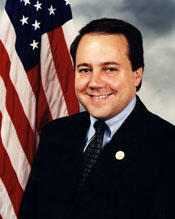
Here you will find contact information for Representative Patrick J. Tiberi, including email address, phone number, and mailing address.
| Name | Patrick J. Tiberi |
| Position | Representative |
| State | Ohio |
| District | 12 |
| Party | Republican |
| Status | Former Representative |
| Term Start | January 3, 2001 |
| Term End | January 15, 2018 |
| Terms Served | 9 |
| Born | October 21, 1962 |
| Gender | Male |
| Bioguide ID | T000462 |
About Representative Patrick J. Tiberi
Patrick Joseph Tiberi (born October 21, 1962) is an American lobbyist and former politician who served as the U.S. Representative for Ohio’s 12th congressional district from January 3, 2001, to January 15, 2018. A member of the Republican Party, he represented a district that included communities north and east of Columbus and served nine consecutive terms in Congress. During his tenure in the U.S. House of Representatives, he participated actively in the legislative process and was regarded as a key Republican voice on tax and health policy. After leaving Congress, he became president and chief executive officer of the Ohio Business Roundtable.
Tiberi was born in Columbus, Ohio, the son of Italian immigrants, Joe Tiberi and Rina (Silvestri) Tiberi. Raised in a working-class family, he attended Woodward Park Middle School and Northland High School in Columbus. He was the first person in his family to attend and graduate from college. Tiberi enrolled at The Ohio State University, where he was a member of The Ohio State University Marching Band. He graduated in 1985 with a degree in journalism, an academic background that later informed his communication style and public engagement as an elected official. In recognition of his public service, Capital University awarded him an honorary doctorate in the humanities in May 2005. He is a practicing Catholic.
Following his graduation from Ohio State, Tiberi worked in the private sector as a realtor for RE/MAX Achievers, a franchise of RE/MAX located in Lewis Center, Ohio. His early career in real estate provided him with experience in small business and local economic issues, which would become recurring themes in his later legislative work. Tiberi entered elective office in 1993 when he was elected to the Ohio House of Representatives. During his tenure in the state legislature, he rose to the position of House Majority Leader, solidifying his standing within the Ohio Republican Party and gaining experience in legislative leadership and policy development at the state level.
In 2000, Tiberi ran for and won election to the U.S. House of Representatives from Ohio’s 12th congressional district, succeeding John Kasich. He took office on January 3, 2001, and went on to serve nine terms, remaining in Congress until his resignation in January 2018. Over this period, he represented a rapidly growing suburban district and was repeatedly returned to office by his constituents. His service in Congress occurred during a significant period in American history, spanning the aftermath of the September 11 attacks, the wars in Afghanistan and Iraq, the Great Recession, the debate over the Affordable Care Act, and the early years of the Trump administration. Tiberi was known as a mainstream Republican and was closely aligned with the party’s leadership, including then-Speaker John Boehner, with whom he was frequently described as loyal.
Within the House, Tiberi developed a particular focus on tax, health, and economic policy. He served on the powerful Committee on Ways and Means, eventually chairing its Subcommittee on Health and serving on the Subcommittee on Tax Policy. He also chaired the Joint Economic Committee, where he helped frame Republican approaches to economic growth and fiscal policy. In 2006, he authored legislation that made it easier for returning military veterans to receive federal jobs and provided additional federal assistance to caregivers of incapacitated adults; both bills were enacted that year. He was active in several caucuses, including the Republican Main Street Partnership, the Tuesday Group, the Congressional NextGen 9-1-1 Caucus, and the U.S.–Japan Caucus, reflecting his interest in pragmatic governance, public safety infrastructure, and international economic relations. On September 7, 2017, he briefly served as chair of the newly formed Republican Main Street Congressional Caucus.
Tiberi’s voting record and public statements placed him firmly within the Republican mainstream on fiscal and regulatory matters. He opposed the American Recovery and Reinvestment Act of 2009, criticizing it as “loaded with Nancy Pelosi’s grab bag of big spending wishes.” Nonetheless, after its passage he wrote to Secretary of Agriculture Tom Vilsack seeking to direct stimulus funds to his district, illustrating his efforts to secure federal resources for local needs. He was a prominent critic of the Affordable Care Act (ACA) and expressed support for House Speaker Paul Ryan’s framework to replace it. In a February 17, 2017 address to the Ripon Society, he outlined a multi-pronged strategy to change the ACA through regulatory action by Health and Human Services Secretary Tom Price, the budget reconciliation process, and bipartisan legislation. His comments suggested a shift from advocating full repeal toward modifying provisions of the law, stating that “it’s not just about repealing. Maybe it’s about modifying some provisions of the Affordable Care Act.” His proposed replacement plan would have ended the ACA’s Medicaid expansion, a position opposed by Governor John Kasich, who warned that eliminating Medicaid coverage for approximately 700,000 Ohioans would be “a very, very bad idea.” Analysts estimated that the proposed cuts could cost Ohio between $16 billion and $18 billion and reduce services for children in special education.
On health policy, Tiberi also engaged with the debate over protections for individuals with pre-existing medical conditions. While the ACA barred insurers from denying coverage or raising premiums based on pre-existing conditions, Tiberi co-sponsored legislation with Representative Greg Walden intended to preserve those protections if the ACA were repealed. Health policy experts, including Joseph Antos of the American Enterprise Institute, questioned the feasibility of such an approach without the ACA’s individual mandate, noting that a risk pool dominated by individuals with pre-existing conditions could drive up premiums. The issue was further complicated by an amendment to the American Health Care Act that would have allowed states to waive requirements preventing insurers from charging higher premiums to those with pre-existing conditions. Tiberi’s positions on health care drew criticism from conservative groups such as the Club for Growth, which ran television ads accusing him of obstructing President Donald Trump’s efforts to repeal the ACA, as well as from constituents concerned about the potential loss of coverage.
Tiberi’s role on the Ways and Means Committee also placed him at the center of debates over tax policy and government oversight. He spoke at a Ripon Society forum about the Internal Revenue Service targeting controversy, calling it one of the worst scandals he had seen in American history and arguing that it alarmed Americans across the political spectrum. He urged bipartisan cooperation with the administration to resolve the matter and to pursue comprehensive tax reform that would simplify the tax code. In committee deliberations, he voted against an amendment by Representative Bill Pascrell that would have requested President Trump’s federal income tax returns, arguing that the proposal was politically motivated and risked creating a “slippery slope.” He noted that Trump had said he would release his returns and stated that he encouraged the president to do so. On issues of executive oversight, Tiberi said that President Trump’s firing of FBI Director James Comey amid the investigation into Russian interference in the 2016 election raised “many questions,” but he did not initially support appointing a special prosecutor, indicating he would back such a step only if recommended by the relevant congressional subcommittees.
Constituent access and public engagement were recurring themes in Tiberi’s congressional career. He was skeptical of large, open town hall meetings, describing them as “not productive” and “shouting matches.” While he held some town halls, including a 2011 event with Tea Party members in Newark and a 2015 meeting on the Iran nuclear agreement, he increasingly favored smaller, private meetings with constituents. He cosponsored legislation that would require a commission to host town halls regarding reforms to Medicare and Social Security, reflecting his view that structured forums could better facilitate discussion of complex policy issues. During the February 2017 congressional recess, amid intense public debate over health care reform, Tiberi declined to hold a large public town hall despite a petition from more than 1,500 constituents. Instead, he met with small groups while constituents organized their own town hall on February 22, 2017, to which he was invited but did not attend, choosing instead to deliver the keynote address at a Knox County Republican Party fundraiser—although Knox County lies in Ohio’s 7th congressional district and not his own. He similarly did not hold public town halls during the May 2017 recess, participating instead in a roundtable with Speaker Paul Ryan and local business leaders and attending a Republican fundraiser at the home of businessman Les Wexner. Tiberi maintained that he was “the most accessible Congressman [his constituents have] ever had” and “one of the most accessible members of Congress,” a claim some observers contrasted with the public appearances of colleagues such as Representative Joyce Beatty, who attended a citizen-led town hall when he did not. In the broader public debate over the ACA, one of Tiberi’s statements—that “in Ohio, almost one third of counties will have only one insurer participating in the exchange”—was cited by Vox, ProPublica, Kaiser Health News, and Stat as an example of contested claims about the law; their analysis concluded the figure was accurate for about 23 percent of Ohio counties.
Within the House Republican Conference, Tiberi was viewed as a reliable ally of leadership. After John Boehner resigned as Speaker and Paul Ryan assumed the position, Tiberi sought to succeed Ryan as chair of the Ways and Means Committee. The House Republican Steering Committee instead selected Representative Kevin Brady of Texas, with Ryan reportedly backing Brady’s bid and controlling several key votes on the panel. Tiberi’s strong fundraising in the 2016 cycle and his statewide profile led to speculation that he might seek the Republican nomination for the U.S. Senate in 2018, but he declined to enter the race. In the 2010s he also became involved with centrist and pro-business Republican groups, including the Republican Main Street Partnership and the Tuesday Group, and on September 7, 2017, he was named chair of the newly organized Republican Main Street Congressional Caucus, though he held that role only briefly before announcing his departure from Congress.
In October 2017, Tiberi announced that he would resign from Congress in January 2018 to become president of the Ohio Business Roundtable, a coalition of chief executive officers from major Ohio companies focused on promoting economic growth and competitiveness in the state. His last day in office was January 15, 2018, ending more than two decades of continuous elected service at the state and federal levels. In his post-congressional career, Tiberi has worked as a lobbyist and business advocate, drawing on his experience in tax, health, and economic policy and maintaining an influential role in Ohio’s political and business communities.