Representative Paul W. Cronin
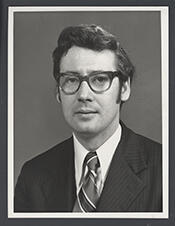
Here you will find contact information for Representative Paul W. Cronin, including email address, phone number, and mailing address.
| Name | Paul W. Cronin |
| Position | Representative |
| State | Massachusetts |
| District | 5 |
| Party | Republican |
| Status | Former Representative |
| Term Start | January 3, 1973 |
| Term End | January 3, 1975 |
| Terms Served | 1 |
| Born | March 14, 1938 |
| Gender | Male |
| Bioguide ID | C000925 |
About Representative Paul W. Cronin
Paul William Cronin (March 14, 1938 – April 5, 1997) was a Republican politician and businessman who served one term as a United States Representative from Massachusetts from 1973 to 1975. His congressional service took place during a turbulent period in American politics marked by the Vietnam War’s aftermath and the Watergate scandal, and he was identified with the moderate wing of his party.
Cronin was born in Boston, Massachusetts, on March 14, 1938. He grew up in the Greater Boston area and became active in public affairs at a relatively young age. He pursued higher education at Boston University, from which he graduated in 1962. Seeking further training in public policy and administration, he attended the John F. Kennedy School of Government at Harvard University, earning a degree there in 1969. His academic background in government and public administration helped prepare him for a career that would span local, state, and federal office.
Cronin’s political career began at the local level in Andover, Massachusetts. At the age of 24, he was elected as an Andover selectman, gaining early experience in municipal governance and constituent service. He subsequently advanced to state office, winning election to the Massachusetts House of Representatives, where he served from 1967 to 1969. During this period he also became involved in national Republican politics. He joined the congressional staff of Representative F. Bradford Morse, gaining firsthand experience with legislative work in Washington, and he served as a delegate to the Republican National Conventions in both 1968 and 1972, reflecting his growing prominence within the party.
In 1972, Cronin ran for Congress in Massachusetts’s Fifth Congressional District after Representative Morse resigned to accept a post at the United Nations. Running as a Republican in a traditionally Democratic state, he faced Democratic nominee John Kerry, a decorated Vietnam veteran and outspoken anti-war candidate who would later become a U.S. senator and presidential nominee. Kerry had moved into the district to seek the open seat, and the race quickly drew national attention. At one point trailing by more than 20 percent in the polls, Cronin mounted a comeback that culminated in a narrow upset victory. Contemporary observers often credited his win in part to strong support from The Lowell Sun, which sharply criticized Kerry as an elitist carpetbagger and took issue with Kerry’s questioning of the patriotism of those who supported the war. Cronin was elected to the Ninety-third Congress and took office on January 3, 1973.
During his term in the U.S. House of Representatives, Cronin served on the House Interior Committee. In that role he became involved in initiatives affecting natural resources and public lands, and he helped begin a process that ultimately led, years later, to the creation of an urban national historical park in Lowell, Massachusetts, recognizing the city’s industrial and cultural heritage. Known more as a businessman and pragmatist than as an ideologue, Cronin aligned himself with the moderate wing of the Republican Party. He represented his Massachusetts constituents through a period marked by the unfolding Watergate investigations and shifting public attitudes toward government, participating in the legislative process and national debates of the early 1970s.
Cronin sought reelection in 1974, a year that proved difficult for Republicans nationwide in the wake of President Richard Nixon’s impeachment troubles and resignation. His Democratic challenger was Paul Tsongas, a county commissioner from Lowell who ran an energetic campaign. Tsongas pressed Cronin to release his income tax returns, a request Cronin declined, and criticized him for refusing to debate. Tsongas also capitalized on local economic concerns, particularly the failure of the technology firm Mostek to locate a facility in Lowell after Cronin had indicated it would do so; a memorable Tsongas radio advertisement featured echoing footsteps in an empty building to dramatize the issue. In the November 1974 election, Tsongas defeated Cronin with 61 percent of the vote. Tsongas would later serve in the U.S. Senate and seek the Democratic presidential nomination in 1992, underscoring the prominence of the figures Cronin faced in his brief congressional career.
After leaving Congress in January 1975, Cronin returned to the private sector and public service in various capacities. He held a number of positions with the Massachusetts Port Authority, where he was involved in the administration and development of key transportation facilities in the state, including airports and seaports. Remaining active in Republican politics, he later sought higher office at the state level. He ran unsuccessfully for the Republican nomination for governor of Massachusetts against William Weld, who would go on to win the governorship. In 1992, Cronin attempted a political comeback by seeking to regain his former U.S. House seat. He secured the Republican nomination to challenge Democratic Representative Chester G. Atkins, who had been weakened by his involvement in the House banking, or “check-kiting,” scandal. However, Atkins lost the Democratic primary to Martin T. Meehan, an emerging Democratic figure. In the general election, Meehan defeated Cronin by a margin of 52 percent to 38 percent, ending Cronin’s final bid for elective office.
Paul William Cronin died on April 5, 1997, at Massachusetts General Hospital in Boston from a brain tumor. He was 59 years old. He was buried in Spring Grove Cemetery in Andover, Massachusetts, the community where his political career had begun as a young selectman. His life and career reflected the trajectory of a moderate New England Republican who moved from local government to Congress during a pivotal era in American politics and continued to serve in public and quasi-public roles in Massachusetts long after his single term in the U.S. House of Representatives.