Senator Paul J. Fannin
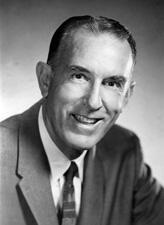
Here you will find contact information for Senator Paul J. Fannin, including email address, phone number, and mailing address.
| Name | Paul J. Fannin |
| Position | Senator |
| State | Arizona |
| Party | Republican |
| Status | Former Representative |
| Term Start | January 4, 1965 |
| Term End | January 3, 1977 |
| Terms Served | 6 |
| Born | January 29, 1907 |
| Gender | Male |
| Bioguide ID | F000013 |
About Senator Paul J. Fannin
Paul Jones Fannin (January 29, 1907 – January 13, 2002) was an American businessman and politician who became one of Arizona’s leading Republican officeholders in the mid‑twentieth century. A member of the Republican Party, he served as the 11th governor of Arizona from 1959 to 1965 and as a United States Senator from Arizona from 1965 to 1977, completing two terms in the Senate. His congressional service occurred during a significant period in American history, and he participated actively in the legislative process while representing the interests of his Arizona constituents.
Fannin was born in Ashland, Kentucky, to Thomas Newton Fannin and Rhoda Catherine (née Davis) Fannin. His father worked as a dairy farmer and also owned a harness shop. When Paul Fannin was eight months old, the family moved to Phoenix, Arizona, seeking a more favorable climate for his father’s health. He was raised in Phoenix, where he received his early education at Kenilworth Elementary School and later attended Phoenix Union High School, from which he graduated in 1925. The move from Kentucky to the Arizona Territory’s rapidly growing capital city shaped his lifelong identification with the state he would later govern and represent in Congress.
After high school, Fannin attended the University of Arizona for two years before transferring to Stanford University in California. At Stanford he pursued business studies and received a Bachelor of Arts degree in business administration in 1930. Upon graduation, he returned to Phoenix and entered the family hardware business, gaining practical experience in commerce and management that would inform his later public career. In 1934, he married Elma Addington; the couple remained married until her death in 2001 and had one daughter and three sons, including Bob Fannin, who would later become active in Arizona Republican politics.
Fannin soon expanded his business interests beyond the family hardware enterprise. Together with his brother Ernest, he established the Fannin Gas and Supply Company, a gas and petroleum equipment company that served the region’s growing energy needs. He served as president of the company from 1945 until 1956, overseeing its development during a period of postwar economic expansion in Arizona. In 1956, he and his brother sold the company, freeing Fannin to devote his full attention to public affairs and setting the stage for his entry into elective office.
A conservative Republican, Fannin was elected governor of Arizona in 1958, defeating Democratic Attorney General Robert Morrison by nearly 30,000 votes. He was sworn into office on January 5, 1959, and was subsequently re‑elected in 1960 and again in 1962. During his three terms as governor, he pursued policies that combined fiscal conservatism with support for key state institutions. He increased funding for the public school system by raising sales taxes and worked to equalize property taxes across the state. His administration established Arizona’s first medical school, an important step in expanding higher education and health care infrastructure. Fannin also created the Arizona‑Mexico Commission to promote tourism and trade across the border, strengthening economic and cultural ties with neighboring Mexico. In addition, he served as chairman of the Western Governors Association and was a member of the Executive Committee of the Council of State Governors and of the National Civil Defense Advisory Council, roles that extended his influence on regional and national policy.
In 1964, when Senator Barry Goldwater declined to seek re‑election to the U.S. Senate in order to run for President of the United States, Fannin ran for and won the open Senate seat. In the general election he defeated Democrat Roy Elson, an aide to Senator Carl Hayden, by a narrow 51–49 percent margin. He took office in January 1965 and was re‑elected to a second term in 1970 with 56 percent of the vote. A Republican Senator from Arizona from 1965 to 1977, Fannin served during a period marked by the civil rights movement, the Vietnam War, and significant domestic policy debates. He did not seek re‑election to a third term in 1976, concluding his Senate service at the end of his second term.
During his Senate career, Fannin was regarded as a hard‑line conservative and often voted in alignment with Senator Goldwater on major issues. He supported some key civil rights measures while opposing others: he voted in favor of the Voting Rights Act of 1965, did not vote on the confirmation of Thurgood Marshall to the U.S. Supreme Court, and voted against the Civil Rights Act of 1968. As the ranking Republican on the Senate Interior Committee, he became a principal spokesman for Presidents Richard Nixon and Gerald Ford on energy policy. In that capacity, he opposed new limits on strip mining and tighter federal controls over public lands, reflecting his concern for resource development and state interests. He joined with conservative Democratic Senators to preserve the clause of the Taft–Hartley Act that allowed states to decide whether to prohibit mandatory union membership in unionized shops, thereby protecting right‑to‑work laws. One of his most significant legislative achievements was his role in 1968 as the principal sponsor of the Central Arizona Project, which diverted water from the Colorado River to central and southern Arizona, transforming the state’s long‑term water and development prospects. During part of his tenure in the Senate, Fannin also occupied the so‑called “candy desk,” a tradition in which a Senator maintains a supply of candy at a desk on the Senate floor for colleagues.
After leaving the Senate in 1977, Fannin returned to private life in Phoenix, where he continued to be regarded as an elder statesman of Arizona Republican politics and a figure identified with the state’s postwar growth and development. He lived in Phoenix until his death from a stroke on January 13, 2002, just short of his ninety‑fifth birthday. Paul Jones Fannin was buried at Greenwood/Memory Lawn Mortuary & Cemetery in Phoenix, Arizona, the city he had called home since infancy and which he had served for decades in both business and public office.