Senator Paul Oscar Husting
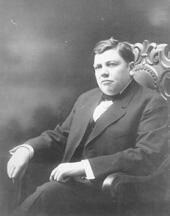
Here you will find contact information for Senator Paul Oscar Husting, including email address, phone number, and mailing address.
| Name | Paul Oscar Husting |
| Position | Senator |
| State | Wisconsin |
| Party | Democratic |
| Status | Former Representative |
| Term Start | December 6, 1915 |
| Term End | October 21, 1917 |
| Terms Served | 1 |
| Born | April 25, 1866 |
| Gender | Male |
| Bioguide ID | H001006 |
About Senator Paul Oscar Husting
Paul Oscar Adolph Husting (April 25, 1866 – October 21, 1917) was an American lawyer and Democratic politician from Mayville, Wisconsin, who served as a United States senator from Wisconsin from March 4, 1915, until his death in 1917. A member of the Democratic Party, he was the first United States senator from Wisconsin to be elected by direct popular vote, following the ratification of the Seventeenth Amendment. He previously served eight years in the Wisconsin Senate, representing Dodge County, and four years as district attorney of Dodge County. Husting was a grandson of Solomon Juneau, the co-founder and first mayor of Milwaukee, and is the last senator to have held his Wisconsin seat who did not subsequently lose either reelection or renomination.
Husting was born on April 25, 1866, in Fond du Lac, Wisconsin, the second of seven children of John P. and Mary M. (née Juneau) Husting. His father emigrated from the Grand Duchy of Luxembourg to Wisconsin in 1855, and his mother was the twelfth of sixteen children of Solomon Juneau, a prominent early settler and political leader in Milwaukee. In 1876 the family moved to Mayville, Wisconsin, where Husting received a common school education. From the age of seventeen he worked in a series of clerical and administrative positions, including as a retail clerk in a general store, a railway postal clerk, a mailing clerk in the Wisconsin State Prison at Waupun, and an assistant bookkeeper in the office of the Secretary of State of Wisconsin under Thomas J. Cunningham. These early employments provided him with practical experience in public administration and commerce that would later inform his political career.
Pursuing a legal education, Husting entered the University of Wisconsin Law School and, after completing his studies, passed the state bar examination and was admitted to the bar in 1895. He began the practice of law in Mayville on his own, establishing himself as a local attorney. In 1897 he entered into partnership with C. W. Lamoreux, and the two practiced together until Lamoreux was elected judge. Thereafter Husting formed the firm of Husting & Brother, reflecting the involvement of his family in his professional life. His younger brother, Berthold Juneau “Bert” Husting, later had a brief career in professional baseball and went on to serve as United States Attorney for the Eastern District of Wisconsin in the 1940s, while his older brother, Charles Ottomar “Otto” Husting, would serve as his private secretary during his tenure in the United States Senate.
Husting’s formal political career began at the county level. He was elected district attorney of Dodge County in 1902 and was reelected in 1904, serving a total of four years in that office. In 1906 he was elected to the Wisconsin Senate from Dodge County and was reelected in 1910, serving eight years in the state legislature. As a state senator, Husting became identified with progressive reforms. He advocated for conservation of Wisconsin’s natural resources, supported the adoption of an income tax, and sponsored the so‑called “Husting bill,” which established a maximum passenger railroad fare of two cents per mile. He also championed initiative and referendum measures and was an early and consistent supporter of the direct election of United States senators. Husting offered the original resolution to investigate the Wisconsin primary and election of 1908 and assisted in the ensuing inquiry, which led to the enactment of the state’s Corrupt Practices Act, aimed at curbing electoral abuses.
In the context of these reform efforts, Husting emerged as a leading Democrat in a state then dominated by Republicans. In the November 1914 election he became the first United States senator from Wisconsin to be chosen directly by the voters, narrowly defeating the incumbent Republican governor, Francis E. McGovern, by 967 votes. He succeeded Senator Isaac Stephenson and took his seat in the United States Senate on March 4, 1915. Husting’s service in Congress occurred during a significant period in American history, as the nation debated its role in World War I and grappled with domestic reform. During his time in the Senate, he was chairman of the Committee on Fisheries in 1917 and chaired a special committee investigating trespasses on Indian lands throughout his tenure. He participated actively in the legislative process, represented the interests of his Wisconsin constituents, and was recognized as a loyal supporter of President Woodrow Wilson’s pro-Allied policies. The New York Times later described him as “the most aggressive leader” of the “loyalist” forces in Wisconsin, in contrast to Senator Robert M. La Follette and the state’s substantial pro-German constituency. Husting was the only Democrat to win a statewide election in Wisconsin between 1892 and 1932, underscoring the distinctiveness of his political success in that era.
Husting’s congressional service was cut short by his sudden death in 1917. On October 21 of that year, while duck hunting on Rush Lake near Pickett, Wisconsin, he was accidentally shot by his brother Gustav. As Husting rose in a rowboat after telling his brother to fire, Gustav’s shot struck him in the back. Husting fell into a coma and died later that same day. His death in office had notable political consequences: had he lived to seek and win reelection as a Democrat, the composition of the Senate in 1919 might have been different. Instead, he was succeeded by Republican Irvine Lenroot, and in 1919 the Senate stood at 49 Republicans and 47 Democrats; with Vice President Thomas R. Marshall, a Democrat, holding the tie-breaking vote, Husting’s continued presence could have shifted control of the chamber. Husting was interred in the Husting family plot at Graceland Cemetery in Mayville. His career, though brief at the national level, marked an important chapter in Wisconsin’s political history and in the evolution of popular election to the United States Senate.